From transformers and switchgear to ring main units, substations, circuit breakers and smart components, Jubang provides integrated product support for power distribution projects.
Discover Jubang’s strengths in technology R&D, quality testing and smart manufacturing, supporting reliable electrical equipment and efficient power distribution solutions for global customers.
From technical consultation and OEM/ODM customization to EPC support, smart O&M, delivery documentation and after-sales service, Jubang supports your project at every stage.
Explore Jubang Group’s development history, intelligent manufacturing base, R&D platforms, CNAS-accredited laboratory and global project service capabilities.
What Is a Three-Dimensional Wound-Core Power Transformer?
Release Time: 2026-08-24
When an EPC electrical engineer in Ho Chi Minh City reviewed a compact transformer proposal, the package was rejected late in review: the core type, losses, vector group, insulation and cooling configuration, and applicable test evidence had never been specified together. The reversal was important—the issue was not simply a bad transformer, but a selection and documentation problem that had reached the approval stage too late.
Summary: A three-dimensional wound-core design uses wound magnetic-core sections arranged as a three-phase magnetic circuit rather than relying on the familiar stacked-lamination layout. Its value must be evaluated as a complete 50/60 Hz transformer specification: rated voltage, frequency, vector group, impedance, no-load and load losses, cooling, insulation, taps, and project tests must agree. IEC 60076 is a standards series for power-transformer requirements and tests, not a product certification. Put the required performance and evidence in one data sheet before comparing compactness or efficiency.
A Three-Dimensional Rolled Iron Core Transformer uses a closed three-phase magnetic path.
A Three-Dimensional Rolled Iron Core Transformer has wound electrical-steel core sections arranged as a spatial, three-legged magnetic circuit. It may also be called a three-dimensional wound, rolled, or stereo core. The name is less important than the drawing and test schedule: the buyer needs to know the magnetic path, joints, and actual winding and tank arrangement.
In a conventional laminated three-phase core, sheets are cut, stacked, and stepped to form limbs and yokes. In a wound-core arrangement, the steel is wound into closed forms before assembly. Designers use this geometry to reduce discontinuities in the magnetic circuit and to use core steel in its rolling direction over more of the flux path. Those are design intentions, not a universal efficiency guarantee; actual no-load loss depends on steel grade, flux density, core mass, manufacturing control, and the agreed test conditions.
The practical distinction matters because no-load loss is present whenever the transformer is energized, while load loss changes approximately with the square of load current. For a continuously energized distribution transformer, a small difference in verified no-load loss can affect operating cost over many years. An illustrative—not project-specific—calculation is 100 W of no-load-loss difference × 8,760 hours = 876 kWh per year. A buyer should apply the local energy price, load profile, loss capitalization method, and expected service life rather than treating that figure as a saving promise.
Ask for the excitation-current and no-load-loss test record, together with the rated voltage and frequency used for the test. IEC 60076-1 describes general requirements and tests for power transformers, while the wider IEC 60076 series addresses matters such as temperature rise, dielectric tests, sound levels, and loading in separate parts. It is not enough to write “IEC transformer” on a quotation; the applicable edition, test classification, contractual limits, and acceptance process need to be stated.
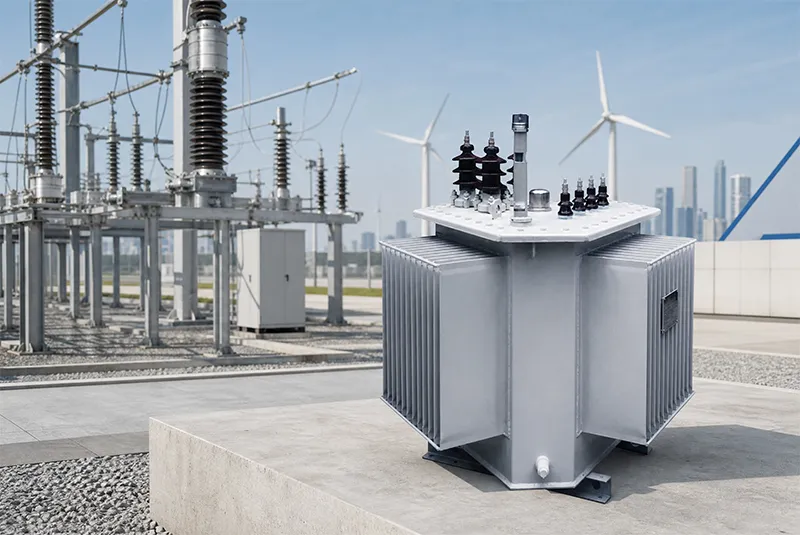
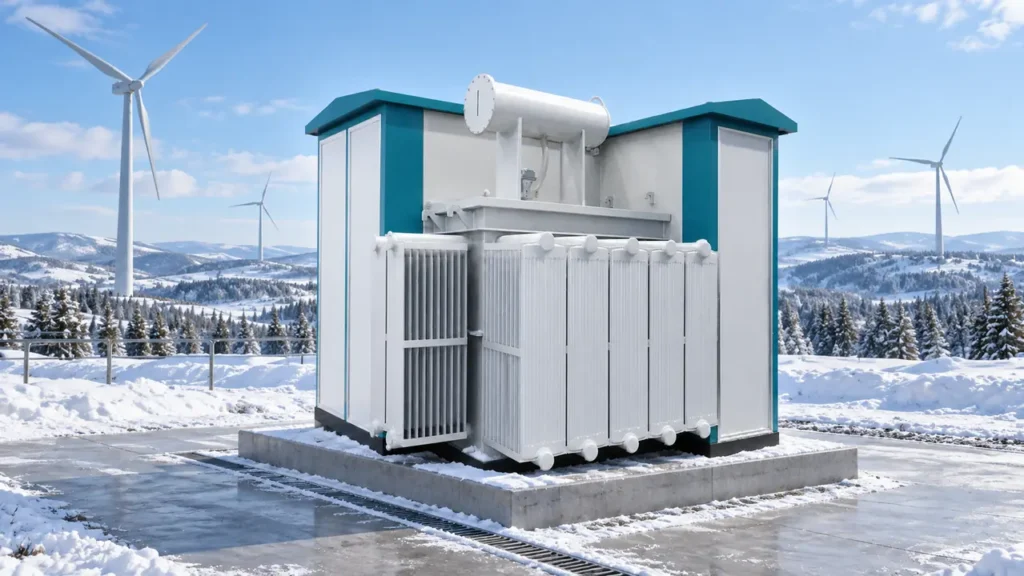
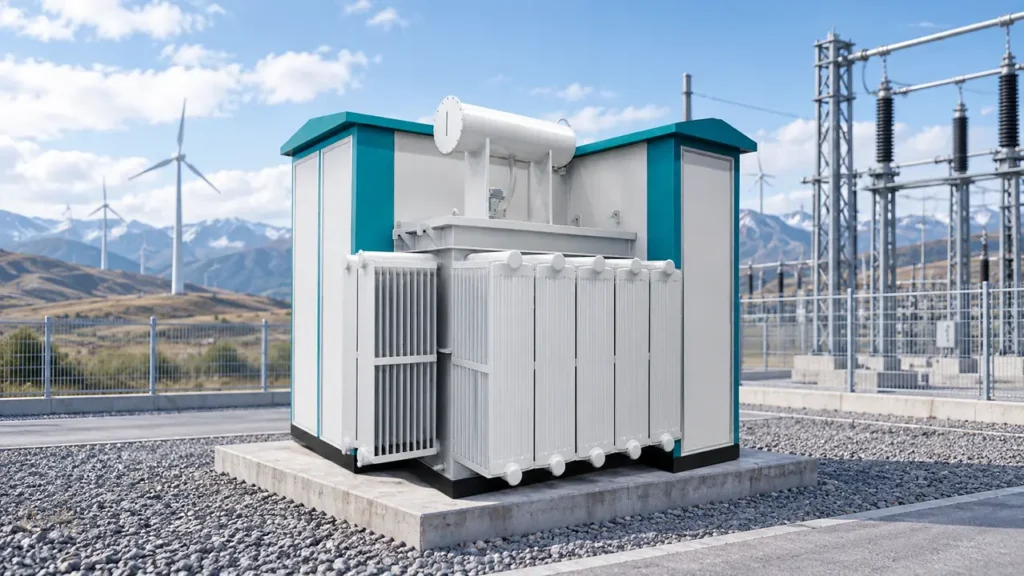
This real product photo helps a buyer examine the physical interface: tank footprint, radiator arrangement, bushing positions, lifting features, and the space needed for cable termination and maintenance.
A 3D wound core power transformer must be specified as an electrical system, not a core alone.
The core architecture is only one part of the transformer. A usable request for quotation states rated power, highest and nominal voltages, frequency, tap arrangement, vector group, impedance, insulation levels, cooling, temperature rise, losses, accessories, site conditions, and tests. Omitting one field can make two quotations look comparable when they are not.
For a 3D wound core power transformer, vector group is especially worth settling early. It controls phase displacement and neutral availability, and it can affect whether a transformer can operate in parallel with existing units. Rated impedance also matters: it influences fault-current calculations and voltage regulation. A low-loss core cannot cure a mismatch in vector group, impedance, voltage ratio, or tap range. The system study should govern those values.
Loss figures need a shared measurement basis.
Request guaranteed no-load loss, load loss at a stated reference temperature, and auxiliary power where relevant. Winding resistance changes with temperature, so an unqualified load-loss number is not a clean bid comparison. Test records should identify the tested unit, rated data, required test arrangement, and measured results.
Cooling and insulation choices set the real operating envelope.
Oil-immersed distribution designs commonly use natural oil and natural air cooling, often shown as ONAN; larger duties may require additional cooling stages. The cooling designation must match the site ambient conditions, duty cycle, enclosure or substation ventilation, altitude, and noise constraints. Likewise, insulation levels must be coordinated with the network’s highest voltage, lightning impulse requirements, switching exposure, arresters, and cable or overhead-line connection. “Oil immersed” is not by itself an insulation specification.
A Stereo rolled core oil-immersed transformer should be compared on verified lifetime value.
A Stereo rolled core oil-immersed transformer may offer a compact configuration and potentially attractive loss characteristics, but procurement should compare verified requirements rather than a product label. The table below separates characteristics that are inherent to the offered design from results that must be guaranteed and tested for the specific unit.
Comparison point
Three-dimensional wound-core approach
Conventional laminated-core approach
What the buyer should verify
Core construction
Wound core sections arranged in a spatial three-phase circuit
Cut and stacked laminations forming limbs and yokes
Core drawing, steel specification, and manufacturing description
No-load performance
May be optimized through closed wound magnetic paths
Depends on lamination grade, joints, flux density, and design
Guaranteed no-load loss and excitation-current test result
Load performance
Governed mainly by windings, leads, impedance, and cooling as well as the core
Governed by the same system factors
Load loss at stated reference temperature and impedance test
Footprint and interfaces
Can have a different tank and bushing layout
Often follows familiar rectangular layouts
Approved outline, terminal clearances, mass, and lifting plan
Unit-cost tendency
Depends on material, winding, tank, and production route
Depends on the same project variables
Like-for-like scope, accessories, tests, freight, and warranty terms
Total cost of ownership
Can benefit when verified losses suit a high-energization duty
Can be competitive where its verified loss and procurement package fit
Loss capitalization, outage risk, maintenance access, and lifecycle assumptions
Calculate evaluated cost using the project’s loss-capitalization values, not a generic payback claim. A low initial price can exclude monitoring, terminal protection, special tests, installation adaptations, or lifetime losses. A premium for a different core design needs support in guaranteed data and contractually witnessed tests.
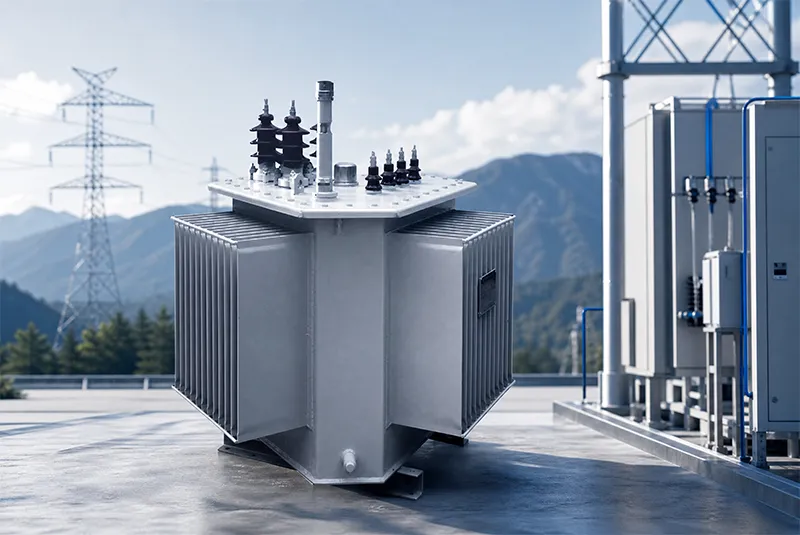
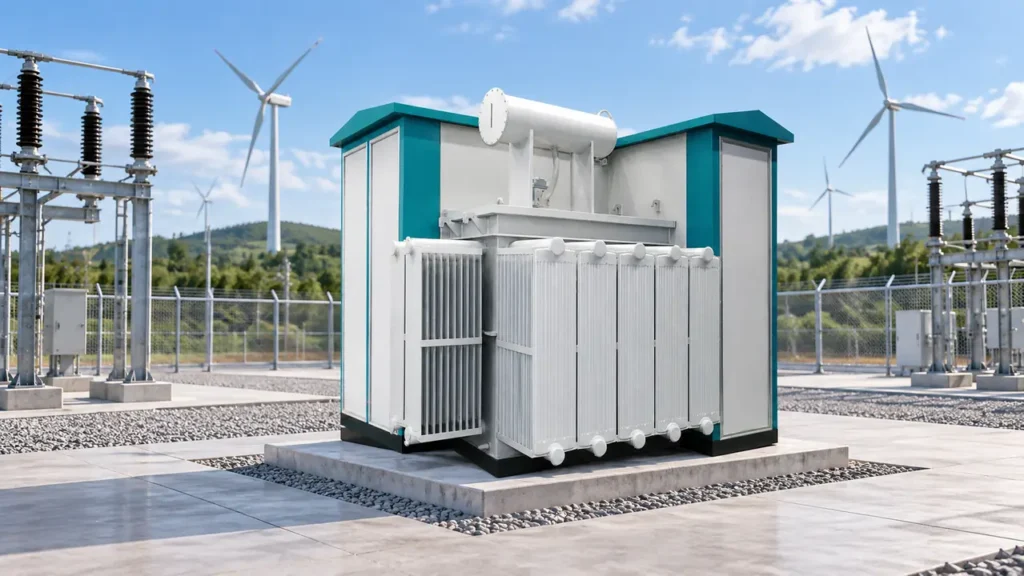
This real product photo helps buyers assess the oil-immersed assembly they must accommodate, including cooling surfaces, conservator and accessory positions, access around terminals, and the location to confirm nameplate data.
A Three-Dimensional Rolled Iron Core Transformer selection matrix turns site conditions into bid requirements.
Core geometry alone does not define the right application. Use this matrix to turn site conditions into questions every bidder answers on the same basis.
Application condition
Priority to define
Evidence to request
Decision risk if omitted
Urban compact substation
Outline, bushing orientation, noise, ventilation, fire and oil-containment interfaces
Certified outline drawing, sound-test basis, cooling data, accessory list
Late civil-work or cable-routing changes
Rural grid extension
Voltage ratio, tap range, overload profile, transport route, and maintenance support
Rated-data sheet, mass and dimensions, routine-test plan, spares list
Voltage quality or logistics problems after delivery
Industrial plant expansion
Vector group, impedance, fault duty, harmonics, and parallel operation
System-study inputs, impedance guarantee, connection diagram, test records
Protection-coordination or paralleling failure
Hot or high-altitude site
Ambient temperature, altitude, temperature rise, cooling margin, and insulation coordination
Derating assessment, cooling designation, temperature-rise test basis
Overheating or shortened insulation life
Efficiency-led replacement
Actual energization hours, load curve, loss values, and loss-capitalization rule
Guaranteed losses and the stated reference conditions
A 3D wound core power transformer claim needs standards, test evidence, and market-specific checks.
IEC 60076-1 applies to three-phase and single-phase power transformers, including autotransformers, with stated exclusions; it sets general requirements and test concepts, while other parts cover specific subjects. It is a technical standard, not a certificate a manufacturer or transformer automatically “has.” State the edition and applicable parts, then request routine, type, or special test evidence for the delivered scope.
For the United States, federal distribution-transformer energy rules appear in 10 CFR Part 431, Subpart K; applicability depends on classification and market route. In the EU, Commission Regulation (EU) 2019/1783 establishes power-transformer ecodesign requirements. Neither automatically governs another market; confirm the destination obligations and declarations before making compliance claims.
Dielectric and temperature-rise evidence deserves the same attention as loss data. Ask which IEC 60076 parts and test methods apply, whether evidence is from the offered design or individual unit, and whether it is routine, type, or special. A report from a different rating, voltage class, or cooling arrangement is not automatically proof for the supplied transformer.
A Stereo rolled core oil-immersed transformer procurement package should close the review gaps.
Use these actions to make the technical review auditable:
Freeze system inputs. Confirm rating, voltage ratio, frequency, vector group, impedance, neutral arrangement, taps, fault level, and parallel-operation needs.
Issue one loss and thermal schedule. State loss limits and reference temperature, cooling, ambient, altitude, temperature rise, and capitalization rule.
Make interfaces visible. Request a dimensioned outline, terminal plan, clearances, mass, oil data, cooling details, accessories, and transport constraints before civil work is released.
Turn tests into deliverables. Identify IEC 60076 parts, required tests, witness points, report format, nameplate data, and serial-number traceability.
Compare like with like. Tabulate deviations, exclusions, lead time, service, and documents; do not score a Stereo rolled core oil-immersed transformer only on core terminology.
Jubang Group / Jubang Electric can be approached as a sourcing partner when the buyer needs the offered configuration and documentation set aligned to a project specification. Start from the system data and approval package, then ask how the available product configuration addresses the required core, losses, vector group, cooling, insulation, taps, and tests.
What is the difference between a 3D wound core and a laminated transformer core?
A wound core uses wound electrical-steel sections, whereas a laminated core is assembled from cut and stacked sheets. This can influence core-loss behavior and layout, but does not determine full performance. Compare guaranteed losses, impedance, thermal design, interfaces, and test evidence for the offered unit.
Is a Three-Dimensional Rolled Iron Core Transformer always more efficient?
No. Core design can support lower no-load loss, but the result depends on steel, flux density, core mass, manufacturing, and test conditions; load loss also depends on winding design. Require guaranteed losses with their measurement basis and evaluate them against the duty cycle.
Which tests should I request for a 3D wound core power transformer?
List the IEC 60076 general and subject-specific requirements, then the routine, type, and special tests required by the contract. The package should address ratio, winding resistance, impedance, losses, dielectric performance, and temperature rise where applicable. The final list depends on the rating, voltage class, and project specification.
Can a Stereo rolled core oil-immersed transformer operate in parallel with an existing transformer?
Possibly, but core type alone does not establish compatibility. The electrical engineer must check voltage ratio, vector group, polarity and phase displacement, impedance, tap position, frequency, and capacity against the existing unit and the system study. Obtain approval before committing to the purchase order.
Does IEC 60076 certification prove a transformer is compliant?
No. IEC 60076 is a standards series, not a blanket product certification. Compliance for a project is demonstrated through an agreed specification, applicable test evidence, and any destination-market legal or contractual documents; confirm exactly what claim and document are required before marketing or accepting the transformer.
A Three-Dimensional Rolled Iron Core Transformer decision should end with traceable evidence.
The durable procurement principle is simple: choose the core design only after the duty, interfaces, losses, tests, and evidence describe one coherent transformer. When that package is ready, review Jubang Electric’s three-dimensional wound-core transformer product option and contact the team with the project data sheet for a configuration discussion.
Products are exported to more than 100 countries and regions such as Africa, the Middle East, and the United Kingdom and Europe. It is a leading manufacturer of power distribution equipment in China.

 JUBANG