JUBANG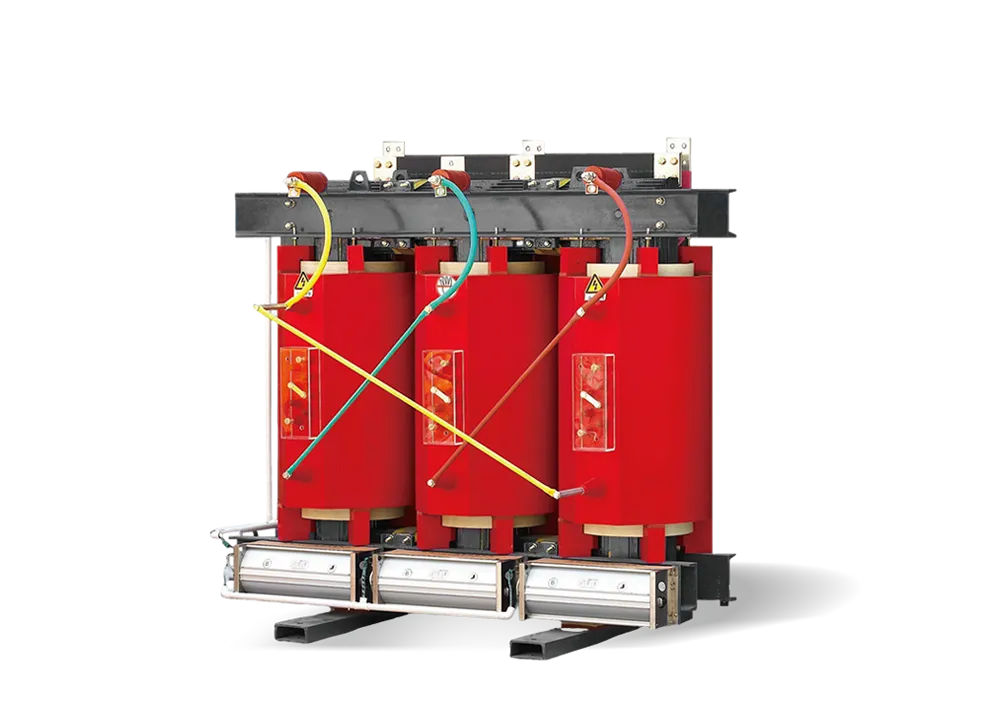

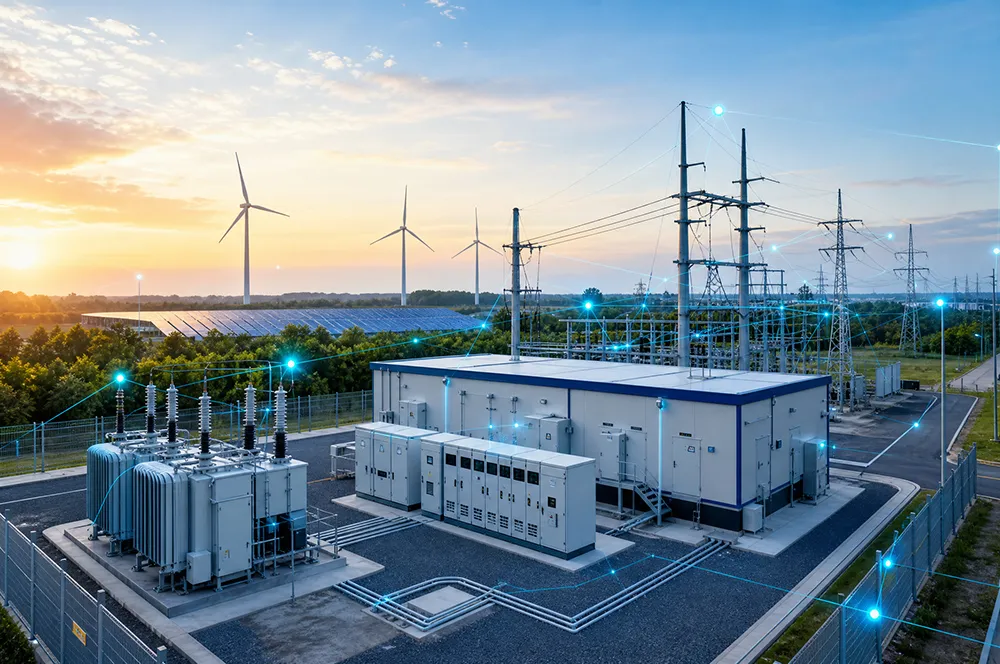

Summary: An oil-immersed transformer for rural grid renovation should be purchased from a defined load forecast, voltage plan, impedance and tap requirements, ambient conditions, loss evaluation, and acceptance-test schedule. For a three-phase system, apparent power is S = √3 × VLL × IL; this relationship prevents a kVA label from being treated as a complete selection basis. We recommend awarding only after the supplier has submitted a guaranteed data sheet, loss values, routine-test records, transport plan, and conformity evidence against the named IEC or local standard.
A Three-phase oil-immersed power transformer begins with the feeder and load forecast
Rural distribution projects are governed by the network around the transformer, not by nameplate power alone. The EPC team should define the primary nominal voltage, secondary voltage, frequency, vector group, neutral-earthing arrangement, expected source-voltage range, present demand, and credible load growth over the asset-planning period.
For three-phase operation, rated current follows the apparent-power relationship below. At either 50 Hz or 60 Hz, the selected unit must match the system frequency and voltage tolerances stated by the purchaser; a 50 Hz design cannot be assumed suitable for a 60 Hz duty without the manufacturer’s documented review.
Three-phase apparent power:  S = √3 × V_LL × I_L
Rated line current:          I_L = S / (√3 × V_LL)
IEC 60076-1 establishes general requirements for power transformers, including ratings, tests, and information to be provided by the manufacturer. It gives the procurement team a common technical language, but it does not choose the correct kVA, tap range, or network impedance for a specific rural feeder; those remain project decisions.
World Bank energy-access work links reliable electricity access to service delivery and productive use. That is why a low initial price should not displace evidence of loss performance, site suitability, and maintainable protection arrangements.
An oil-immersed transformer for rural grid renovation needs a complete technical schedule
Which ratings belong on the purchase specification?
The technical schedule should state rated power in kVA or MVA, HV and LV rated voltages, frequency, number of phases, vector group, tapping range and method, impedance, cooling designation, insulation level, and terminal arrangement. For an oil-immersed transformer for rural grid renovation, “10 kV transformer” is incomplete because it does not state the secondary voltage, connection group, capacity, or conditions under which the unit must carry load.
IEC 60076-1 requires agreed ratings and test-related information to be identified; IEC 60076-2 addresses temperature-rise requirements for liquid-immersed transformers. The supplier should confirm guaranteed temperature-rise limits and cooling mode on the data sheet, rather than relying on an informal statement that the unit is “suitable for hot climates.”
Why do impedance and tap range affect rural service quality?
Transformer impedance influences both voltage regulation and the available fault current seen by downstream protection. A lower or higher percentage value is not universally better: it must coordinate with feeder length, conductor size, source strength, protection devices, and the allowable voltage drop at remote consumers.
The tap range is the practical adjustment available when source voltage and feeder voltage drop vary. A no-load tap changer requires de-energization for adjustment; an on-load tap changer is a different scope with different cost and maintenance implications. The RFQ should state the required tap positions and method instead of leaving the supplier to assume a catalogue default.
What must be checked for a wet or dusty remote site?
The site record should cover maximum and minimum ambient temperature, altitude, rainfall, flooding exposure, salt or industrial contamination, dust, access-road limits, seismic requirement where applicable, and security. A remote site turns minor omissions into costly interventions because oil sampling, bushing replacement, tap adjustment, and leak repair may require travel, lifting equipment, and an outage window.
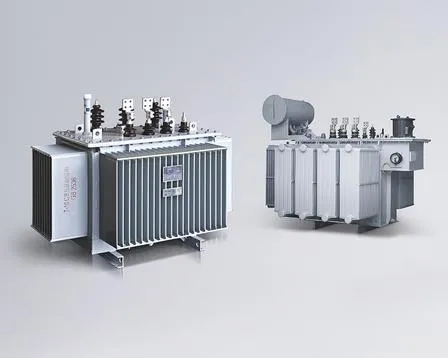
For a Three-phase oil-immersed power transformer, the required accessory scope may include a conservator arrangement, breather, oil-level indication, temperature indication, pressure-relief device, drain and sampling valves, surge arresters, and marshalling provisions. The exact package must follow the project protection philosophy and the stated IEC or national standard—not a generic export list.
Which tests should be included before shipment?
IEC 60076-1 routine tests provide the baseline acceptance structure, while the purchaser’s specification should identify any type, special, witness, or third-party inspection requirement. The test plan should name the serial number, agreed ratings, tap position, test voltage, measured no-load loss, load loss, impedance, ratio, and dielectric-test results that will appear in the final report.
Factory acceptance is not a substitute for site checks. Before energization, the EPC team should verify transport condition, oil level, bushing integrity, earthing, terminal identification, protection settings, and the final tap position. This pre-energization installation guide provides a useful project-side checklist.
A Three-phase oil-immersed power transformer should be evaluated by total delivered cost
A rural project can overpay even when its purchase order looks inexpensive, because transport, lifting, losses, outages, spare accessories, and incomplete test documentation shift cost outside the quoted transformer line. The comparison below uses the same technical scope; without that discipline, bidders are not offering equivalent equipment.
| Comparison factor | Lowest initial-price offer | Specification-led offer | Project consequence |
|---|---|---|---|
| Guaranteed losses | Loss values may be absent or stated without a test basis | No-load and load losses are guaranteed and reported in routine-test records | Enables an energy-cost comparison over the service life. |
| Voltage and tap data | Catalogue voltage may be quoted without feeder review | HV/LV ratings, vector group, tap range, and impedance are stated | Reduces voltage-regulation and protection-coordination rework. |
| Remote-site accessories | Basic tank and bushings only | Accessory schedule matches monitoring, safety, and maintenance needs | Fewer field modifications and unplanned site visits. |
| Inspection evidence | Generic certificate with unclear serial traceability | Serial-numbered data sheet, test report, drawings, and packing record | Improves acceptance, warranty administration, and asset records. |
| Freight and installation scope | Crating, oil handling, lifting, and site support may be excluded | Responsibility matrix lists inclusions and exclusions | Prevents budget leakage after the equipment arrives. |
The honest answer is that a higher quoted price is not automatically a better technical decision. However, the buyer cannot judge price until every bid uses the same power rating, loss capitalization rule, impedance, taps, accessory list, test scope, delivery term, and warranty boundary.
Oil-immersed transformer manufacturer direct sale quotations must disclose cost drivers
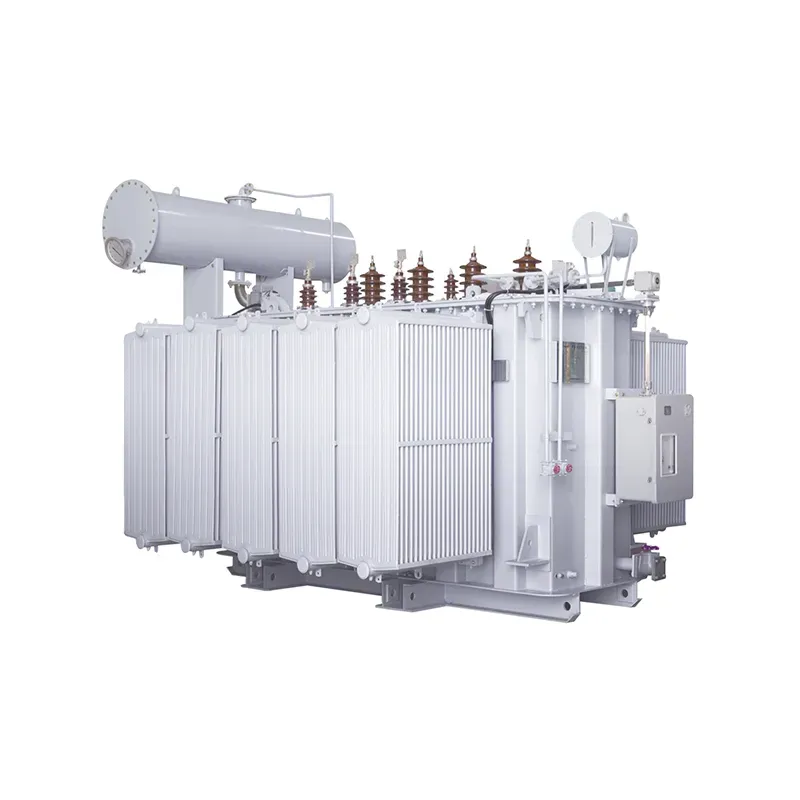
Direct sourcing can reduce unnecessary commercial layers, but it does not remove the need for engineering review. A factory quotation is only comparable when the purchaser can see what is included in the active part, cooling system, insulating oil, tank, bushings, tap arrangement, protection accessories, test records, packing, and after-sales support.
A genuine oil-immersed transformer manufacturer direct sale offer should identify the manufacturing entity, factory address, data-sheet revision, applicable standard, test location, production lead time, delivery term, warranty boundary, and named contact for technical deviations. Those items distinguish technical accountability from a price-only forwarding arrangement.
| Cost driver | What changes the price | What the EPC buyer should request |
|---|---|---|
| Core and winding design | Rated power, loss guarantee, conductor material, and temperature-rise duty | Guaranteed no-load/load losses and the routine-test basis. |
| Insulation and environment | Insulation level, creepage, bushings, sealed or conservator arrangement, and accessories | Environmental schedule and accessory list by item number. |
| Tap and impedance | Tap range, changer type, voltage ratio, vector group, and fault-duty coordination | Approved single-line data and guaranteed impedance at the named base. |
| Quality and tests | Routine tests, witness testing, third-party inspection, and document package | Inspection and test plan before production release. |
| Logistics | Transport weight, packing, accessories, oil supply, site supervision, and spares | Shipping dimensions, packing list, lifting points, and responsibility matrix. |
Price requests should include the project country, utility standard, system voltage, frequency, kVA rating, load profile, short-circuit data, tap requirement, vector group, impedance, ambient conditions, altitude, accessories, delivery term, and required tests. For loss comparisons before award, the project team can use this transformer-loss comparison guide.
An oil-immersed transformer for rural grid renovation must meet applicable standards
Standards establish a verifiable scope; they are not decorative text on a quotation. IEC 60076-1 covers general transformer requirements, IEC 60076-2 addresses temperature rise for liquid-immersed transformers, GB/T 1094 is the relevant Chinese transformer-standard series, and ANSI C57.12.00 is commonly used for liquid-immersed distribution and power transformer requirements in relevant North American specifications.
| Reference | What it supports | Commercial risk if omitted |
|---|---|---|
| IEC 60076-1 | General ratings, requirements, and testing framework | Ambiguous ratings, missing test evidence, and weak data-sheet control. |
| IEC 60076-2 | Temperature-rise requirements for liquid-immersed transformers | Unclear thermal-duty basis for high-ambient or heavily loaded sites. |
| GB/T 1094 | Transformer technical requirements and test framework used in Chinese supply chains | Mismatch between factory documents and acceptance language. |
| ANSI C57.12.00 | Applicable liquid-immersed distribution and power transformer requirements | Potential incompatibility with utility or project-specific requirements. |
| ISO 9001 | Quality-management-system controls | Inconsistent traceability, document control, or corrective-action handling. |
ISO 9001 certification demonstrates a quality-management system, not a blanket technical approval for every transformer. The buyer should require the named standard, data sheet, drawings, test plan, and inspection records for the exact serial-numbered unit; this avoids treating a corporate certificate as proof of product conformity.
Oil-immersed transformer manufacturer direct sale needs a controlled five-step release
- Freeze the network inputs. Confirm nominal voltage, frequency, load forecast, system earthing, fault level, feeder length, and the required LV service quality before issuing the RFQ.
- Approve the technical schedule. State kVA, voltage ratio, vector group, impedance, tap arrangement, cooling, losses, insulation level, accessories, ambient conditions, and required standards.
- Evaluate losses and operating risk. Compare guaranteed no-load and load losses on the same base, then consider access difficulty, maintenance capability, monitoring needs, and outage consequence.
- Lock the inspection plan. Identify routine tests, witness or third-party inspection, report format, factory acceptance criteria, and required actions if measured values deviate.
- Protect delivery and handover. Require approved drawings, serial-numbered records, packing instructions, transport constraints, site checks, warranty contacts, and spare-accessory recommendations.
Jubangele provides three-phase oil-immersed power transformers, oil-immersed distribution transformers, prefabricated substations, dry-type transformers, and MV/LV distribution equipment with ISO 9001 quality-management controls, CE documentation where applicable, and IEC-standard product documentation. For voltage-range selection, engineers can review the available 6–10 kV oil-immersed transformer options before submitting a network-specific RFQ.
A Three-phase oil-immersed power transformer FAQ answers rural procurement questions
How do I choose the right transformer size for a rural grid project?
Start with measured or forecast diversified load, power factor, load growth, feeder voltage drop, ambient conditions, and the utility’s permitted loading approach. Select the kVA together with voltage ratio, taps, impedance, and loss guarantees; oversizing without a load plan can add avoidable capital and no-load losses.
What information should a transformer manufacturer provide before an order?
The buyer should receive an approved data sheet, outline drawing, connection diagram, guaranteed losses, impedance, tap details, accessory schedule, routine-test plan, quality documents, packing information, warranty terms, and a serial-numbered final test report. A quotation that cannot state these items cannot be technically compared.
What is the difference between an oil-immersed and a dry-type transformer?
Oil-immersed units use insulating liquid for insulation and cooling, while dry-type units use solid insulation and air-based cooling arrangements. Site fire strategy, indoor or outdoor location, environmental exposure, rating, maintenance approach, and local code determine the suitable option; see this oil-immersed versus dry-type selection guide for a project comparison.
Why are transformer losses important in rural electrification?
No-load loss is present whenever the transformer is energized, while load loss changes with current. On long-life distribution assets, both affect energy cost and heat generation, so the RFQ should require guaranteed values and the factory report should show measured values at the agreed test conditions.
Can an oil-immersed transformer operate in a hot and humid location?
It can be designed for the stated environment when ambient temperature, altitude, rain, dust, corrosion, sealing arrangement, bushing creepage, and accessory requirements are correctly specified. The buyer should not accept a generic climate claim; IEC 60076-2 thermal information and the project environmental schedule need to agree.
Documented duty and test evidence make rural transformer procurement defensible
- International Energy Agency: Global Electricity Review.
- Hitachi Energy — Distribution Transformers.
- World Bank: energy access and rural electrification resources.
- ISO: ISO 9001 quality management.
- Hitachi Energy — Distribution Transformers.
Jubangele builds distribution-transformer solutions for that moment, when a rural feeder must become a reliable long-life asset. Review the Jubangele power-transformer range or contact the technical team with the network schedule, environment, and inspection requirements for a specification-led quotation.