JUBANG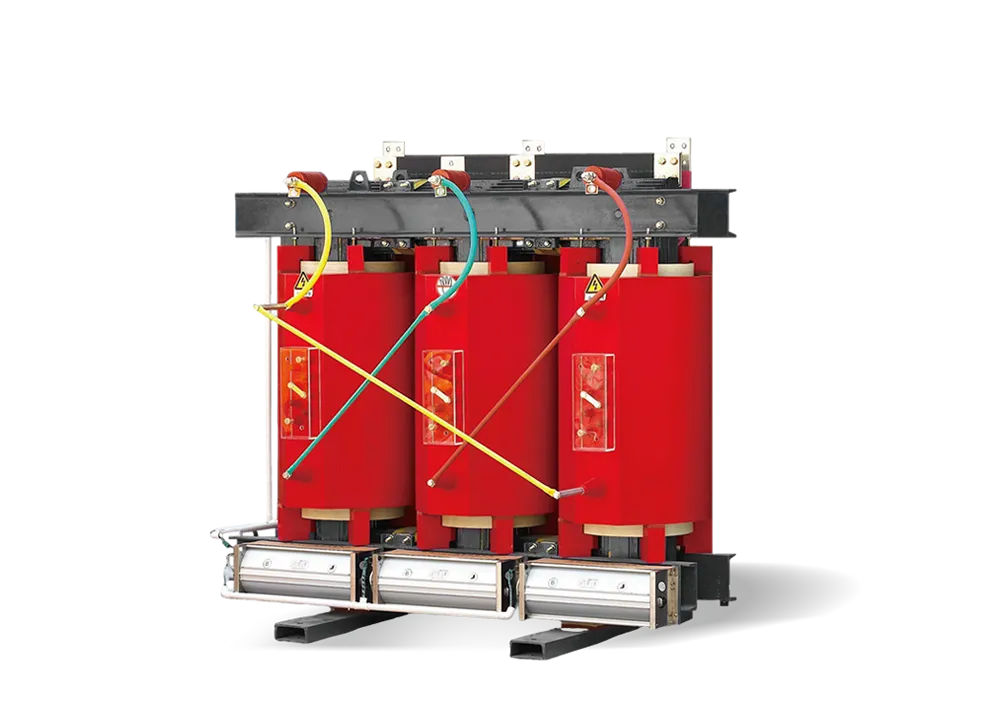

Summary: The right selection starts with system voltage, capacity, impedance, losses, insulation level, vector group, cooling, ambient temperature, and authority requirements—not the lowest kVA price. A Power Transformer series should be compared on evaluated lifecycle cost and a common scope. The specification 6-10kV Oil-immersed Power Transformer/35kV Oil-Immersed Power Transformer represents two distinct insulation and system classes, while current transformers serve metering and protection rather than power conversion. For Dubai, any 50°C-plus exposure must be declared as a special service condition and supported by thermal calculations, approved drawings, and project-specific testing.
How does the Power Transformer series cover 6–35kV distribution duties?
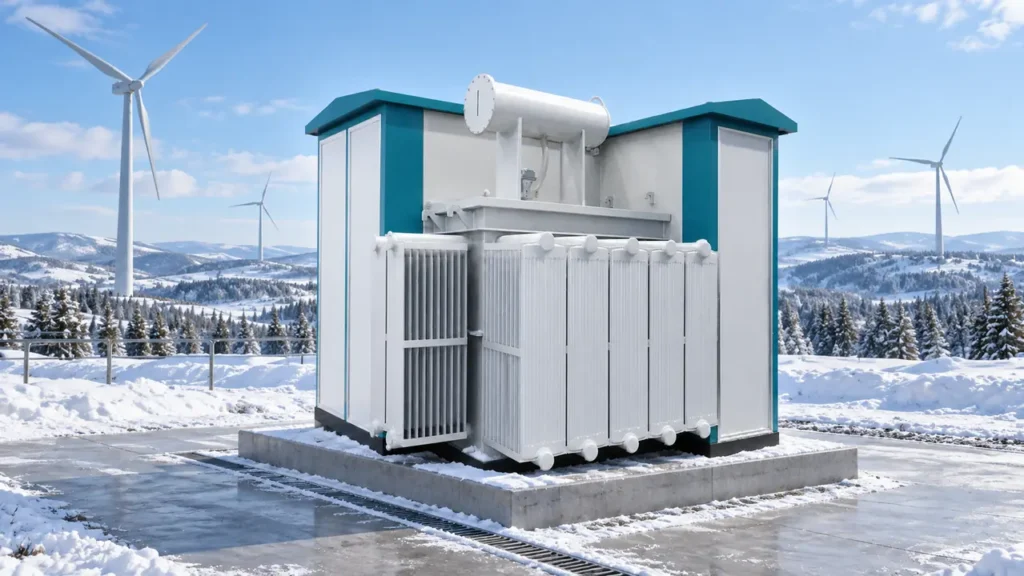
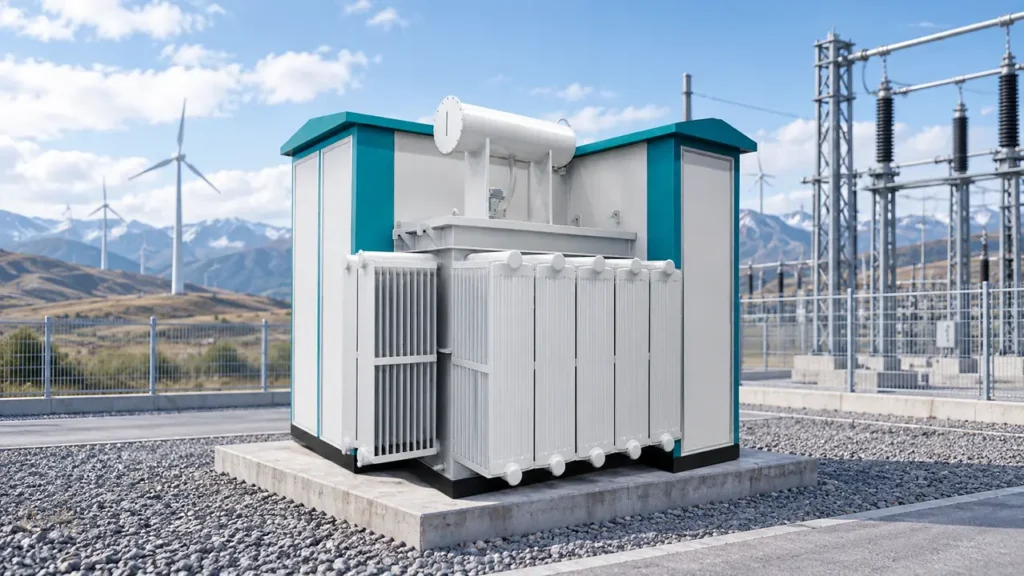
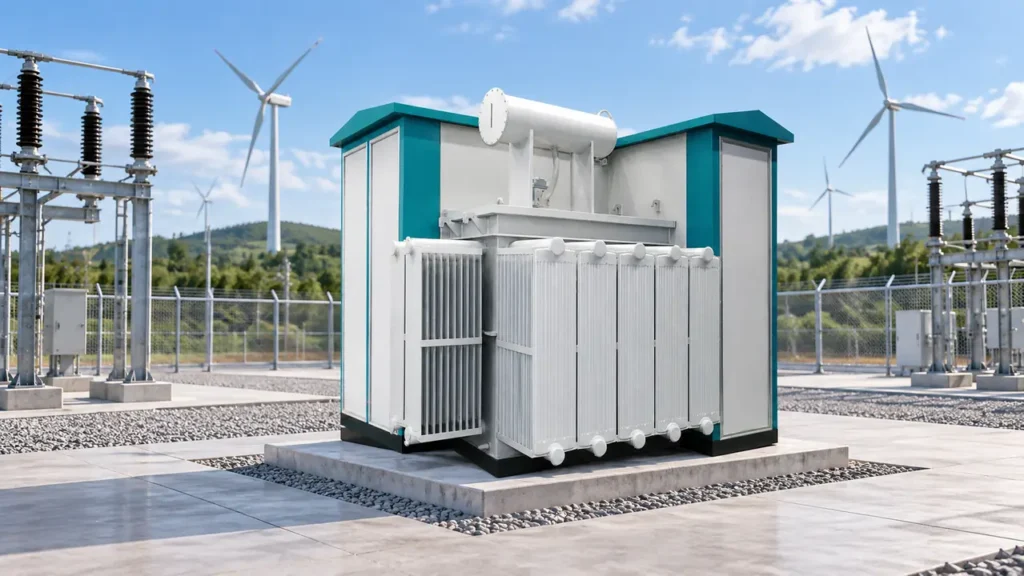
An oil-immersed unit uses insulating liquid both as dielectric insulation and as a heat-transfer medium. The core and windings sit inside a sealed or conservator-type tank; heat passes from the active part to the oil and then through radiators or corrugated tank walls to the surrounding air. That arrangement gives the technology a strong combination of compactness, thermal capacity, and cost efficiency for utilities, industrial plants, renewable-energy stations, and packaged substations.
The buyer should not treat a catalogue Power Transformer series as one scalable machine. Rated voltage changes dielectric clearances, impulse withstand, bushing selection, test levels, tank geometry, and often the protection philosophy. Rated capacity changes conductor section, loss level, oil volume, transport mass, cooling surface, and short-circuit forces. A technically complete enquiry must therefore state both the network duty and the installation environment.
What changes between 6–10kV and 35kV oil-immersed transformer designs?
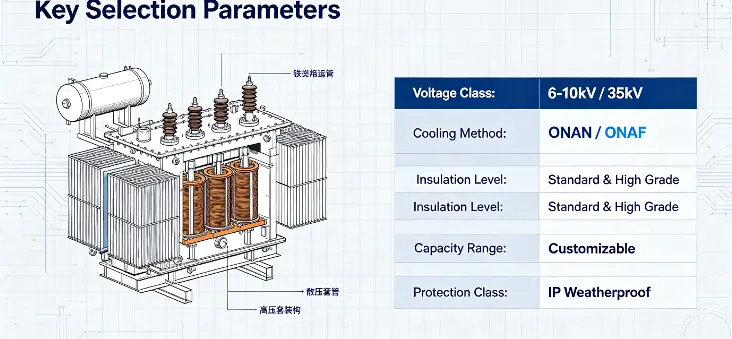
The procurement phrase 6-10kV Oil-immersed Power Transformer/35kV Oil-Immersed Power Transformer is useful for search, but it should be separated into two schedules during engineering. A 10kV/0.4kV distribution unit commonly feeds building or industrial low-voltage loads; a 35kV unit may step down to 10.5kV, 6.3kV, 3.15kV, or 0.4kV depending on the grid architecture.
JUBANG’s published 6–10kV S11 data include capacities from 30 to 2500 kVA for a representative 0.4kV secondary schedule, with typical short-circuit impedance examples of 4.0% at lower ratings, 4.5% around the middle of the range, and 5.0% at larger ratings. Its 35kV page publishes a separate S11 table extending into multi-MVA ratings and shows higher impedance values for larger designs. These are catalogue references—not substitutes for the approved guaranteed technical particulars.
Why are current transformers not substitutes for a power transformer?
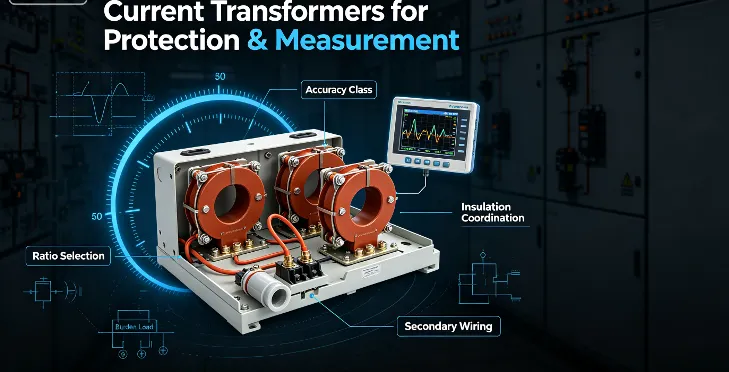
Current transformers reproduce primary current at a standardized secondary level for meters, relays, and control devices. They do not transfer bulk power to a utilization voltage. Their selection depends on ratio, burden, accuracy class, protection class, knee-point or transient requirements where applicable, and short-time thermal current. Mixing their specification with the main transformer rating creates two common errors: an unsuitable relay input and an incomplete switchgear scope.
How should a Power Transformer series be sized for capacity, impedance, and losses?
Capacity should be derived from an approved load list—not from connected load alone. The study should account for demand factors, motor starting, harmonic-producing loads, future expansion, emergency operating modes, photovoltaic export, battery charging, and permissible loading. A 1600 kVA unit continuously serving 900 kVA may be inefficiently oversized; the same unit serving a rapidly expanding data or mixed-use project may be prudent when the growth profile is documented.
The engineering sequence is straightforward:
- Establish the maximum diversified kW and kvar demand for each operating case.
- Convert demand to kVA using the lowest credible operating power factor.
- Check motor starting and voltage-dip limits at the low-voltage bus.
- Apply the project’s contingency and future-growth philosophy.
- Verify normal and emergency loading against IEC 60076 guidance and the manufacturer’s thermal model.
- Run short-circuit and protection-coordination studies using the guaranteed impedance, not a generic percentage.
Impedance is a system parameter as much as a transformer parameter. Raising it reduces prospective short-circuit current but increases voltage drop; lowering it improves regulation but can push downstream switchgear beyond its fault rating. The selected 6-10kV Oil-immersed Power Transformer/35kV Oil-Immersed Power Transformer must therefore be checked together with the medium-voltage breaker, low-voltage main device, cable withstand, busbar rating, and relay settings.
Losses also need separate treatment. No-load loss is present whenever the transformer is energized; load loss rises approximately with the square of load current. At an electricity value of USD 0.10/kWh, every additional 1 kW of continuous no-load loss costs USD 876 per year, or USD 17,520 over 20 years before discounting and escalation. That simple arithmetic explains why an apparently cheaper quotation can have the higher evaluated cost.
How does Dubai heat change a 6-10kV Oil-immersed Power Transformer/35kV Oil-Immersed Power Transformer?
Ambient temperature is not a note added after selection; it sets the thermal boundary. JUBANG’s published normal service conditions for its 6–10kV product state a maximum ambient temperature of 45°C and an altitude not exceeding 1000 m. A Dubai project that can expose equipment to 50°C or more is therefore outside that published normal envelope and must be declared as a special service condition.
The supplier’s thermal review should address:
- maximum, daily-average, and annual-average ambient temperatures;
- solar radiation on the transformer tank or prefabricated enclosure;
- ventilation inlet temperature and recirculation inside the station;
- permitted top-oil and winding temperature rises;
- loading profile, harmonic content, and emergency overload duration;
- radiator surface, oil volume, fan redundancy if forced cooling is used, and alarm settings;
- dust, sand, corrosion category, sealing, paint system, and maintenance access.
The practical options may include a lower loss design, additional cooling surface, a derated nameplate, forced-air cooling, a larger enclosure, or a different installation arrangement. A dry-type unit may reduce liquid-fire concerns indoors, but it does not automatically solve a 50°C ventilation problem and may carry a higher initial cost. The correct comparison is thermal capability against the same load profile and fire strategy.
When the transformer will be installed inside a prefabricated substation, the enclosure is part of the thermal system. IP protection, louver design, fan control, internal arc strategy, cable entry, transformer clearances, and low-voltage heat release must be reviewed together. A high IP rating can keep out dust yet restrict airflow; specifying “IP54 minimum” without a heat-balance calculation can make the enclosure safer from sand and less reliable thermally.
How should current transformers, tap range, vector group, and protection be coordinated?
The electrical interfaces decide whether a transformer can be commissioned without last-minute relay changes. The schedule should state high- and low-voltage ratings, system highest voltage, frequency, phase count, vector group, neutral treatment, tap range, insulation levels, impedance tolerance, and terminal arrangement. JUBANG’s published 6–10kV examples include ±2 × 2.5% and ±5% off-circuit tapping options and common vector groups such as Dyn11, Yzn11, or Yyn0 for particular ratings; the final choice must follow the network study.
Current transformers should be coordinated at the same time because protection stability depends on their ratio, class, burden, and location. The buyer should ask:
- Are the devices supplied in the transformer bushings, the MV panel, or both?
- Are separate metering and protection cores required?
- Do the ratio and accuracy class match the utility meter and protection relay?
- Does the short-time current rating exceed the calculated fault duty for the clearing time?
- Are terminal blocks, test links, earthing points, wiring diagrams, and polarity marks included?
The transformer incomer and outgoing feeder equipment should be reviewed through one coordination study. A compatible switchgear and ring main unit interface reduces drawing conflicts, but common manufacturing responsibility does not remove the need to verify IEC ratings, internal arc classification where required, cable terminations, interlocks, and protection settings.
Which Power Transformer series option offers the best lifecycle value?
The lowest capital price is useful only when the offers have the same boundaries. The table below compares common options on a normalized basis; it is a procurement framework rather than a price quotation.
| Option | Initial cost tendency | Thermal and site considerations | Maintenance and risk | Best-fit applications |
|---|---|---|---|---|
| 6-10kV Oil-immersed Power Transformer/35kV Oil-Immersed Power Transformer | Usually competitive per kVA, but 35kV insulation and accessories raise cost | Strong thermal performance; requires oil containment, ventilation, and declared high-ambient conditions | Oil sampling, sealing, bushings, protection devices, and fire provisions must be planned | Utility distribution, industrial plants, renewable stations, outdoor substations |
| Resin-insulated dry-type transformer | Often higher for an equivalent duty | No insulating liquid; enclosure ventilation and ambient derating remain important | Reduced liquid-management burden; dust cleaning and fan maintenance may apply | Indoor buildings, fire-sensitive areas, tunnels, hospitals, and data facilities |
| Integrated prefabricated substation | Higher package price, but site work can be lower | Factory-integrated thermal, IP, switchgear, LV panel, and cable interfaces | One interface simplifies coordination; package FAT and spare-parts scope become critical | Fast-track EPC projects, solar and wind sites, commercial developments |
| Main transformer plus separately purchased instrument transformers and switchgear | Can look cheaper line by line | Greater freedom to select brands, but more interface engineering | Higher risk of ratio, wiring, terminal, and protection mismatches | Projects with a strong owner standard and experienced system integrator |
What drives the purchase price of a Power Transformer series?
A credible quotation should separate the base transformer from project options. For the 6-10kV Oil-immersed Power Transformer/35kV Oil-Immersed Power Transformer category, capacity alone is a poor price comparator because conductor material, guaranteed losses, test levels, tap equipment, cooling, accessories, and export logistics can change the offer substantially.
| Cost driver | Typical price impact | What the buyer should request | Hidden-cost warning |
|---|---|---|---|
| Rated kVA and voltage class | High | Guaranteed data for each rating and winding combination | Do not compare a 35kV design with a 10kV insulation schedule |
| Copper or aluminium winding | High | Conductor material, winding mass where contractually required, and resistance test | Ambiguous wording can conceal a materially different design |
| No-load and load losses | Medium to high | Guaranteed watts, tolerance, test method, and loss-capitalization formula | A low bid can cost more over 20–30 years |
| Special 50°C-plus service | Medium to high | Thermal calculation, temperature-rise limits, cooling arrangement, and derating statement | Standard radiators may not support the quoted nameplate continuously |
| Tap changer and voltage regulation | Medium to high | Off-circuit or on-load type, range, steps, controls, and maintenance requirements | An OLTC is a system decision, not a late accessory |
| Bushings, relays, gauges, and marshalling | Medium | Detailed bill of materials and terminal schedule | Base quotations often omit utility-specific accessories |
| Protection and instrument-transformer package | Medium | Ratio, cores, class, burden, short-time rating, wiring, and test certificates | Protection redesign can delay energization |
| Type, routine, and special tests | Medium | IEC clause, acceptance criteria, witness points, and report format | “Tested” may mean routine tests only |
| Enclosure, IP rating, and package integration | Medium to high | Heat balance, GA drawing, SLD, interfaces, and internal wiring scope | Higher IP can increase enclosure cooling requirements |
| Export packing and delivery | Project-dependent | Incoterm, port, shock limits, oil shipping condition, insurance, and site handling plan | Oversize transport and reassembly may sit outside the factory price |
Which standards govern the Power Transformer series and current transformers?
IEC 60076 is the primary international framework for the transformer itself. IEC 60076-1 covers general requirements; IEC 60076-2 addresses temperature rise for liquid-immersed transformers; IEC 60076-3 covers insulation levels and dielectric tests; IEC 60076-5 addresses the ability to withstand short circuit; and IEC 60076-7 provides loading guidance. The project specification should identify editions and any local deviations rather than writing only “IEC compliant.”
The 6-10kV Oil-immersed Power Transformer/35kV Oil-Immersed Power Transformer schedule should also be reconciled with the utility’s voltage, earthing, loss, protection, test, documentation, and approved-vendor requirements. In Dubai, the latest applicable DEWA circulars and project guidelines should be obtained at tender stage; a previous project’s approval is not evidence of automatic acceptance for a new site.
IEC 61869-1 and IEC 61869-2 govern instrument-transformer requirements relevant to inductive current transformers. IEC 62271 applies to high-voltage switchgear and controlgear, while IEC 61439 applies to low-voltage assemblies. These interfaces matter whenever a transformer is delivered inside a packaged station.
CE marking and the EU Low Voltage Directive should not be used as shorthand for high-voltage transformer approval. The LVD voltage scope is 50–1000 V AC and 75–1500 V DC; the low-voltage assembly or components may fall within that scope, but a 6–35kV winding does not become compliant merely because a CE logo appears on a brochure. RoHS applicability and exemptions must likewise be checked against the actual supplied product and destination.
Non-compliance has measurable commercial consequences: rejected submittals, repeated tests, revised enclosures, port storage, delayed energization, liquidated damages, and loss of utility acceptance. A certificate should therefore be checked for issuing body, model coverage, manufacturing site, standard edition, validity, and test scope.
How should buyers qualify JUBANG’s Power Transformer series before ordering?
The first brand-related decision point comes after the duty and standards are fixed. JUBANG provides transformer, prefabricated-substation, switchgear, ring-main-unit, medium-voltage breaker, and low-voltage assembly options; the company states that it has operated since 1993 and supports its manufacturing with a CNAS-accredited laboratory, while KEMA, CE, and DEKRA RoHS evidence is available across relevant product families. The buyer should request the exact certificate or report covering the offered model—company-level credentials do not replace product-level compliance.
For an OEM or ODM project, a controlled workflow is more reliable than exchanging catalogue screenshots:
- Enquiry definition: issue the SLD, load schedule, impedance study, protection philosophy, environmental data, utility requirements, and commercial boundary.
- Technical clarification: close every deviation for the 6-10kV Oil-immersed Power Transformer/35kV Oil-Immersed Power Transformer, including winding material, losses, vector group, taps, accessories, and tests.
- Interface design: approve the guaranteed technical particulars, outline drawing, foundation loads, cable entries, terminal arrangement, enclosure heat balance, and relay I/O.
- Manufacturing release: freeze drawings and establish document and inspection hold points before long-lead materials are committed.
- Factory acceptance: witness agreed routine and special tests, verify calibrated instruments, and reconcile nameplate data with the approved schedule.
- Delivery and handover: approve packing, shock and tilt controls, site assembly instructions, oil-handling procedure, spare parts, warranty contacts, and final dossiers.
The same review should close the scope for current transformers, MV panels, LV assemblies, and the prefabricated enclosure. Lead time should be stated as a milestone schedule—drawing submission, approval, material release, assembly, FAT, dispatch—not as one number beginning on an undefined date.
Five purchasing safeguards are especially useful:
- Do not approve capacity until normal, emergency, motor-starting, and future-load cases are complete.
- Do not accept a 50°C rating without a written thermal basis and enclosure heat balance.
- Do not compare prices until losses, conductor material, accessories, testing, packing, and commissioning are normalized.
- Do not accept “IEC/CE compliant” without identifying the exact standard, edition, report, model, and issuing body.
- Do not release manufacturing until the utility and consultant comments are closed in the approved drawings.
Which questions do buyers ask about the Power Transformer series?
How is the correct kVA size calculated for an oil-immersed transformer?
The maximum diversified kW should be divided by the lowest expected power factor, then checked against motor starting, harmonics, contingency, emergency loading, and documented future growth. Connected load alone normally overstates the requirement.
Is an oil-filled transformer cheaper than a dry-type transformer?
It is often more cost-effective per kVA, particularly outdoors, but the honest comparison must include oil containment, fire separation, maintenance, enclosure ventilation, losses, and site rules. A dry type can be economically preferable where indoor fire and liquid-management constraints dominate.
Can a 6-10kV Oil-immersed Power Transformer/35kV Oil-Immersed Power Transformer operate at 50°C?
It can only do so at the required load when the manufacturer has designed and documented the special service condition. The buyer should require a thermal calculation, temperature-rise limits, cooling details, derating statement, enclosure heat balance, and agreed acceptance tests.
Are current transformers normally included with a power transformer?
Not automatically. Current transformers may be installed in bushings, MV switchgear, metering panels, or protection panels. The purchase order must define their location, ratio, number of cores, class, burden, short-time rating, wiring, and test documents.
How long does a custom transformer take to manufacture?
There is no responsible universal answer. Capacity, voltage class, winding material, tap changer, special tests, enclosure integration, approval cycles, and raw-material availability all affect the schedule. A dependable quotation separates drawing approval, manufacturing, FAT, and shipping milestones.
Which references support this 6–35kV transformer buying guide?
- IEC 60076-1:2011, Power Transformers—General — rating, general requirements, and the foundation of the IEC 60076 series.
- IEC 61869-2:2012, Instrument Transformers—Additional Requirements for Current Transformers — requirements for newly manufactured inductive devices used with metering and protection equipment.
- IEA, Electricity 2026: Grids — reports more than 2,500 GW of projects in grid queues and estimates annual grid investment must rise about 50% from roughly USD 400 billion by 2030.
- Dubai Electricity and Water Authority, Circulars and Regulations — the official entry point for current Dubai distribution requirements and project guidance.
- JUBANG 35kV Oil-Immersed Power Transformer Technical Page — published voltage combinations, capacities, losses, impedance examples, weights, and dimensional references.