JUBANG


When a substation procurement lead in Jakarta approved a lower-loss transformer for a constrained urban site, the layout failed its transport review within two days: the enclosure clearance, lifting mass and thermal data did not reconcile. The unit was not necessarily a bad product; the selection had compared an efficiency headline with a footprint sketch, not one guaranteed design dossier under the same rating, impedance, temperature-rise limit and accessories.
Summary: The phrase Stereo rolled core transformer high efficiency long service life should trigger an evidence request, not an automatic award. Ask for guaranteed no-load and load losses measured under IEC 60076-1, a temperature-rise method under IEC 60076-2, short-circuit withstand evidence under IEC 60076-5, and an approved general-arrangement drawing. Likewise, 3D wound core transformer compact size light weight is meaningful only against a defined conventional alternative at equal kVA, voltage ratio, impedance, cooling duty and accessories. Compare annualized losses, installed envelope, shipping mass, hot-spot risk and maintainability in one technical schedule before calculating total cost.
Why Core Geometry Changes the Procurement Conversation
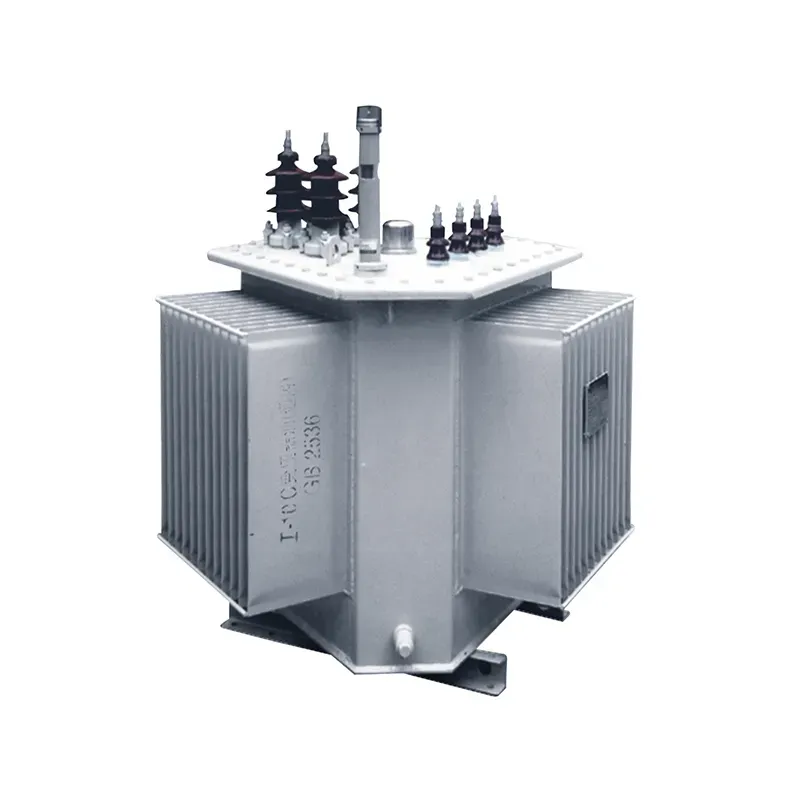
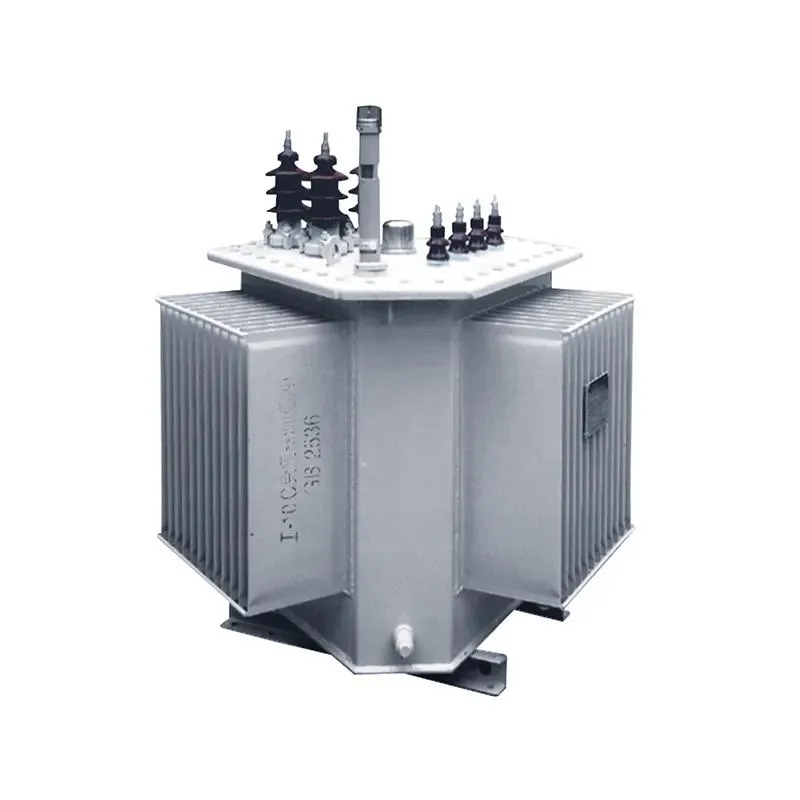
A three-dimensional wound core usually arranges three continuous magnetic circuits symmetrically around the windings. The intended benefit is a shorter, more balanced flux path with fewer joint discontinuities than a conventional stacked-lamination assembly. That physical logic can support lower excitation demand, reduced core vibration and a different tank layout, but it does not guarantee a result. Steel grade and thickness, flux density, cutting and winding stress, annealing, joint quality and clamping all influence the finished unit.
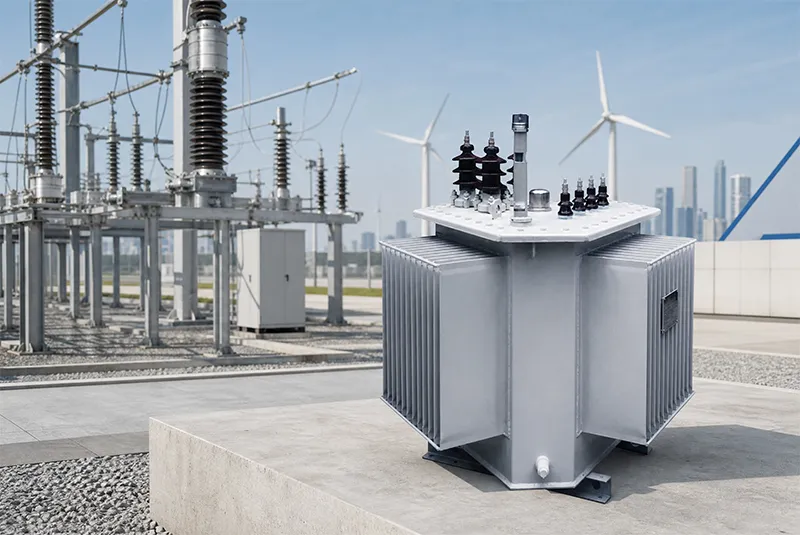
For this reason, Stereo rolled core transformer high efficiency long service life is a hypothesis about the complete design, while 3D wound core transformer compact size light weight is a comparative statement. IEC 60076-1 establishes general requirements and loss measurement conventions for power transformers, but it does not award either phrase to a core shape. Procurement teams need guaranteed values for the offered serial number or design family, plus tolerances, test status and the reference configuration.
Efficiency: Separate No-Load Loss from Load Loss
Stereo rolled core transformer high efficiency long service life often begins with no-load loss because the energized core consumes power every hour, including at light load. A wound core may reduce magnetic path discontinuities, yet actual no-load loss still depends on voltage, frequency, waveform and manufacturing stress. IEC 60076-1 distinguishes no-load loss and current from load loss and short-circuit impedance; buyers should never accept a single “efficiency” number without the test point and correction basis.
Load loss is primarily associated with winding resistance and stray effects, and it changes with current and temperature. A core improvement cannot offset undersized conductors or poorly controlled stray loss. Require guaranteed no-load loss in watts at rated voltage and frequency, load loss at the stated reference temperature, impedance, auxiliary consumption where relevant, and the applicable tolerances. For regulated destinations, add the local efficiency rule; IEC testing alone does not prove compliance with every national minimum-energy requirement.
Illustrative loss-cost calculation
Use the tendered values rather than a universal saving percentage. If offer A guarantees 720 W no-load loss and 6,400 W load loss, while offer B guarantees 610 W and 6,650 W, an illustrative annual-energy model is:
Annual loss energy = (P0 × 8,760) + (Pk × load-factor² × energized hours)
At a 0.45 equivalent load factor and 8,760 energized hours, A represents about 17.67 MWh/year and B about 17.98 MWh/year before auxiliaries. The lower core loss does not win this example because higher load loss dominates the stated duty. Multiply the difference by the buyer’s delivered energy rate, then discount over the evaluation period. This is an illustrative comparison, not a product result or price claim.
Compact Size and Light Weight: Define the Boundary
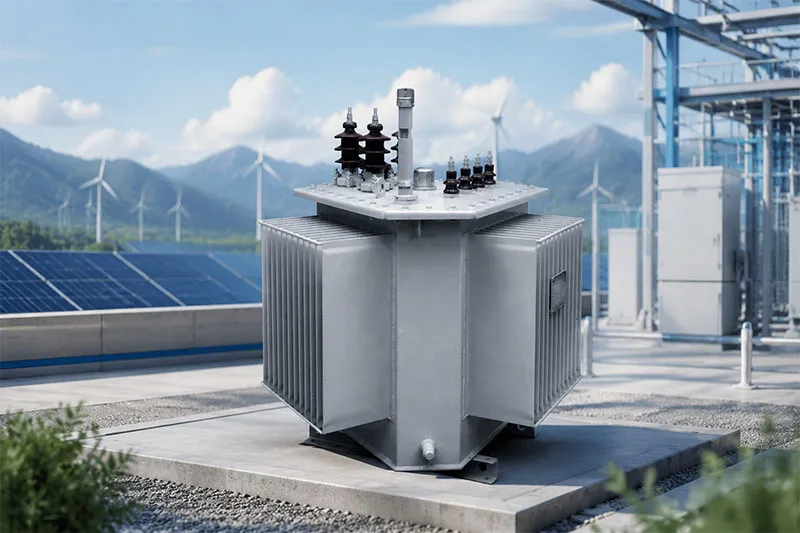
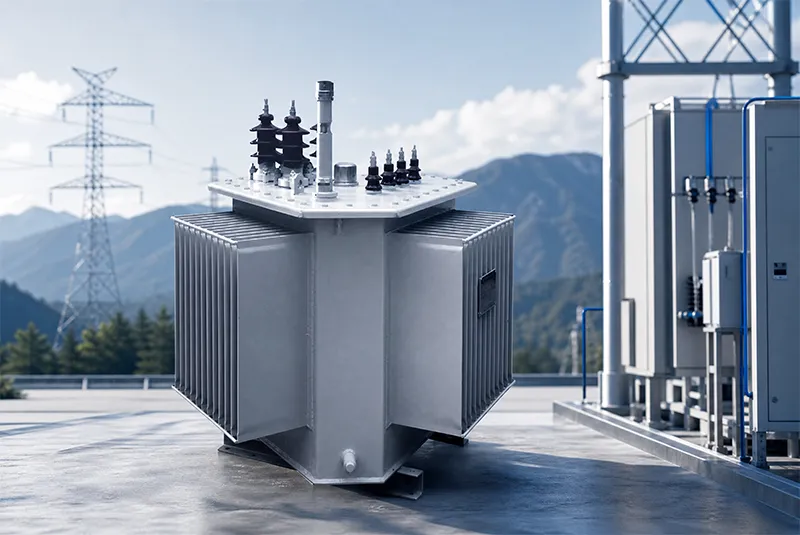
3D wound core transformer compact size light weight can be credible when the magnetic circuit and coil arrangement permit a smaller active-part envelope. However, the installed transformer includes the tank, dielectric liquid, radiators, conservator or sealed expansion provision, bushings, cable boxes, tap changer, marshalling equipment and clearances. A smaller core does not automatically produce a smaller bay.
Ask for length, width and maximum height in millimetres; total operating mass, untanking mass, oil mass and shipping mass in kilograms; centre of gravity; wheel gauge; lifting points; and the heaviest transport piece. Compare those values at the same rated power, voltage ratio, vector group, impedance, insulation level, temperature-rise limit, cooling class and accessory set. Even one changed impedance or bushing arrangement can invalidate a mass comparison.
The claim 3D wound core transformer compact size light weight also needs route evidence. Port limits, bridge axle loading, crane reach, doorway geometry and minimum turning radius can cost more than the transformer’s dimensional advantage. IEC 60076-1 covers rating and service conditions, while the approved general-arrangement and transport drawings establish whether the offered unit fits the project.
Thermal and Mechanical Evidence Governs Life
Stereo rolled core transformer high efficiency long service life is incomplete without temperature and fault-duty evidence. Insulation ageing is strongly affected by thermal exposure, but service life also depends on moisture, oxygen, dielectric condition, switching and lightning stresses, through-faults, harmonics, overload history, sealing quality and maintenance. No core geometry can neutralize all of those variables.
IEC 60076-2 defines temperature-rise requirements and test methods for liquid-immersed transformers. IEC 60076-7 provides a loading guide and thermal-ageing framework; it is an operating guide, not a lifetime certificate. Buyers should obtain the guaranteed top-liquid and winding-rise limits, cooling mode, ambient assumptions and temperature-rise test evidence. Where duty includes harmonics, cyclic overload or elevated ambient, provide the load profile rather than relying on the nameplate kVA.
Mechanical survivability matters because a close-coupled wound core and coils must withstand transport shocks and electromagnetic forces during faults. IEC 60076-5 addresses ability to withstand short circuit and permits design review, calculation and testing routes within its framework. Request the manufacturer’s declared verification route, reference design applicability, clamping controls and transport-impact plan. “Tested to IEC” should identify the part, edition, test type, laboratory and report applicability.
Sound, Flux Balance and Manufacturing Control
A continuous, symmetrical magnetic path can reduce excitation asymmetry and may support lower sound, but 3D wound core transformer compact size light weight does not prove acoustical performance. Sound depends on core flux density, steel, joints, tank panels, cooling equipment, mounting and measurement environment. IEC 60076-10 specifies sound-level determination; require the sound power or pressure quantity, cooling state, measurement surface and guaranteed limit stated in the tender.
Manufacturing repeatability is the hidden variable. Winding tension, annealing cycle, core handling, coil fit, clamping pressure and final drying can move measured results away from a design calculation. An inspection and test plan should identify hold points and routine tests under IEC 60076-1, dielectric tests under IEC 60076-3, temperature-rise evidence where specified, and calibrated sound testing when acoustics are material. This connects the search phrase Stereo rolled core transformer high efficiency long service life to auditable production evidence.
Value Comparison: Claim Versus Award Evidence
The two procurement phrases—Stereo rolled core transformer high efficiency long service life and 3D wound core transformer compact size light weight—become useful only when every bidder completes the same data schedule.
| Decision factor | 3D wound-core offer: evidence to compare | Conventional offer: evidence to compare | TCO consequence |
|---|---|---|---|
| Core performance | Guaranteed no-load loss/current at rated conditions | Same values, conditions and tolerances | Continuous energized-energy cost |
| Load performance | Load loss and impedance at stated reference temperature | Same rating and correction basis | Duty-dependent energy cost and fault level |
| Installed size | Approved overall envelope with all accessories | Like-for-like general arrangement | Civil works, clearances and bay utilization |
| Mass and logistics | Operating, shipping and heaviest-piece mass | Same delivery split and accessories | Freight, route survey, crane and foundation |
| Durability | Thermal limits, short-circuit verification, sealing plan | Equivalent IEC evidence | Risk allowance, outage exposure and maintenance |
| Maintainability | Access, spares, oil handling and repair strategy | Same lifecycle scope | Planned and corrective service cost |
Application and Cost-Driver Matrix
| Application | Dominant evidence | Hidden cost driver | Commercial check |
|---|---|---|---|
| Continuously energized, lightly loaded network | Guaranteed no-load loss and sound | 24/7 core loss; nearby receptors | Model annual losses and stated sound limit |
| Industrial plant with high utilization | Load loss, impedance, harmonics and temperature rise | Conductor heating and production outage | Use measured load profile and contingency value |
| Dense urban substation | Complete installed envelope and fire/clearance requirements | Cable routing, ventilation and civil redesign | Overlay approved drawing on the coordinated model |
| Remote or island project | Shipping split, mass, spares and field assembly plan | Port handling, crane mobilization and repair lead time | Price delivered-and-installed scope, not ex-works mass |
| Hot-climate or cyclic-overload duty | Ambient basis, IEC 60076-7 loading study and cooling margin | Accelerated thermal ageing and fan/pump energy | Evaluate site temperature and hourly duty |
For an illustrative ROI, annualize the evaluated energy-loss difference, civil and logistics difference, maintenance allowance and monetized outage risk; subtract any purchase premium, then discount all cash flows on the owner’s approved horizon. Do not use a simple “payback” if the alternatives have different delivery risk, residual value or maintenance scope.
Standards and Compliance: What Each Reference Proves
- IEC 60076-1 covers general requirements, ratings, service conditions and routine measurements. It supports comparable guaranteed data; it is not a certification of high efficiency or long life.
- IEC 60076-2 covers temperature rise for liquid-immersed transformers. A compliant test supports the tested thermal configuration, not every ambient or overload profile.
- IEC 60076-3 addresses insulation levels and dielectric tests. Confirm the destination system’s highest voltage, impulse level and neutral requirements.
- IEC 60076-5 addresses short-circuit withstand. Confirm whether evidence is a test, calculation or design review and whether the referenced unit is applicable.
- IEC 60076-7 and IEC 60076-10 address loading guidance and sound determination respectively. The former guides operation; the latter is a measurement method, not an acoustic product certificate.
Destination-market rules can add minimum efficiency, eco-design, grid-code, environmental, seismic, fire, language and documentation obligations. Unsupported Stereo rolled core transformer high efficiency long service life wording can distort bid evaluation; unsupported 3D wound core transformer compact size light weight wording can propagate into civil and transport contracts. Put guaranteed figures, standards editions, acceptance criteria and remedies into the purchase specification.
Five Selection Actions Before Award
- Freeze the comparison basis. Issue one schedule covering kVA, ratio, taps, vector group, impedance, insulation level, ambient, rises, cooling, accessories and delivery split.
- Convert phrases into guarantees. For Stereo rolled core transformer high efficiency long service life, request losses, thermal evidence and short-circuit verification. For 3D wound core transformer compact size light weight, request approved dimensions and four mass values.
- Audit report applicability. Match manufacturer, factory, design family, rating, materials and test configuration; record deviations instead of accepting a generic report cover.
- Evaluate installed TCO. Apply the project’s load profile, energy rate, logistics quotations, civil scope, maintenance plan and outage consequence.
- Make verification contractual. Define document approval, inspection points, routine and type-test evidence, tolerances and response to a failed guarantee.
Jubang Group can support this evidence-led process with a configurable three-dimensional wound-core transformer offer and a project-specific technical schedule. Buyers should still match every submission to their specification and may review the supplier’s public qualification and certification information while requesting report-level applicability for the offered unit.
Frequently Asked Questions
Is a stereo rolled core transformer always more efficient?
No. Core geometry may reduce no-load loss, but total efficiency also depends on windings, load, temperature and auxiliaries. Compare IEC 60076-1 guaranteed no-load and load losses at identical rating and reference conditions.
Does a 3D wound core transformer always have compact size and light weight?
No. 3D wound core transformer compact size light weight is a valid comparison only when tank, liquid, cooling equipment, bushings, cable boxes and delivery configuration are included. Approve the general-arrangement drawing and logistics mass schedule before award.
How can buyers verify a long-service-life claim?
There is no single IEC “long-life” certificate. Review temperature-rise evidence, IEC 60076-7 loading assumptions, dielectric tests, short-circuit verification, sealing and moisture controls, maintenance provisions and the actual duty profile.
Which transformer losses matter most for TCO?
No-load loss matters throughout energized hours, while load loss rises approximately with the square of load current. A lightly loaded network and a heavily utilized plant can therefore rank the same two offers differently; use the owner’s hourly or representative load profile.
What documents should accompany a medium-voltage tender?
Request a guaranteed technical particulars schedule, drawings, loss and impedance reports, dielectric-test evidence, thermal and short-circuit verification, sound data where relevant, material schedules, inspection plan and manuals. Buyers comparing standard liquid-filled options can also review a 6–10 kV oil-immersed transformer configuration as a like-for-like baseline.
Primary References
- IEC 60076-5:2006, Power transformers—Part 5: Ability to withstand short circuit.
- IEC 60076-7:2005, Power transformers—Part 7: Loading guide for oil-immersed power transformers.
- U.S. eCFR, 10 CFR Part 431 Subpart K—Distribution Transformers.
- European Commission Regulation (EU) No 548/2014 on small, medium and large power transformers.
The durable procurement rule is simple: compare verified performance at the project boundary, not adjectives at the brochure boundary.
To align ratings, IEC evidence, loss guarantees, dimensions and delivery constraints, contact Jubang Group and request a project-specific data schedule for the three-dimensional wound-core transformer.