JUBANG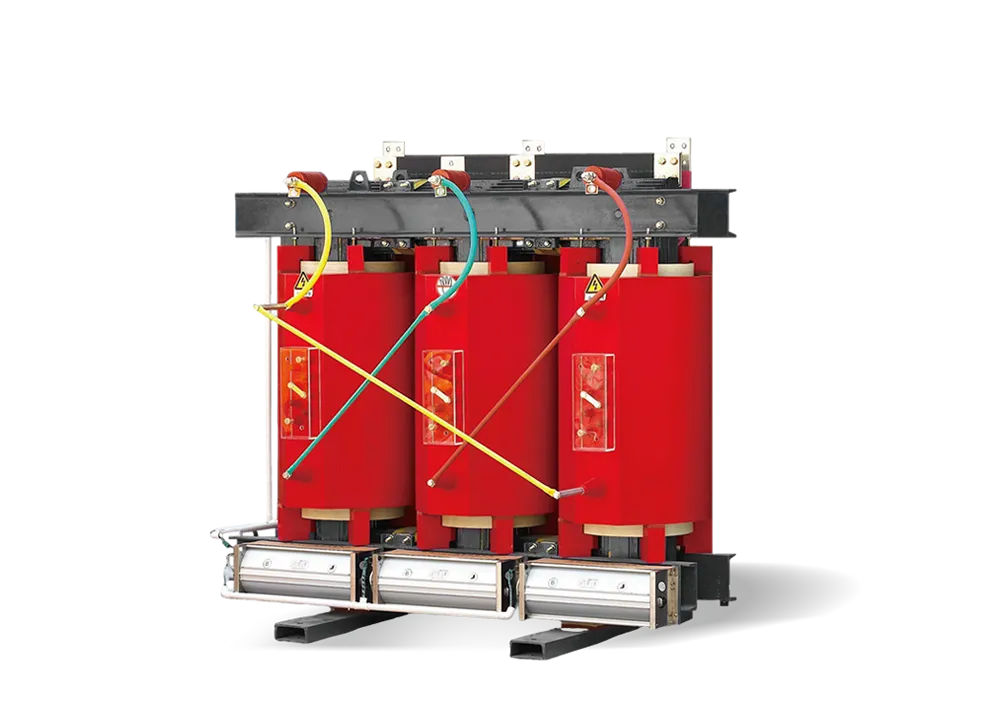

When a procurement manager in Ho Chi Minh City approved a 10kV transformer after comparing guaranteed no-load watts alone, the layout review failed within 48 hours: the radiator bank obstructed the service aisle, the predicted sound level missed the site limit, and the assembled envelope would not clear the delivery route. The unit was not defective. The specification had separated core stress and flux density from tank cooling, acoustic radiation, and transport constraints.
Summary: Effective 10kV 3D wound core transformer no-load loss reduction requires a guaranteed loss value at stated voltage and frequency, supported by an IEC 60076-1-aligned test—not a core label alone. A 10kV stereo rolled core transformer with oil tank must also pass the project’s temperature-rise, sound, oil-containment, access, and shipping criteria. Compare bidders on tested watts, tank-and-radiator integration, and lifecycle cost over 8,760 energized hours per year.
Why 10kV No-Load Performance Is a System Decision
No-load loss is the active power drawn when rated voltage at rated frequency is applied to one winding while the other winding is open. It is dominated by hysteresis and eddy-current loss in the magnetic core, with smaller contributions elsewhere. Because it continues whenever the transformer remains energized—even at little or no customer load—it deserves separate treatment from load loss, which rises approximately with the square of current under comparable thermal conditions.
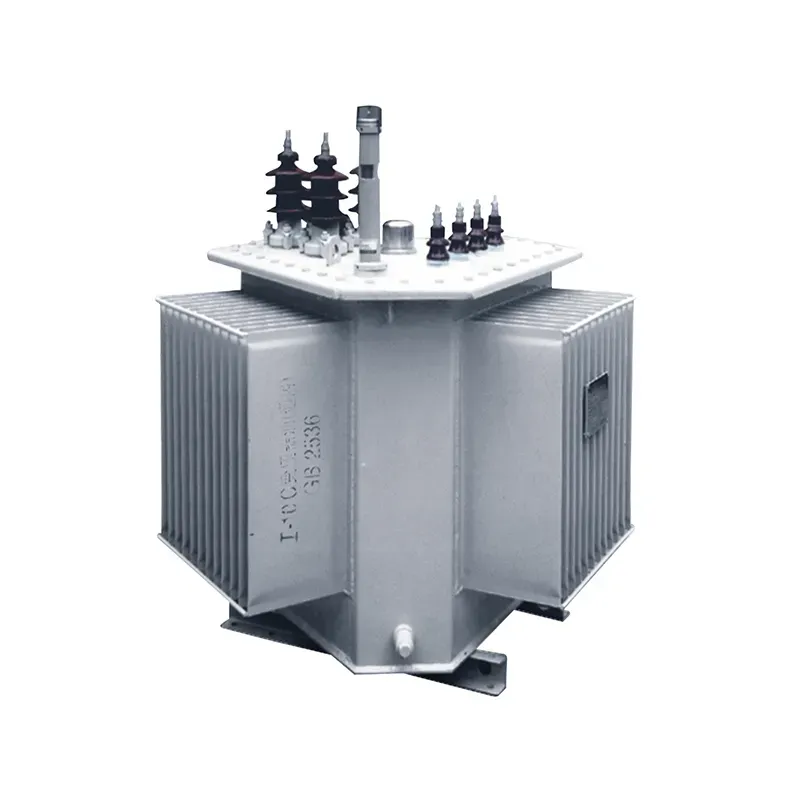
A three-dimensional wound core forms a symmetrical three-limb magnetic circuit from continuously wound strip rather than assembling a conventional planar stack with multiple joints. That topology can support shorter, more continuous flux paths and reduced joint-related disturbance. However, 10kV 3D wound core transformer no-load loss reduction is not a universal percentage. Steel grade, strip thickness, cutting and winding control, annealing, joint construction, clamping pressure, design flux density, waveform, and production consistency all affect the result.
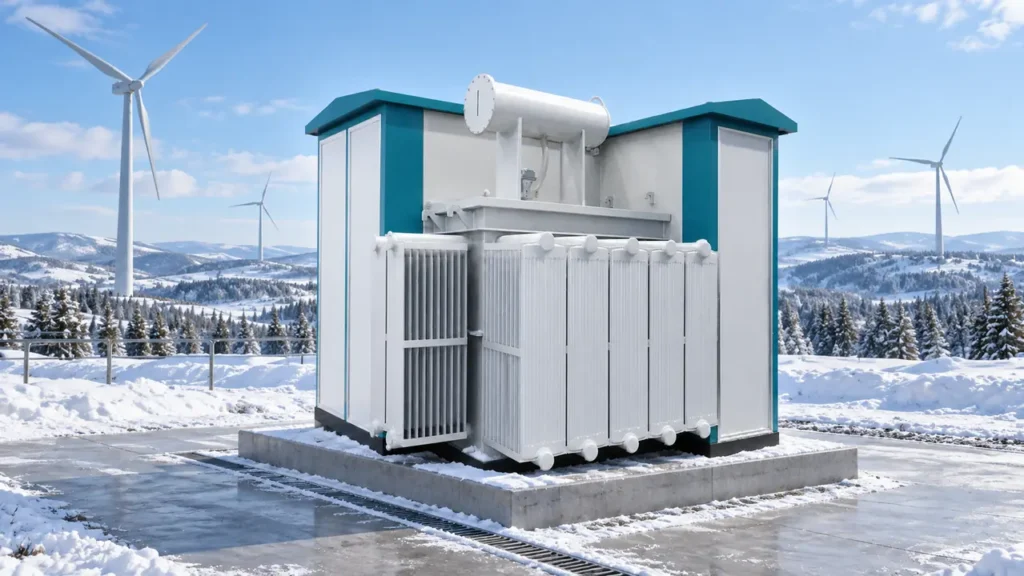
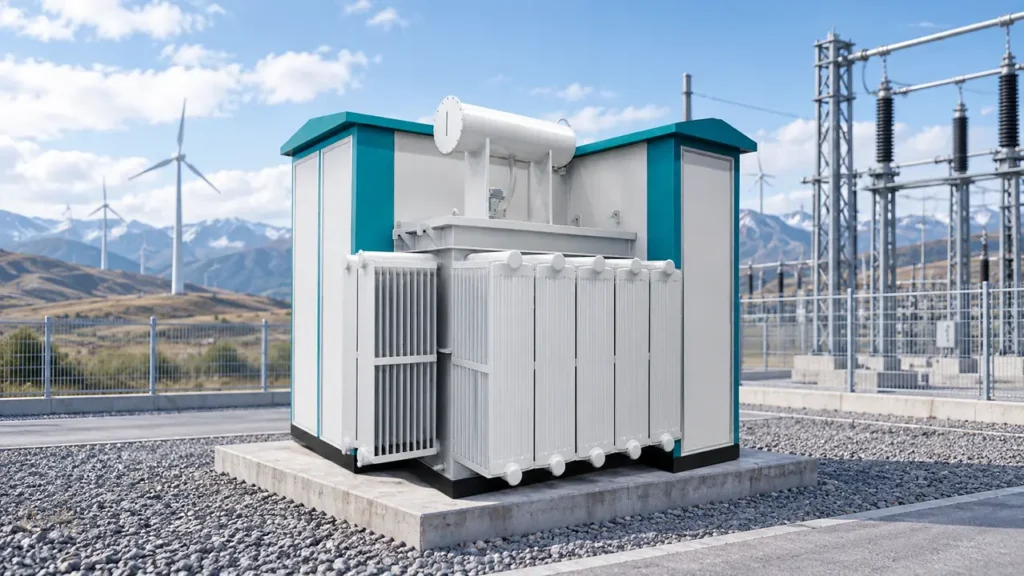
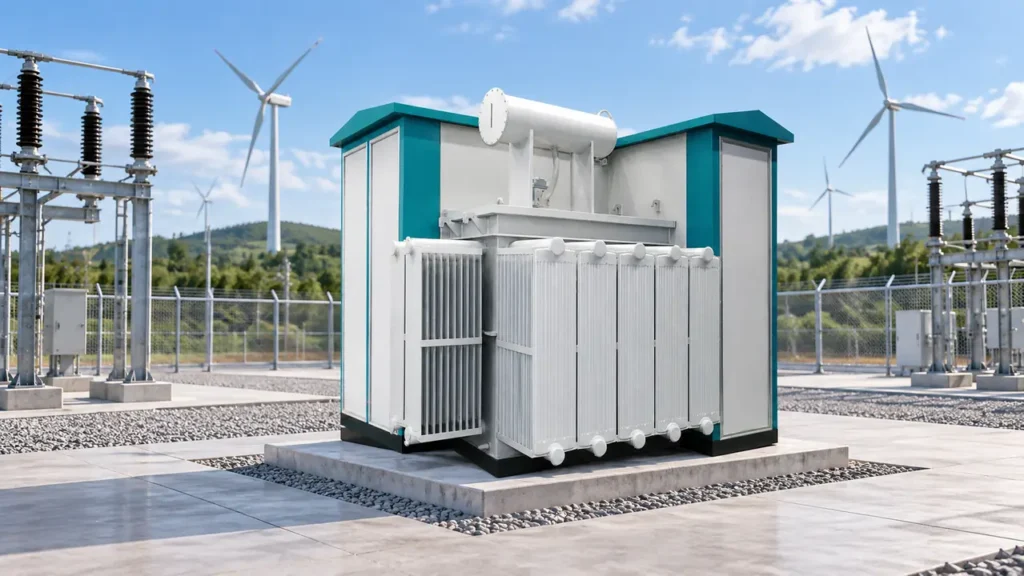
The buyer therefore needs a complete-transformer guarantee. A 10kV stereo rolled core transformer with oil tank couples the magnetic assembly to liquid insulation, cooling surfaces, supports, and fittings. Residual stress, local over-fluxing, resonant panels, or restricted airflow can undermine a favorable core calculation.
1. Measure No-Load Loss Under Comparable Electrical Conditions
What should the data sheet state?
Request guaranteed no-load loss and current at rated voltage, rated frequency, and the specified tap. State the ratio, vector group, rating, insulation levels, cooling designation, and tolerances. IEC 60076-1 provides general transformer requirements and the framework for routine loss measurements; identify the adopted edition.
For a defensible 10kV 3D wound core transformer no-load loss reduction comparison, normalize every bid to the same excitation condition. Core loss is sensitive to voltage and frequency because they determine working flux density; harmonic distortion or an unsuitable test supply can distort the measurement. The factory test report should record applied voltage, frequency, measured input power, no-load current, instrument details, connections, and waveform-related corrections required by the agreed method.
Why manufacturing stress matters
Bending, clamping, lifting, and tanking can introduce stress that changes wound-strip magnetic behavior. Review a production-unit test after complete assembly, not only a design calculation or the steel supplier’s laboratory specific-loss figure.
Flux balance matters as well. Three-phase symmetry, turn accuracy, joint geometry, local gaps, and excitation waveform can create local peaks even when average design flux appears acceptable. That is why 10kV 3D wound core transformer no-load loss reduction should be an acceptance value tied to a serial-numbered unit and calibrated instruments, with retest rules agreed before manufacture.
2. Integrate Oil Tank, Radiators, and Temperature Rise
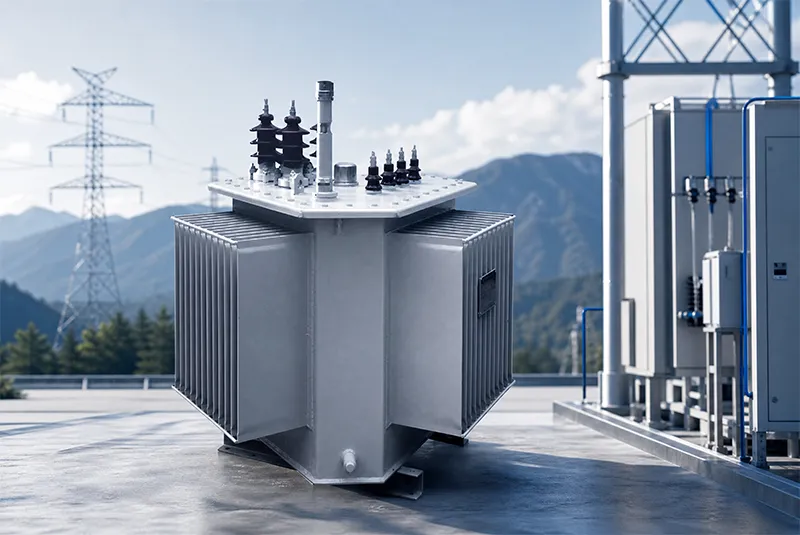
The tank contains insulating liquid, protects the active part, transfers heat, and supports interfaces and fittings. In natural-oil, natural-air cooling, warm oil rises, rejects heat through tank walls or radiators, and returns cooler. Channel geometry, radiator elevation, oil viscosity, and clearances influence circulation.
IEC 60076-2 addresses temperature-rise requirements and test methods for liquid-immersed transformers. It does not prescribe one universally superior tank. Corrugated walls can combine enclosure flexibility and cooling area on some ratings; detachable radiator banks can offer serviceability and scalable surface area; pressed or flat panels may suit other mechanical demands. For a 10kV stereo rolled core transformer with oil tank, the correct choice follows verified total losses, ambient conditions, altitude, solar exposure, enclosure arrangement, fouling, and the required cooling class.
Temperature rise is not the same as loss
Lower no-load loss reduces one heat source, but rated thermal performance also includes winding load loss and stray loss. A temperature-rise test evaluates the assembled cooling system under specified conditions; it is not inferred from a core-loss result. Buyers should request top-oil and winding temperature-rise evidence, the test loading method, ambient readings, resistance measurements, stabilization criteria, and any corrections applied under IEC 60076-2.
Tank design also affects maintenance. Check radiator valves, gaskets, sampling points, oil-level indication, pressure relief, coating, weld inspection, and bund interfaces. A 10kV stereo rolled core transformer with oil tank that blocks valve access can impose recurring outage cost.
3. Control Acoustic Radiation and Transport Loads
Core magnetostriction produces vibration at twice supply frequency and at harmonic components. Clamps and supports transmit that energy to the tank, whose panels and radiators can radiate or amplify sound. IEC 60076-10 defines methods for determining transformer sound levels using sound-pressure or sound-intensity measurements. The specified quantity, measurement contour, operating condition, background correction, and cooling-equipment state must match the project requirement.
Consequently, 10kV 3D wound core transformer no-load loss reduction does not automatically prove a low site sound level. Require a guaranteed sound-power level or other contractually appropriate quantity, plus a test report for the complete configuration. For noise-sensitive substations, review structural isolation, tank-panel stiffness, fan or pump contribution where fitted, room reflections, ventilation openings, and distance to the receiving point.
For transport, confirm shipping and operating mass, center of gravity, lifting points, route envelope, crane capacity, and removable equipment. A 10kV stereo rolled core transformer with oil tank still needs a documented field-assembly and oil-handling plan.
4. Convert Guaranteed Watts into TCO and Illustrative ROI
The cleanest lifecycle comparison separates no-load energy, load-loss energy, auxiliary energy, maintenance, outage exposure, installation, and end-of-life costs. For annual no-load energy, use:
Annual no-load energy = guaranteed P0 (kW) × energized hours.
For continuous energization, 365 × 24 = 8,760 hours. Illustratively—not as a performance claim—a verified 1.0 kW P0 difference equals 8,760 kWh annually. Multiply it by the buyer’s forecast tariff and loss-capitalization assumptions. Simple payback is the evaluated premium divided by annual avoided cost; use discounted cash flow for long horizons.
This is where 10kV 3D wound core transformer no-load loss reduction can create value on lightly loaded, always-energized networks. Yet a nominal loss advantage should not displace costs caused by an oversized plinth, restricted delivery, radiator removal, special oil processing, poor spares commonality, or higher failure consequence. Evaluate the complete 6–10kV oil-immersed transformer package, not watts in isolation.
Comparison: Core-and-Tank Options for a 10kV Project
| Decision factor | 3D wound core with corrugated tank | 3D wound core with detachable radiators | Conventional stacked core with project-specific tank |
|---|---|---|---|
| No-load loss evidence | Require a finished-unit guarantee and IEC 60076-1-aligned test for any 10kV 3D wound core transformer no-load loss reduction claim. | Use the same voltage, frequency, tap, tolerance, and reporting basis; topology alone does not decide compliance. | |
| Thermal integration | Compact integrated cooling may suit lower ratings; verify temperature rise and airflow. | Cooling surface can be configured and isolated; confirm valve, gasket, and service access. | Broad design flexibility; require the same assembled temperature-rise evidence. |
| Acoustics | Tank corrugations and supports influence radiation. | Radiator banks and connections can transmit vibration. | Joint and clamp behavior differs; complete-unit sound testing remains decisive. |
| Transport and installation | Fewer loose cooling components may simplify handling, subject to route envelope. | Removable radiators may reduce shipping width but add site assembly and oil work. | Depends on final geometry, mass, removable equipment, and route study. |
| Maintenance and TCO | Inspect welds, corrugations, coating, and access. | Include valves, gaskets, radiator cleaning, and spares. | Compare guaranteed losses, installation, maintenance, and outage exposure consistently. |
Second Decision Table: Application, Hidden Cost, and Design Response
| Application or cost driver | What can be missed | Procurement response |
|---|---|---|
| Urban indoor substation | Sound reflections, restricted ventilation, fire and oil containment, narrow access | Specify room ambient, sound quantity, clearances, final envelope, and oil-management requirements. |
| Industrial plant with low average load | Long energized hours make P0 material even when kVA utilization is low. | Capitalize guaranteed P0 and Pk using the site load profile and tariff forecast. |
| Hot, dusty, or high-altitude site | Reduced cooling margin, fouled surfaces, coating degradation | State maximum ambient, altitude, solar exposure, pollution, corrosion category, and cleaning access. |
| Remote renewable or infrastructure node | Mobilization, oil handling, gasket replacement, and outage duration | For a 10kV stereo rolled core transformer with oil tank, price commissioning kits, critical spares, monitoring, and field support. |
| Constrained transport route | Detours, crane upgrades, component removal, reassembly and retesting | Freeze shipping drawings, masses, center of gravity, lifting plan, and post-assembly checks before release. |
Standards, Test Evidence, and Commercial Compliance
- IEC 60076-1 covers general power-transformer requirements and forms the basis for agreed routine measurements, including loss and no-load current.
- IEC 60076-2 addresses temperature-rise requirements and tests for liquid-immersed transformers; it supports validation of tank and radiator performance.
- IEC 60076-7 is a loading guide for mineral-oil-immersed transformers; it helps assess thermal aging under actual load and ambient profiles rather than replacing the rating specification.
- IEC 60076-10 defines determination of sound levels; specify whether sound power, pressure, or intensity evidence is contractually required.
These documents set requirements, guidance, or test methods; “tested according to IEC” is not automatically independent product certification. Verify the edition, laboratory, tested configuration, accreditation scope, and serial-number traceability, then apply destination-market rules. Unsupported 10kV 3D wound core transformer no-load loss reduction or 10kV stereo rolled core transformer with oil tank claims can cause rejection, retesting, or delayed energization. Check supplier documents against published qualification and certification information, without treating a company certificate as proof of a unit’s loss.
Four Procurement Actions Before Award
- Issue one normalized data schedule. State rating, voltage and frequency, tapping, vector group, cooling, ambient, altitude, guaranteed P0 and Pk, sound quantity, dimensions, masses, accessories, tolerances, and required test records.
- Link guarantees to acceptance. Define the IEC editions, witness or review points, instrument records, retest treatment, deviation process, and commercial remedy before production.
- Review the mechanical interface. Approve general arrangement, oil volume, radiator removal plan, service clearances, civil loads, cable or bus connections, lifting, route, bund, and field assembly method.
- Evaluate lifecycle cost. Capitalize losses using the project’s own load curve and financial assumptions, then add installation, spares, maintenance, outage, and disposal exposure.
Jubang Group can support buyers by configuring the active part, oil tank, cooling surfaces, accessories, drawings, and test-document package around the project schedule. For a quotation, provide the electrical single-line data, environment, loss evaluation method, noise limit, route envelope, and applicable local rules through the engineering contact channel. That enables a traceable 10kV stereo rolled core transformer with oil tank proposal rather than a catalog-only comparison.
Frequently Asked Questions
What causes no-load loss in a 10kV transformer?
Most no-load loss comes from hysteresis and eddy currents in the energized magnetic core. Steel properties, flux density, joints, cutting or winding stress, clamping, voltage, frequency, and waveform all matter. Judge 10kV 3D wound core transformer no-load loss reduction from a finished-unit test at agreed conditions.
Does a 3D wound core always have lower no-load loss?
No. The topology can enable a continuous, symmetrical magnetic path, but the delivered result depends on material and manufacturing control as well as design. Compare guaranteed watts and tolerances under the same IEC 60076-1 test basis.
How does the oil tank affect transformer efficiency?
The tank does not establish core loss, but it determines how effectively total heat reaches ambient air and can affect auxiliary cooling needs. For a 10kV stereo rolled core transformer with oil tank, verify temperature rise, airflow, radiator arrangement, coating, and installation clearances under site conditions.
Are corrugated tanks better than radiator tanks?
Neither is universally better. Corrugated tanks may integrate cooling surface and accommodate oil-volume changes in some designs; detachable radiators can provide configurable area and isolation. Rating, pressure design, maintenance, transport, ambient, and validated thermal performance should decide.
Which factory tests should a buyer request?
At minimum, align routine tests with the purchase specification and IEC 60076-1, including loss, no-load current, ratio, winding resistance, and dielectric checks as applicable. Add temperature-rise or sound-level type/special tests when risk and contract scope justify them, and confirm whether evidence comes from the offered design or only a similar unit.
Authoritative References
- IEC 60076-1:2011, Power transformers—Part 1: General
- IEC 60076-2:2011, Power transformers—Part 2: Temperature rise for liquid-immersed transformers
- IEC 60076-7:2018, Power transformers—Part 7: Loading guide for mineral-oil-immersed power transformers
- IEC 60076-10:2016, Power transformers—Part 10: Determination of sound levels
The memorable rule is simple: the lowest core-loss number has value only when the finished transformer can cool, travel, fit, operate quietly, and pass the agreed test.
To turn your 10kV 3D wound core transformer no-load loss reduction target into a coordinated electrical, thermal, acoustic, and mechanical specification, review Jubang Group’s three-dimensional wound core transformer solution and request a project-specific technical proposal.