JUBANG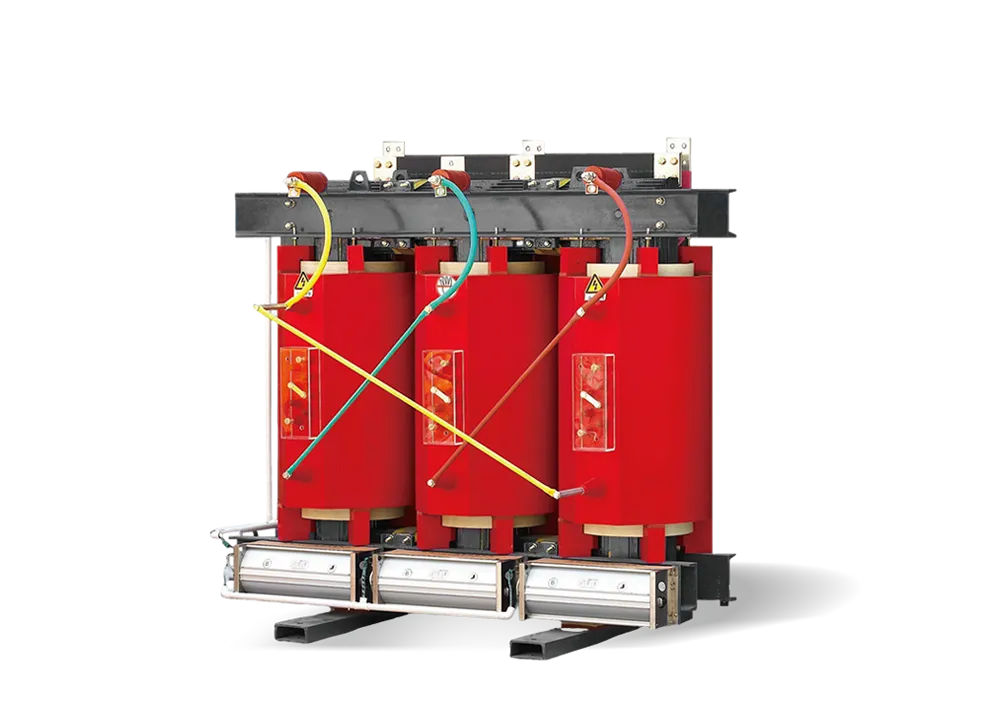

When a procurement engineer in Dubai energized a new indoor substation, he heard a conspicuous hum and watched the winding-temperature alarms rise within the first shift. The team first blamed the transformer, but a review reversed that conclusion: the tender had combined a restrictive enclosure, insufficient room airflow, an unverified sound limit and a harmonic-rich load. The rapid problem came from a cooling, noise and specification mismatch—not a defective transformer.
Summary: A Three-dimensional rolled core dry type transformer combines air-cooled, solid-insulated windings with a continuously wound three-phase magnetic core. IEC 60076-11:2018 covers dry-type power transformers up to 72.5 kV highest voltage for equipment, subject to its stated exclusions, but a model name alone proves neither compliance nor project suitability. For an SCB11-RL 3D wound core dry type transformer, buyers should lock down guaranteed losses, temperature-rise limits, sound level, enclosure, environmental class and test evidence before comparing price.
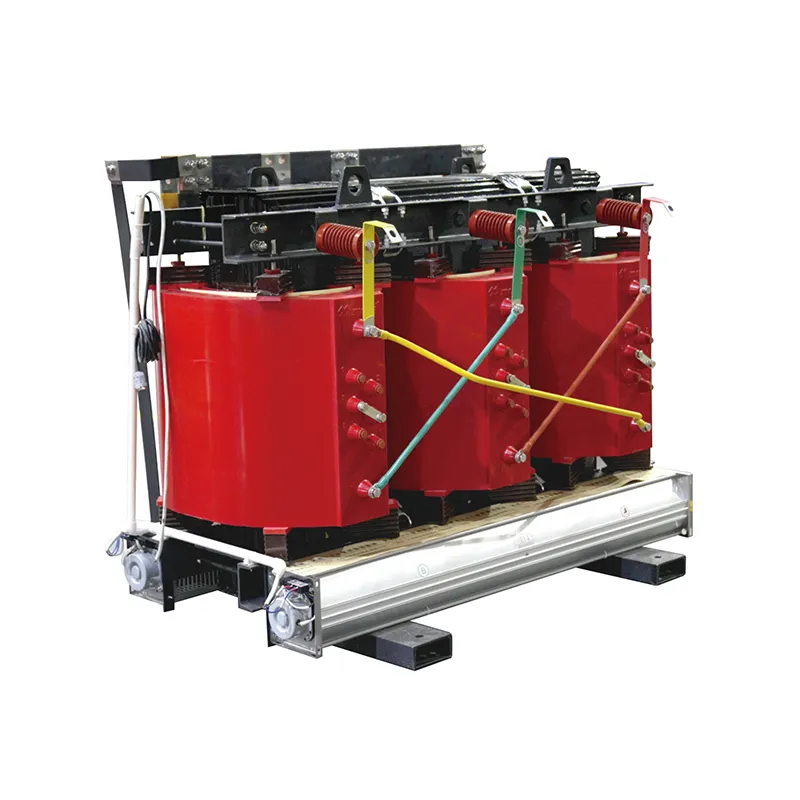
Dry-type duty means the transformer does not use liquid as its insulating and cooling medium. In a cast-resin design, windings are encapsulated or cast in cured resin, while heat reaches the surrounding air by natural or forced circulation. This avoids liquid-oil leakage and changes fire-containment and maintenance planning, but it does not create a zero-risk installation: combustible loading, clearances, ventilation, contamination and local fire rules still matter.
The SCB11-RL label is best treated as a manufacturer or market designation, not an IEC performance class. Its commercial meaning must be translated into a project data sheet covering voltage, kVA, impedance, taps, load profile and site environment.
1. What Does the Three-Dimensional Rolled Core Change?
A rolled or wound core is made by winding electrical-steel strip into a continuous magnetic structure rather than stacking individually cut laminations. In a three-dimensional arrangement, the three limbs form a spatially symmetrical magnetic circuit. Actual no-load loss, exciting current and sound level still depend on steel grade, geometry, flux density, clamping and manufacturing control.
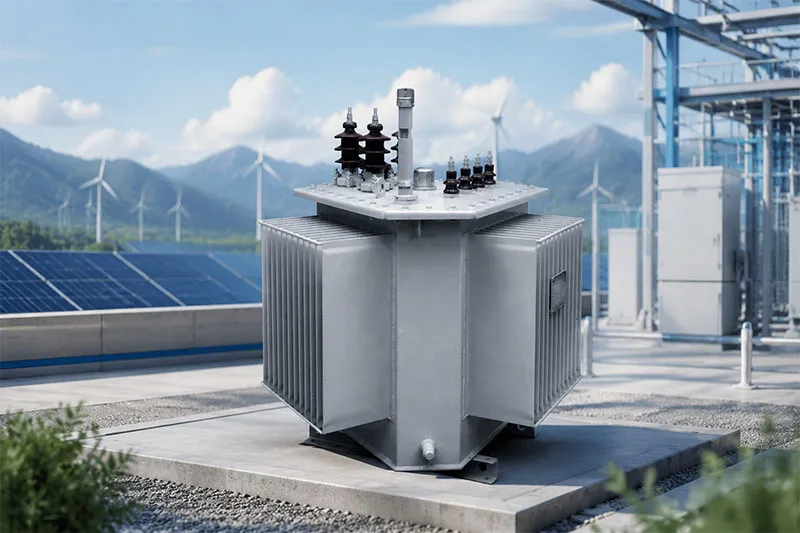
This distinction is central to an SCB11-RL 3D wound core dry type transformer: “3D wound core” describes magnetic construction, while “dry type” describes the insulation and cooling system. Neither phrase supplies a guaranteed watt figure. Buyers comparing magnetic geometries can review a three-dimensional wound-core platform for construction context, but that linked oil-immersed product is not evidence of dry-type ratings or results.
IEC 60076-1 provides general power-transformer requirements and test terminology. Procurement should therefore request a guaranteed no-load loss at rated voltage and frequency, load loss at the stated reference temperature, no-load current and impedance. For a Three-dimensional rolled core dry type transformer, compare supplier schedules at identical ratings and conditions; otherwise a favorable number may simply reflect a different temperature, tapping position or test basis.
2. How Do Cast Resin, Cooling and Site Conditions Interact?
Cast resin supports and isolates the winding, but thermal performance is a system outcome. Heat must cross insulation, resin, air passages and any enclosure before leaving the room. Nameplate kVA does not override a blocked duct or elevated ambient temperature.
IEC 60076-11 addresses dry-type temperature rise and environmental, climatic and fire-behaviour provisions. Its scope includes equipment with a highest voltage up to and including 72.5 kV and at least one winding operating above 1.1 kV, with explicit exclusions. The standard also manages altitude effects on dielectric and thermal characteristics. Therefore, an SCB11-RL 3D wound core dry type transformer intended for a hot coastal plant, dusty factory or high-altitude site needs declared service conditions—not a generic “indoor” description.
Natural-air cooling avoids fan energy and fan maintenance, whereas forced-air operation can raise available loading only when the design, controls and temperature supervision support it. Fans are not a substitute for room heat rejection. Ask the supplier for total heat loss at the specified operating point, then have the mechanical designer verify intake area, exhaust path and maximum room temperature. For a Three-dimensional rolled core dry type transformer, also coordinate enclosure ingress protection with cooling: tighter protection normally increases airflow resistance.
3. Which Loss, Noise and TCO Numbers Matter?
No-load loss is present whenever the unit is energized; load loss varies approximately with current squared within the normal engineering model. That makes low core loss important for lightly loaded or continuously energized substations, while conductor loss dominates heavily loaded duty. IEC 60076-10 defines methods for determining transformer sound levels, so a tender should state whether it requires sound power or sound pressure, the operating condition, measurement distance and applicable tolerance.
An SCB11-RL 3D wound core dry type transformer should be evaluated with guaranteed values, not an unsupported percentage claim. Core geometry may influence magnetostriction-related noise, but the installed result also reflects enclosure panels, busbar forces, floor transmission, room reflections and supply harmonics. A factory sound test cannot promise a room-level acoustic outcome unless installation variables are also controlled.
Illustrative TCO calculation: annual no-load energy cost equals no-load loss in kW × 8,760 hours × electricity tariff. If two compliant bids differ by 0.20 kW and the assumed tariff is US$0.12/kWh, the arithmetic difference is about US$210 per energized year. This is a comparison example, not an SCB11-RL price or performance claim. Add load-loss cost using the project load curve, plus fan energy, room ventilation, preventive cleaning, acoustic treatment and expected outage cost.
Simple payback equals verified incremental purchase cost divided by modeled annual savings. A Three-dimensional rolled core dry type transformer can have the lower lifecycle cost despite a higher initial quote, but only with common-basis guaranteed losses and a credible utilization profile.
4. What Evidence Should the Bid Package Contain?
Start with a completed data schedule: rated power, frequencies, winding voltages, vector group, tap range, insulation levels, impedance, cooling designation, temperature-rise limits, conductor material, enclosure rating, altitude, ambient conditions, losses and sound limits. Then require routine-test reports for the supplied serial numbers and define which type or special test evidence must represent the offered design.
IEC 60076-5 addresses the ability of power transformers to withstand short circuit, while IEC 60076-3 covers insulation levels and dielectric tests. These are different risks. A withstand calculation or design-family report does not replace agreed dielectric tests, and a dielectric report does not prove thermal performance. For an SCB11-RL 3D wound core dry type transformer, the purchaser should map every required test to an acceptance document and responsible witness point.
Installation coordination also matters. Confirm entries, clearances, earthing, lifting route, floor loading, anti-vibration measures, sensors, alarm contacts and fan-control interfaces. Even a compliant Three-dimensional rolled core dry type transformer can create variation orders when enclosure or control interfaces remain open.
SCB11-RL Versus Common Transformer Alternatives
| Decision factor | 3D rolled-core cast-resin dry type | Conventional stacked-core cast-resin dry type | Liquid-immersed distribution transformer |
|---|---|---|---|
| Magnetic circuit | Continuously wound, spatial three-phase path; verify guaranteed losses and excitation | Stacked laminations with engineered joints; broad design familiarity | May use stacked or wound core; liquid system changes thermal design |
| Fire and leakage planning | No insulating liquid; resin and installation fire behaviour still require assessment | Same dry-type planning principle | Requires assessment of insulating-liquid type, containment and local rules |
| Cooling | Air passages, enclosure and room ventilation are coupled | Air passages, enclosure and room ventilation are coupled | Liquid transfers heat to tank/radiators; room or outdoor heat rejection remains relevant |
| Noise | Core geometry can help, but IEC 60076-10 test evidence and room design govern acceptance | Joint and clamping design matter; request the same test basis | Core, tank and cooling equipment can all contribute |
| Maintenance | Inspection, cleaning, connections, sensors and optional fans | Similar dry-type tasks | Add liquid-system inspection and applicable sampling practices |
| Unit-cost tendency | Design-specific; tooling and core manufacture affect quote | Design-specific with many established supply options | Often cost-competitive by rating, but civil and fire measures vary |
| TCO sensitivity | Core loss, load loss, airflow, noise control and downtime | Same categories; compare guaranteed values | Losses plus containment, liquid service and siting consequences |
Application and Performance Coordination Matrix
| Application | Performance priority | Specification evidence | Installation check |
|---|---|---|---|
| Commercial tower or hospital | Low installed noise, reliable indoor duty | IEC 60076-10 sound basis; losses; temperature rise | Acoustic paths, ventilation redundancy, fire strategy |
| Data centre or continuous-process plant | Availability and lifecycle energy | Guaranteed losses, sensors, overload/loading study | Load growth, harmonics, fan controls, maintainable access |
| Metro, airport or public infrastructure | Defined environmental and fire requirements | Project-selected IEC 60076-11 classes and relevant reports | Dust, humidity, evacuation rules, interface approvals |
| Solar, storage or nonlinear industrial load | Thermal margin under harmonics and cycling | Load spectrum, loss evaluation, temperature model | Converter harmonics, cable heating, protection settings |
| Medium-voltage duty above a typical 6–10 kV system | Insulation coordination and clearances | Rated insulation level and dielectric-test schedule | Room size, terminals and destination-market rules; review the 35 kV resin dry-type range only where its documented rating fits |
Standards, Compliance and Certification Boundaries
- IEC 60076-11: product requirements for dry-type transformers within its scope, including dry-type-specific tests and class provisions. A declaration to this standard must identify the edition and applicable requirements.
- IEC 60076-1: general transformer requirements, terminology and test framework. It does not certify a particular factory or unit.
- IEC 60076-3 and IEC 60076-5: dielectric requirements and short-circuit withstand requirements respectively; one report cannot be used as evidence for the other.
- IEC 60076-10: a measurement standard for sound levels, not a universal promise that an installed room will meet a building noise limit.
- IEC 60076-12: a loading guide for dry-type power transformers. It supports loading decisions but does not replace the manufacturer’s thermal data or site study.
A standard defines requirements or methods; certification is a separate conformity-assessment statement under a defined scheme and scope. Do not accept an SCB11-RL 3D wound core dry type transformer as “IEC certified” without identifying the issuer, model, rating, factory, edition and validity. Environmental, climatic or fire-behaviour classes must be selected and evidenced for the installation; they are not universal properties of every cast-resin unit.
Five Procurement Actions Before Award
- Freeze the duty. Provide a single-line diagram, load and harmonic profile, ambient/altitude data, enclosure, cooling mode, impedance constraints and future expansion.
- Normalize the bids. Compare loss, sound, temperature-rise and insulation data at the same rating, tapping position, reference temperature and test method.
- Build an evidence matrix. Separate routine, type and special tests; identify design-family evidence, unit-specific reports, witness points and acceptance criteria.
- Coordinate the room. Confirm airflow, heat rejection, acoustic treatment, access, foundations, cable routes, protection, sensors and controls before drawing approval.
- Audit the supplier scope. Jubang Group positions itself as a China-based B2B transmission-and-distribution manufacturer with power EPC and intelligent O&M support. Buyers should still verify the offered model against project documents and review the relevant qualification and certification records for scope, issuer and validity.
For a Three-dimensional rolled core dry type transformer, these actions turn a promising construction concept into an auditable procurement package. They also make deviations visible before they become site rework.
Frequently Asked Questions
What is a Three-dimensional rolled core dry type transformer?
It is a dry-type transformer whose three-phase magnetic core is formed from continuously wound strip in a spatial arrangement. The winding insulation may be cast resin, while air provides external cooling. Confirm the offered construction in drawings because market terminology is not fully uniform.
Is an SCB11-RL 3D wound core dry type transformer always more efficient?
No universal answer is valid without comparable guaranteed loss data. Core geometry can reduce magnetic discontinuities, but steel grade, flux density, winding design and manufacturing quality affect results. Compare tested or guaranteed no-load and load losses under the same IEC basis and operating profile.
Does cast resin mean the transformer is fireproof?
No. Cast-resin construction removes insulating liquid from the transformer, which changes leakage and fire-load considerations, but resin, cables and nearby materials remain part of the fire assessment. Specify the required IEC 60076-11 class and verify evidence relevant to the rating and installation.
How should buyers specify transformer noise?
State the required sound quantity, limit, operating condition and IEC 60076-10 measurement basis. Then translate the equipment requirement into a room acoustic design covering enclosure resonance, structural transmission, reflections and ventilation openings.
Can an SCB11-RL transformer run above nameplate rating?
Only under a documented loading assessment using IEC 60076-12, manufacturer thermal data, ambient conditions and load history. Forced air, if designed in, may change permissible duty, but it introduces fan availability and maintenance dependencies. Protection and temperature alarms must match the approved loading plan.
Authoritative References
- International Electrotechnical Commission, IEC 60076-11:2018 RLV, Power transformers—Part 11: Dry-type transformers.
- International Electrotechnical Commission, IEC 60076-1:2011, Power transformers—Part 1: General.
- International Electrotechnical Commission, IEC 60076-5:2006, Power transformers—Part 5: Ability to withstand short circuit.
- International Electrotechnical Commission, IEC 60076-10:2016, Power transformers—Part 10: Determination of sound levels.
- International Electrotechnical Commission, IEC 60076-12:2008, Loading guide for dry-type power transformers.
The memorable rule is simple: buy the declared duty and the evidence behind it, not the model code alone.
For a project-specific SCB11-RL 3D wound core dry type transformer review, send Jubang Group the single-line diagram, load profile, service conditions, loss and sound limits, and required test matrix. Review the 6–10 kV SCB resin-insulated dry-type transformer and request a documented configuration for your tender.