JUBANG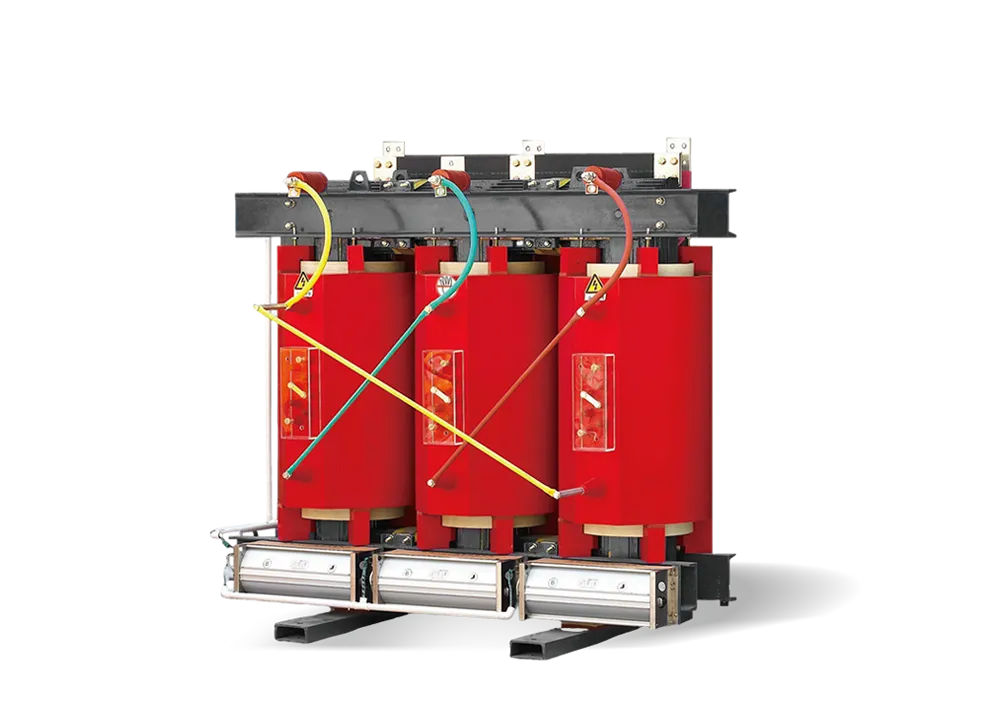
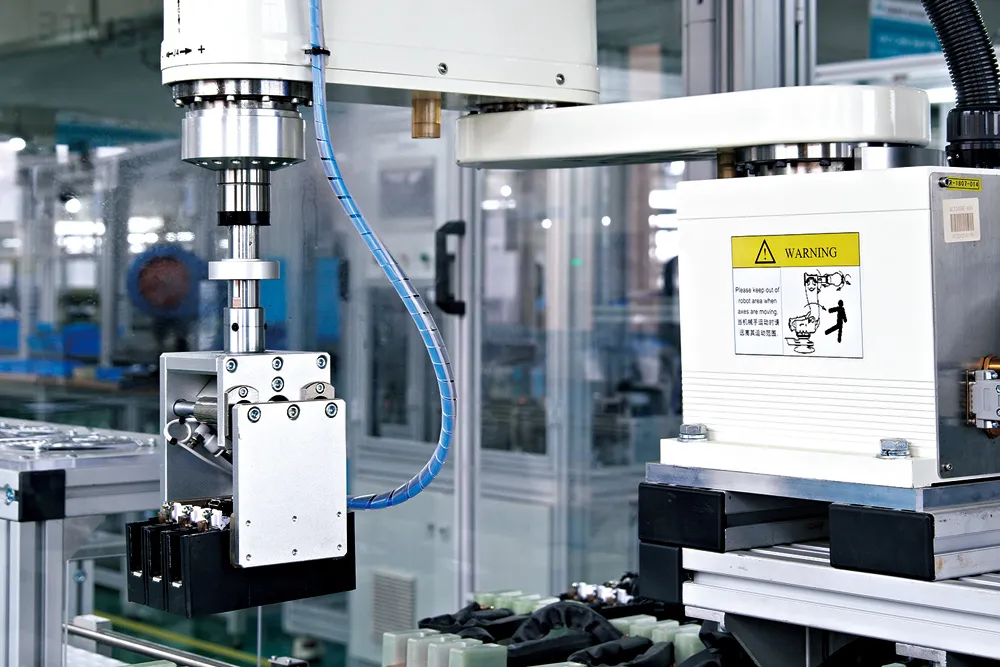
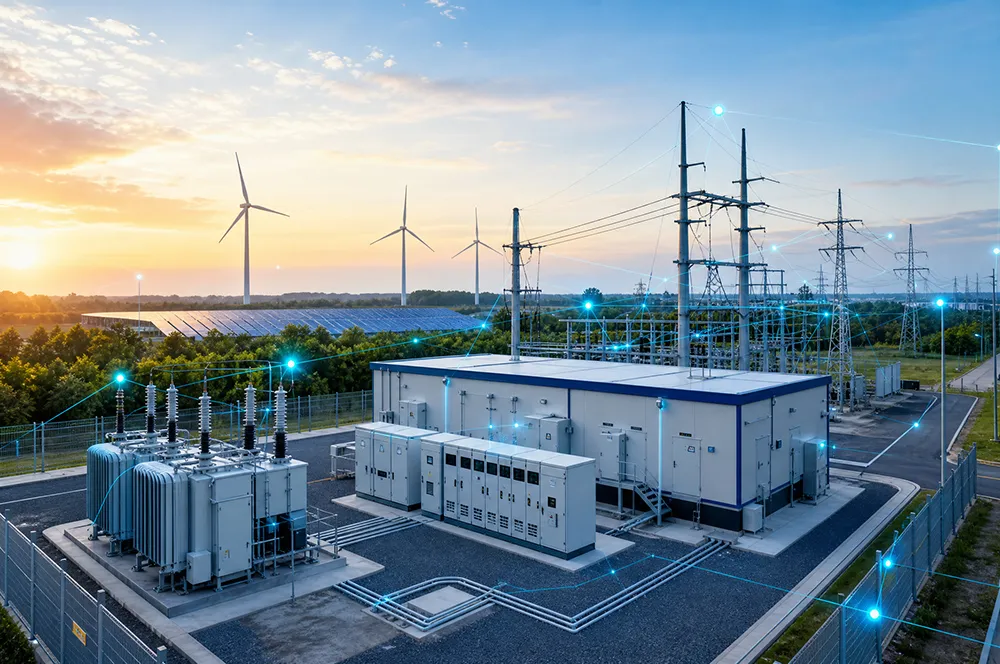

When a procurement manager in Johor Bahru approves a replacement transformer on kVA and voltage alone, an illustrative commissioning sequence can turn ugly: the crew closes the breaker, the unit energizes, and within minutes the sound reading and no-load power trend exceed the project allowances. The immediate verdict is “bad equipment.” Yet the nameplate can be correct and every delivered unit can still follow its design; the real failure is a tender that never aligned core topology, guaranteed no-load loss, excitation current, sound level, harmonic environment, and measurement conditions.
Summary: A 3D wound core power transformer uses three wound magnetic limbs arranged as a spatially symmetrical three-phase circuit, but topology alone does not guarantee a loss or noise result. Specify guaranteed values, tolerances, measurement conditions, and evidence under the IEC 60076 series—especially loss/current measurement and IEC 60076-10 sound determination. Compare capital cost with 8,760 annual energized hours, because no-load loss accumulates whenever the unit is energized. A Stereo rolled core oil-immersed transformer should therefore be purchased from a verified data sheet and test plan, not from a topology label.
Why Core Topology Belongs in the Commercial Specification
Distribution transformers often remain energized continuously when lightly loaded. One watt of no-load loss represents 8.76 kWh per year. IEC 60076-1 provides the general ratings and test framework, while destination-market efficiency rules may set separate limits. Core construction is an input to a guaranteed performance package, not a substitute for one.
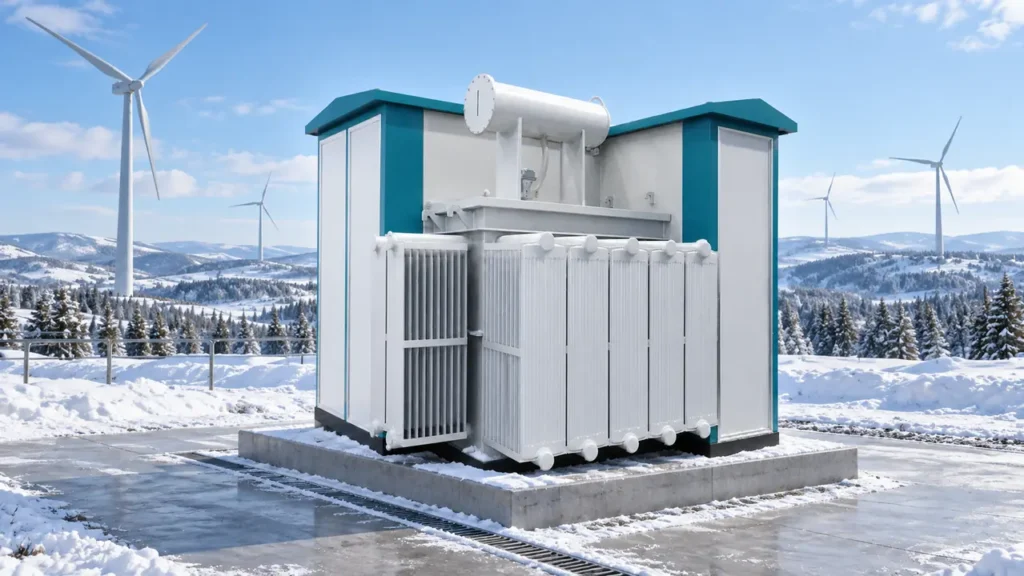
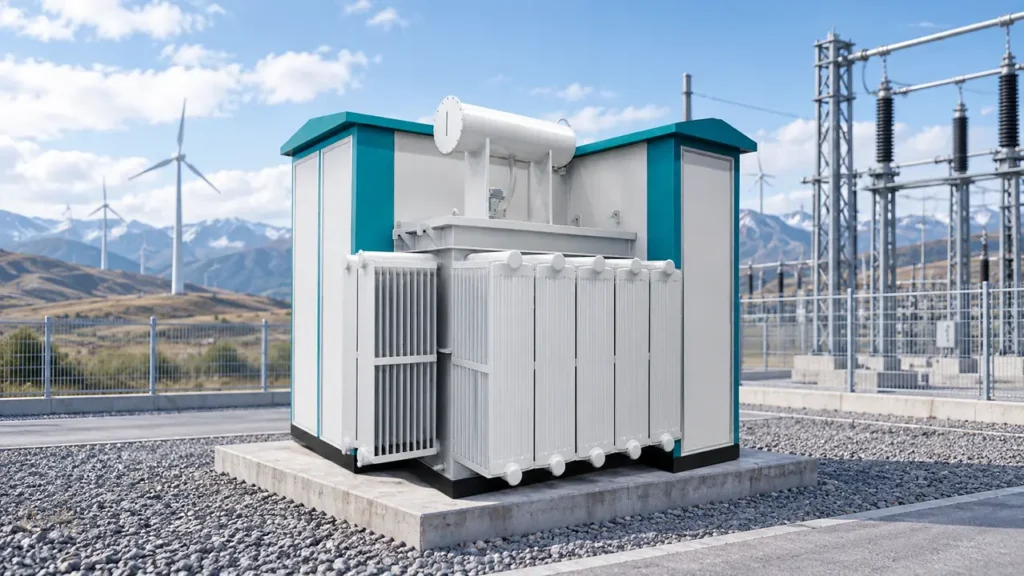
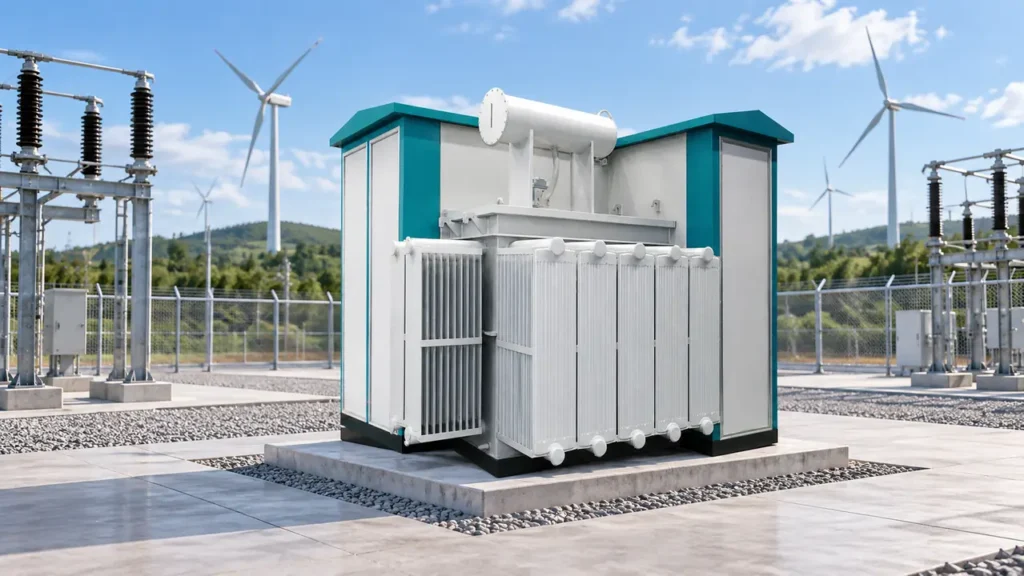
The 3D wound core power transformer category deserves a focused evaluation because its magnetic circuit differs from a conventional flat, stacked three-limb core. Three wound limbs are assembled around a common spatial centerline, commonly at approximately 120-degree positions. This geometry seeks more symmetrical phase paths. It can also reduce the number or effect of mitred joints and local air gaps, depending on the actual manufacturing method. The decisive words are “depending on”: strip grade, flux density, winding tension, annealing, clamping, assembly and tolerances can move the result.
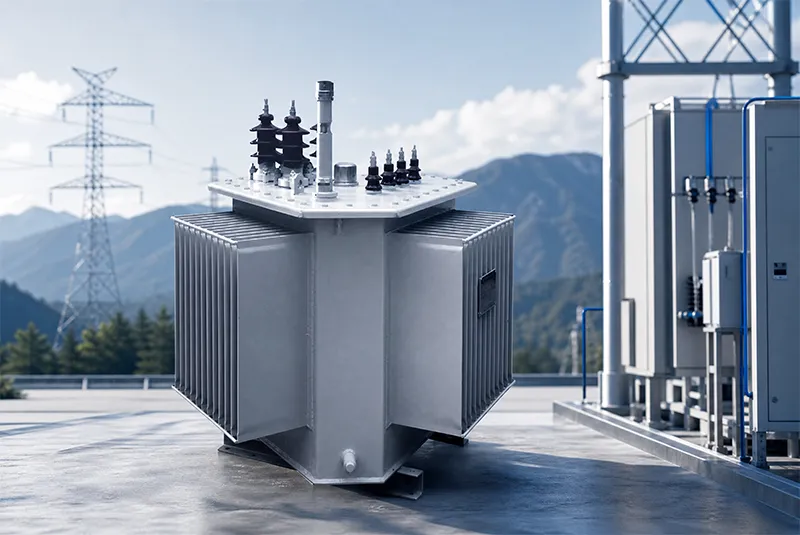
This article complements a basic product definition by concentrating on the decisions hidden inside the phrase Stereo rolled core oil-immersed transformer: how the core is built, where losses and sound originate, what an EPC should request at tender stage, and when lifecycle value justifies a different construction.
1. Three-Limb Stereo Construction and the Magnetic Path
In a conventional stacked core, limbs and yokes are assembled from cut laminations; flux crosses designed step-lap joints. In a three-dimensional wound construction, electrical-steel strip is wound into continuous or near-continuous closed paths and the three core frames form a three-legged spatial assembly. Each phase is magnetically coupled to the other two through the three-dimensional circuit. A 3D wound core power transformer can consequently present more nearly equal magnetic path lengths than an asymmetric planar arrangement.
“Jointless” is not a universal purchasing fact. Some designs minimize cut joints; others require opening, cutting, reforming, or joining during coil assembly. Request a section drawing, steel grade, nominal induction, annealing sequence, and controls for burrs and mechanical stress. IEC 60076-1 results reveal electrical behavior; they do not certify a core-manufacturing method.
A Stereo rolled core oil-immersed transformer also changes the mechanical conversation. The triangular active part can influence windings, lead routing, clamping, tank dimensions and repair. Confirm the transport envelope and center of gravity rather than assuming a smaller core means a smaller package. For seismic or high-vibration sites, require documented active-part restraint.
2. No-Load Loss and Excitation Current: What the Numbers Actually Mean
No-load loss is measured with rated-frequency voltage applied while the secondary is open; it includes magnetic hysteresis and eddy-current effects plus smaller construction-dependent components. No-load current is the current drawn under that same open-circuit condition and includes magnetizing and active components. IEC 60076-1 covers measurement and correction principles, while the agreed standard edition, waveform quality, temperature reference where relevant, instrumentation uncertainty, and voltage/frequency conditions should appear in the inspection plan.
A 3D wound core power transformer may achieve a favorable no-load result when its symmetrical path, electrical-steel selection, joint treatment, annealing, induction and core restraint work together. It is not defensible to assign a universal percentage improvement. Ask for guaranteed no-load loss in watts and no-load current in percent at specified voltage and frequency, the applicable tolerance, design calculations, and routine-test readings for the offered rating—not a brochure comparison from a different kVA or voltage class.
Harmonics and overvoltage matter because RMS voltage alone does not describe peak flux under distortion. For a Stereo rolled core oil-immersed transformer supplying nonlinear loads, provide the spectrum, duty and voltage variation so the supplier can evaluate induction margin, heating and additional loss. If material DC bias is plausible, commission a project-specific study.
3. Sound, Vibration and Thermal Performance
Transformer sound originates mainly from core magnetostriction; winding forces and structural radiation become relevant under load. Material, induction, joints, clamping, tank stiffness and cooling equipment all contribute. IEC 60076-10 defines sound determination, and IEC 60076-10-1 gives application guidance. “Low noise” is incomplete without the quantity, operating condition, cooling state and test environment.
The spatial symmetry of a 3D wound core power transformer can support balanced excitation, while fewer effective joints can reduce localized flux disturbance in a well-executed design. However, tank resonance or overly rigid core restraint can erase an expected acoustic advantage. Specify the guaranteed sound power level, not only a spot sound-pressure reading. If the site boundary is critical, use the factory result as one input to a propagation model that includes enclosure, barriers, distance, tonal penalties and ambient background.
Oil immersion removes heat from windings and core to the tank and radiators. IEC 60076-2 addresses temperature-rise requirements and test methods for liquid-immersed transformers; IEC 60076-7 provides a loading guide for mineral-oil-immersed units. A Stereo rolled core oil-immersed transformer still needs verified winding and top-liquid temperature rises at its declared cooling mode. Do not infer overload capability from low core loss: conductor temperature, hot-spot model, ambient profile, insulation system and accessories determine permissible loading.
4. Hidden Cost, Total Cost and an Illustrative ROI Screen
The purchase price is only one cash flow. Tender evaluation should include no-load energy, load-loss energy under the expected duty curve, auxiliary power, demand charges where applicable, installation changes, spares, inspection, downtime risk and end-of-life handling. For a 3D wound core power transformer, the economic question is whether verified lifetime savings and site benefits exceed any price and integration premium.
An illustrative screen uses: annual no-load energy = guaranteed no-load loss (kW) × energized hours; annual load-loss energy = guaranteed load loss at reference current (kW) × loss factor × energized hours. Suppose Bid A guarantees 0.80 kW no-load loss and Bid B guarantees 0.65 kW, with both energized for 8,760 hours. The difference is 1,314 kWh/year before tolerance, price escalation, tax and discounting. Multiply by the buyer’s own energy value, then present-value the annual difference over the evaluation horizon. These figures illustrate the method, not a product claim.
Hidden costs can reverse the result: a nonstandard footprint can require civil changes, unfamiliar construction can affect repair, and an unsupported sound claim can force a late enclosure. For a Stereo rolled core oil-immersed transformer, capitalize guaranteed values, include contract remedies, and align acceptance-test conditions with the model.
Technology Comparison for Tender Evaluation
| Dimension | Stereo wound-core design | Conventional stacked planar core | Buyer evidence |
|---|---|---|---|
| Magnetic path | Three spatially arranged wound limbs; symmetry is a design objective | Cut laminations with engineered limb-yoke joints | Core drawing, material grade, induction and assembly method |
| No-load performance | Can be favorable when material, annealing and restraint are controlled | Can also be highly optimized with step-lap joints and premium steel | Guaranteed watts, tolerance and IEC 60076-1 test report |
| Sound tendency | Potentially fewer joint disturbances; tank and clamping remain decisive | Joint design, flux density and structure remain decisive | Guaranteed sound power per IEC 60076-10 |
| Manufacturing and repair | Specialized winding, core forming and tooling may be required | Wider conventional manufacturing and repair familiarity | Process description, repair plan, references for offered design |
| Unit-cost tendency | May carry a process/tooling premium or save material; bid-specific | Mature supply base; cost depends on steel and specification | Evaluated bid, not generic assumptions |
| TCO | Strong where verified standing-loss or acoustic value matters | Strong where optimized guarantees and serviceability fit the duty | Discounted loss capitalization and installation costs |
Application and Performance Decision Matrix
| Application | Performance priority | Key tender input | Decision note |
|---|---|---|---|
| 24/7 utility distribution | Standing loss and fleet consistency | 8,760 energized hours, capitalization factors, loss tolerances | A Stereo rolled core oil-immersed transformer merits evaluation against equally guaranteed alternatives. |
| Urban indoor or boundary-sensitive site | Sound power and vibration control | Site limit, distance model, cooling state, tonal criteria | Core topology helps only when the complete tank and installation satisfy the acoustic study. |
| Solar, wind or storage collector | Duty-cycle efficiency and harmonics | Generation profile, converter spectrum, switching and overvoltage | Evaluate losses across the duty cycle; check dielectric and thermal margins. |
| Industrial nonlinear load | Heating margin and power quality | Harmonic spectrum, load factor, imbalance and ambient | A 3D wound core power transformer label does not replace harmonic-loss analysis. |
| Remote infrastructure | Reliability, transport and repairability | Road envelope, lifting plan, spares and field-service strategy | Lifecycle logistics may outweigh a small modeled loss difference. |
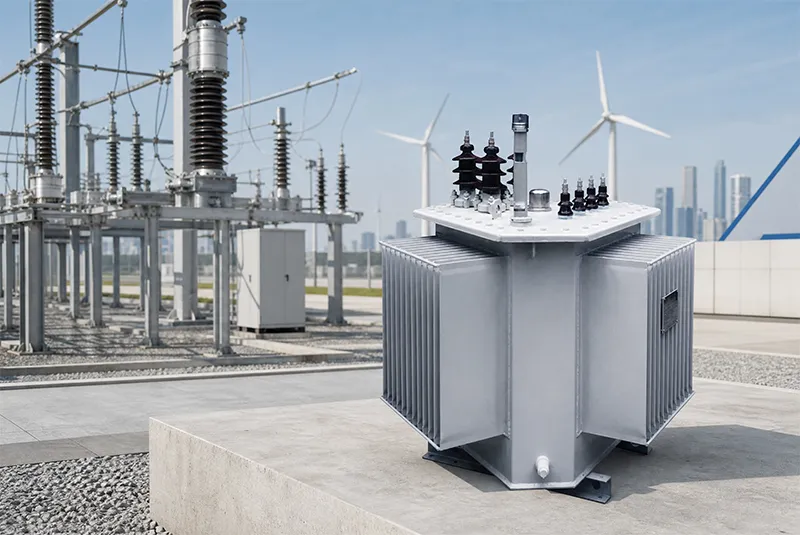
Standards, Tests and Commercial Consequences
- IEC 60076-1: general requirements, ratings and principal test framework. Cite the agreed edition and amendments in the contract.
- IEC 60076-2: temperature-rise requirements and methods for liquid-immersed transformers.
- IEC 60076-3: insulation levels, dielectric tests and external clearances in air.
- IEC 60076-5: ability to withstand short circuit; distinguish design verification from tests actually performed on the offered unit or design.
- IEC 60076-10: determination of sound levels; it is a measurement standard, not a blanket “silent transformer” certification.
- IEC 60076-7: loading guidance for mineral-oil-immersed transformers; it informs operating assessment rather than certifying unlimited overload.
Also identify destination efficiency rules, grid codes, seismic requirements, fire provisions and environmental restrictions. “IEC compliant” is weak unless the supplier maps each Stereo rolled core oil-immersed transformer guarantee to a test, acceptance criterion and document. Unsupported claims can mean rejected FAT results, redesign, damages, delayed energization or an incomplete efficiency filing.
Four Procurement Actions Before Award
- Freeze the duty. State rating, voltages, vector group, impedance, frequency, taps, cooling, ambient, altitude, harmonics, loading profile, insulation level, sound target and accessories. Separate “must comply” from “data for evaluation.”
- Schedule guaranteed values. Require no-load loss/current, load loss, impedance, temperature rise and sound power with standards, tolerances and remedies. Compare the offered 6–10 kV oil-immersed transformer or 35 kV oil-immersed transformer on the same basis.
- Audit evidence before price normalization. Request drawings, core-process controls, applicable type-test evidence, routine-test format and an inspection plan. Jubang Group can align a 3D wound core power transformer offer with the project schedule; buyers should verify exact scope through its qualification and certification information and contract.
- Run a sensitivity case. Recalculate TCO with loss tolerance, low and high energy values, realistic duty, discount rate and installation differences. Award on documented lifecycle value and compliance risk—not a single headline efficiency adjective.
Frequently Asked Questions
What is a three-dimensional wound-core transformer?
It is a three-phase transformer whose three wound core limbs form a spatial magnetic circuit rather than a flat stacked assembly. The practical value depends on the complete design and manufacturing process, so buyers should verify guaranteed tests instead of treating the topology as a performance certificate.
Does a 3D wound core always have lower no-load loss?
No. A 3D wound core power transformer can reduce magnetic-path asymmetry and joint effects, but steel grade, induction, annealing, stress, construction and test tolerances control the delivered value. Compare guaranteed watts at the same rating, voltage, frequency and standard conditions.
Why can stereo rolled-core transformers be quieter?
Balanced flux paths and fewer effective joint disturbances can reduce some excitation forces in a well-designed Stereo rolled core oil-immersed transformer. Sound also depends on magnetostriction, clamping, tank resonance, fans and site reflections; require IEC 60076-10 sound-power evidence for the offered configuration.
Which tests should be witnessed at the factory?
Witnessing should follow the agreed inspection plan and may include routine ratio, polarity/vector group, winding resistance, impedance/load loss, no-load loss/current and dielectric tests. Sound and temperature-rise tests are often specified as type or special tests, so contract their applicability, sample and acceptance criteria explicitly.
How should buyers calculate transformer lifecycle value?
Capitalize no-load loss for energized hours and load loss for the expected duty curve, then add auxiliaries, installation, maintenance, risk and end-of-life costs. Test the result against tolerance, energy-value and discount-rate scenarios before comparing any Stereo rolled core oil-immersed transformer premium.
Primary References
- IEC 60076-1, Power transformers—Part 1: General, International Electrotechnical Commission.
- IEC 60076-2, Temperature rise for liquid-immersed transformers, International Electrotechnical Commission.
- IEC 60076-3, Insulation levels, dielectric tests and external clearances in air, International Electrotechnical Commission.
- IEC 60076-5, Ability to withstand short circuit, International Electrotechnical Commission.
- IEC 60076-10, Determination of sound levels, International Electrotechnical Commission.
Memorable line: Core topology creates potential; guarantees, tests and duty-cycle economics decide whether that potential reaches the grid.
For a project-specific duty review, send the one-line diagram, load profile, loss capitalization, sound limit and destination requirements through Jubang Group’s engineering contact. Then evaluate the proposed Stereo rolled core oil-immersed transformer against your tender schedule and witnessed IEC evidence.