JUBANG

When a distribution engineer in Ho Chi Minh City paralleled a new 35/11 kV unit with an existing transformer, the relay tripped within seconds and the bus went dark. The incoming oil transformer had passed factory tests; the tender omitted a compatible vector group and impedance. This representative scenario shows that technically sound equipment can still be wrong for the system.
Summary: A 35kV Oil-Immersed Power Transformer should be specified as a network solution, not bought from a capacity-and-voltage label. State the system highest voltage, insulation levels, 50 or 60 Hz frequency, tap duty, vector group, guaranteed impedance, loss capitalization, cooling stages, and service conditions. IEC 60076 provides the framework, but the purchaser must convert it into project-specific guarantees and acceptance tests.
Why 35 kV Distribution Specifications Fail at Interfaces
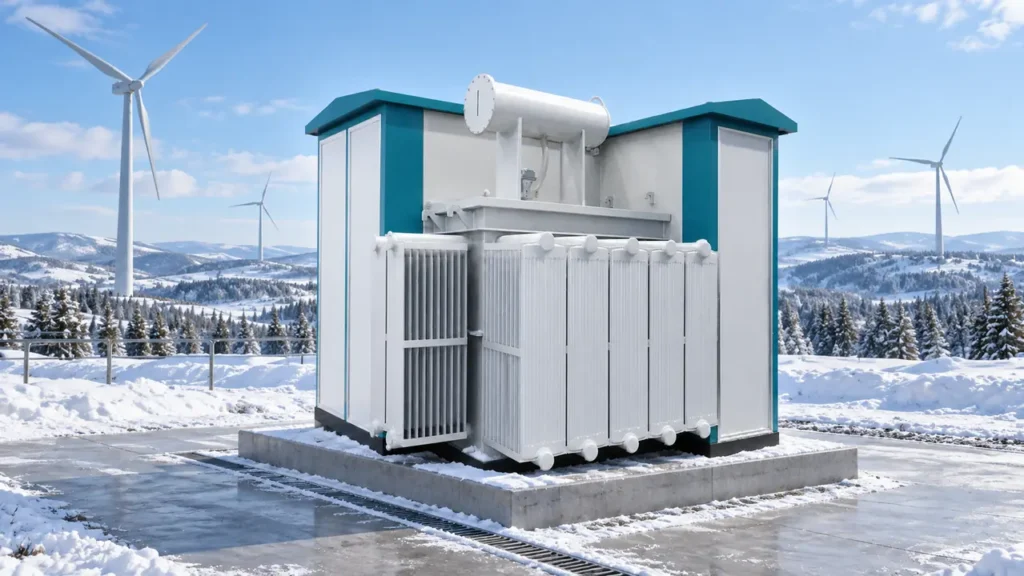
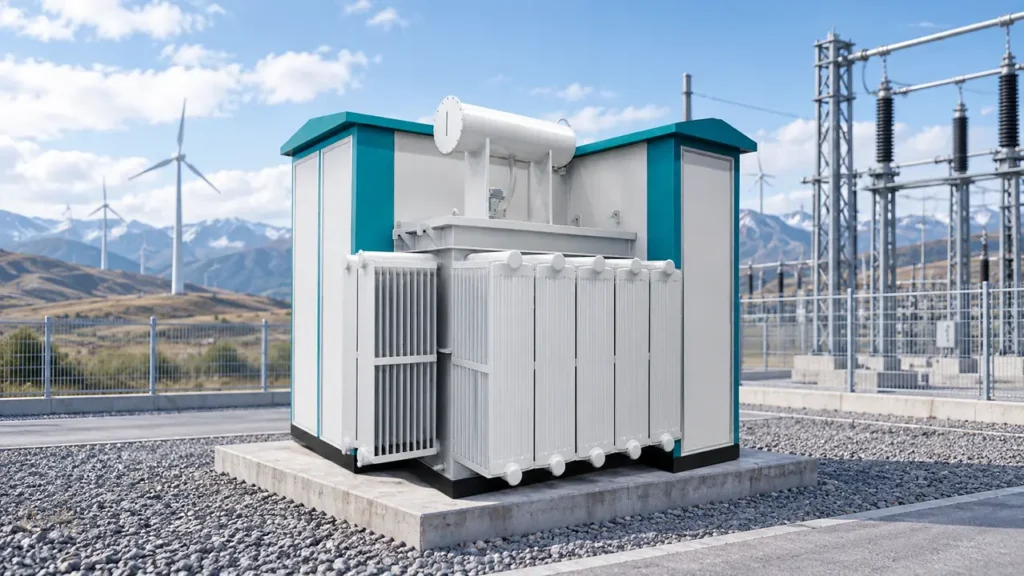
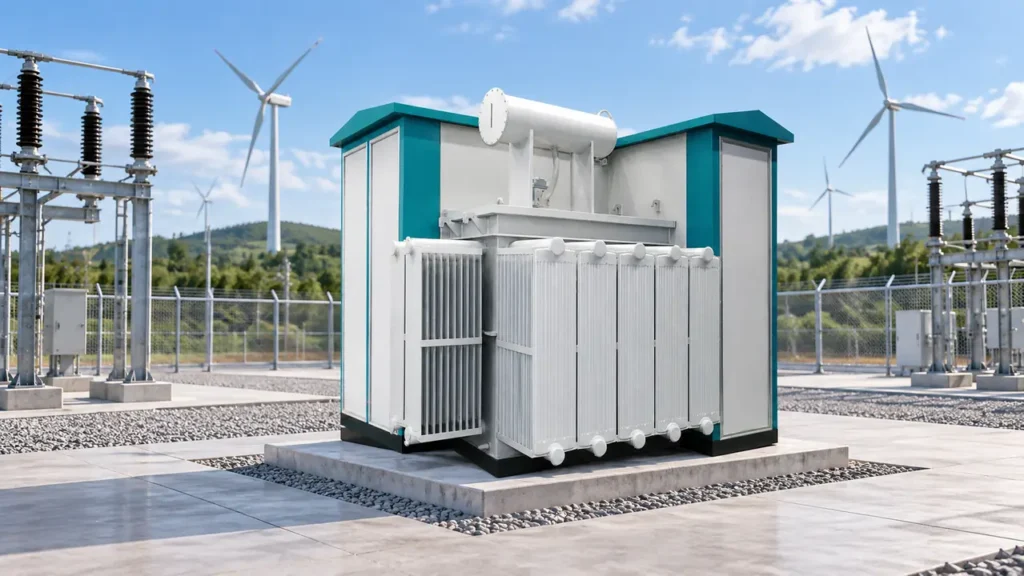
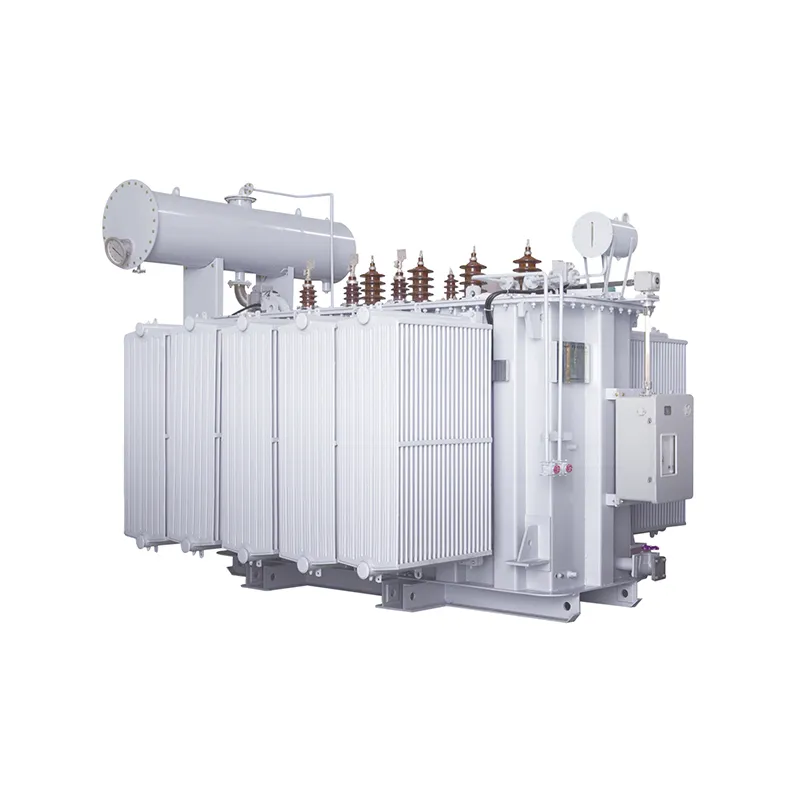
An oil transformer transfers power through windings and a magnetic core while insulating liquid provides dielectric strength and cooling. At 35 kV, it commonly links a subtransmission bus to 3.15, 6.3, 10.5, 11, or another project-defined medium-voltage system. Ratio, frequency, earthing, and duty must come from the network study—not a generic catalogue line.
The phrase 35kV Oil-Immersed Power Transformer therefore describes a product family, not a complete tender. IEC 60076-1 establishes general power-transformer requirements, but a purchase schedule still has to coordinate surge arresters, switchgear ratings, cable insulation, neutral treatment, protection settings, metering accuracy, civil clearances, transport limits, and the planned energization sequence.
Insulation Coordination Starts with Um, Not Nameplate Shorthand
A “35 kV” designation does not define the highest voltage for equipment (Um) or dielectric withstand levels. State nominal and maximum voltage, neutral earthing, overvoltage exposure, altitude, pollution, external clearances, and insulation levels for every winding and neutral. This prevents a 35kV Oil-Immersed Power Transformer from inheriting assumptions from another grid convention.
IEC 60076-3 covers insulation levels, dielectric tests, and external clearances in air. A robust data sheet identifies the required lightning-impulse withstand, separate-source AC withstand, induced-voltage test duty, and whether chopped-wave or other special tests apply. These values must be agreed for the designated Um; they should not be copied from another project merely because both systems are called 35 kV.
Insulation coordination extends outside the tank. Arrester protective level, lead length, and earthing must preserve the intended margin; bushing creepage, cable-box geometry, and installed clearances must suit the environment. At altitude, reduced air density affects external insulation even when the oil transformer’s internal liquid-paper system is unchanged.
Tap Range, Vector Group, and Impedance Must Match the Network
Tap requirements should come from load-flow studies. An off-circuit range of ±2 × 2.5% provides five positions around nominal voltage; any ±5% schedule still needs explicit steps. Energized regulation requires a separately specified on-load tap changer, control bandwidth, step count, duty cycle, and maintenance plan—not an assumed feature of a basic oil transformer.
Vector-group notation defines winding connections and phase displacement. Each clock number represents 30 electrical degrees; Dyn11 and Yyn0 therefore cannot be treated as interchangeable. The choice also affects zero-sequence paths, neutral availability, harmonic behavior, earth-fault protection, and compatibility with an existing bank. Require the manufacturer to confirm terminal marking and phase rotation on drawings before approval.
Percentage impedance governs fault current and load sharing. A lower value can reduce regulation drop but raise prospective short-circuit current; a higher value can limit fault current but alter voltage drop and parallel loading. IEC 60076-1 covers impedance measurement, while IEC 60076-5 addresses short-circuit withstand. State the guarantee, reference temperature, tolerance, network fault level, and required evidence route.
Cooling, Altitude, and Ambient Temperature Define Usable Capacity
Rated MVA is meaningful only under the specified service conditions and cooling mode. ONAN relies on natural circulation of oil and air; ONAF adds forced air and usually introduces fan power, controls, alarms, redundancy, and maintenance. Buyers should state continuous loading, emergency loading, load cycle, harmonic content, enclosure or room conditions, and which auxiliary supplies remain available after a system disturbance.
IEC 60076-2 defines temperature-rise limits and temperature-rise test methods for liquid-immersed transformers. The normal-service reference commonly used by the IEC 60076 framework includes installation altitude up to 1,000 m and cooling-air temperature no higher than 40°C, subject to the standard’s detailed averaging conditions. A project above 1,000 m or with hotter air needs an agreed design adjustment, not a silent assumption that nameplate capacity remains unchanged.
IEC 60076-7 provides a loading guide for mineral-oil-immersed units, including thermal models and ageing considerations. It does not turn overload into free capacity: the operator needs top-oil and winding hot-spot assumptions, starting temperature, duration, cooling availability, and acceptable loss-of-life criteria. For a 35kV Oil-Immersed Power Transformer in a desert or tropical site, ambient profile and solar exposure can be as decisive as the MVA figure.
Loss Guarantees Turn Efficiency into Lifecycle Economics
No-load loss occurs whenever the oil transformer is energized; load loss changes approximately with the square of current within the normal analytical model, although actual operating evaluation should follow the agreed standard and load profile. A tender should request guaranteed no-load loss, load loss at a stated reference temperature, auxiliary power, measurement tolerances, and the commercial evaluation formula. Comparing headline efficiency at one arbitrary load point can conceal annual cost.
Consider an illustrative calculation, not a product claim. If a unit has 8 kW no-load loss and 70 kW load loss at rated current, and the evaluated load-loss factor is 0.45, annual loss energy is:
(8 kW × 8,760 h) + (70 kW × 0.45 × 8,760 h) = 346,020 kWh/year.
A design reducing evaluated losses by 5% would avoid 17,301 kWh per year under those same assumptions. Multiply that energy by the purchaser’s forecast tariff and present-value factor, then add fan energy, inspections, oil sampling, spares, outage exposure, and end-of-life handling. This total-cost method creates a defensible ROI comparison without inventing a universal electricity price or payback period.
Write loss capitalization into bid evaluation before quotations arrive. It can justify a higher initial cost only when tested guarantees and defined remedies support the present value of avoided oil transformer losses.
Configuration Comparison for 35 kV Projects
| Configuration | Best-fit duty | Engineering focus | Maintenance implication | Cost and TCO tendency |
|---|---|---|---|---|
| ONAN, off-circuit taps | Stable-load substations with planned de-energized adjustment | Correct fixed ratio, tap range, radiator performance | Fewer active cooling and tap-control components | Often lower first-cost tendency; losses still dominate long energized hours |
| ONAN/ONAF staged cooling | Sites with peaks or future load growth | Rating at each stage, fan redundancy, alarms, auxiliary supply | Fans, motors, wiring, and controls require inspection | Can defer larger equipment, but auxiliary and maintenance costs belong in TCO |
| On-load tap regulation | Networks with material source or load-voltage variation | Step range, controller logic, operations count, protection coordination | Tap-changer inspection and spares are duty-dependent | Higher complexity may be justified by voltage-quality and operating needs |
| Parallel-ready matched unit | Capacity expansion or N-1 substation operation | Ratio, vector group, impedance magnitude, X/R, tap synchronization | Requires coordinated testing and operating procedures | Can improve resilience and loading flexibility; mismatch risk raises project cost |
Application-to-Specification Matrix
| Application | Tender data that must be fixed | Critical study or acceptance evidence | Frequent omission |
|---|---|---|---|
| Urban utility substation | MVA stages, 35 kV maximum system voltage, LV ratio, sound limit, footprint | Load flow, fault level, dielectric and sound test requirements | Future parallel-unit impedance and civil access |
| Industrial plant intake | Motor-starting duty, harmonics, neutral grounding, protection interfaces | Voltage-dip and harmonic studies; guaranteed impedance | Process restart cost and auxiliary-supply continuity |
| Renewable collector substation | Bidirectional loading, voltage range, harmonics, cyclic profile | Power-flow envelope, thermal loading assessment, grid-code review | Reverse-power operating cases and curtailment states |
| High-altitude installation | Exact elevation, ambient profile, clearances, cooling correction | Manufacturer’s altitude design basis and temperature-rise review | Assuming internal insulation correction alone is sufficient |
| Coastal or desert site | Pollution, salt, sand, humidity, solar radiation, corrosion category | Bushing creepage selection, coating schedule, enclosure and sealing review | Radiator fouling and site cleaning provisions |
| Existing-bank extension | Verified nameplates, test records, tap logic, phase rotation, impedance | Parallel-operation study and site phasing checks | Using nominal ratios while ignoring measured differences |
Standards and Compliance: What the Tender Should Actually Say
- IEC 60076-1 covers general requirements, ratings, service conditions, tests, and tolerances. Name the edition and any destination-market deviations in the contract.
- IEC 60076-2 addresses temperature rise for liquid-immersed transformers and the associated test methods. Cooling mode and site conditions must accompany the requirement.
- IEC 60076-3 covers insulation levels, dielectric tests, and external air clearances. State project insulation levels rather than requesting “IEC insulation” without values.
- IEC 60076-5 addresses ability to withstand external short circuits through calculation, evaluation, and specified test routes. Agree the evidence route before order placement.
- IEC 60076-7 guides loading of mineral-oil-immersed transformers; it supports operating decisions but does not replace the guaranteed rating or a project thermal study.
These documents are standards, not automatic product certifications. A declaration of conformity, routine test report, type-test record, and third-party certificate are different evidence. The buyer should identify which routine, type, and special tests apply to the ordered 35kV Oil-Immersed Power Transformer, who will witness them, what acceptance criteria govern, and how oil transformer serial-number traceability will be maintained.
Local grid, efficiency, environmental, fire, containment, and import rules depend on destination and use. Unsupported claims can cause rejection, delay, repeat testing, or dispute; map each requirement to reviewable evidence.
Four Procurement Actions Before Releasing the Purchase Order
Jubang Group can be assessed as one potential manufacturer and solution partner only after the technical interfaces are frozen. Procurement teams should use the same evidence-based process for every bidder:
- Issue a project data sheet, not a catalogue request. Include MVA, HV/LV ratios, Um, frequency, insulation levels, taps, vector group, impedance, loss guarantees, cooling, sound, accessories, site conditions, transport envelope, and applicable IEC editions. For lower-voltage boundaries, compare the separate 6–10 kV oil-immersed transformer range rather than blending unlike duties.
- Request a guaranteed technical schedule and deviation list. Every blank should be completed, and every exception should be visible before commercial comparison. If core geometry is under evaluation, review the three-dimensional wound-core alternative against the same loss, sound, footprint, service, and maintainability criteria.
- Approve the inspection and FAT plan early. Identify routine tests, requested type or special-test evidence, witness points, calibrated instruments, loss-measurement treatment, dielectric sequence, document language, and acceptance responsibilities. Review public qualification and certification information as supporting documentation, then verify that each document applies to the offered design, factory, standard edition, and destination requirement.
- Evaluate lifecycle coordination. Capitalize losses, budget auxiliaries and maintenance, define critical spares, confirm drawings and protection data, and agree site support boundaries. The selected oil transformer should minimize evaluated system cost and interface risk—not merely win the ex-works price column.
Frequently Asked Questions
What information is needed to specify a 35kV Oil-Immersed Power Transformer?
Provide rated power, complete voltage ratios, maximum system voltage, frequency, insulation levels, taps, vector group, guaranteed impedance and losses, cooling, accessories, sound limit, and service conditions. Also attach fault-level, load-profile, protection, civil, transport, and destination-compliance requirements.
Can two 35 kV transformers with the same MVA operate in parallel?
Not automatically. Their ratios, tap positions, vector groups, phase sequence, impedance values, and X/R characteristics must support acceptable circulating current and load sharing; protection and fault levels must also be rechecked.
Does IEC 60076 compliance mean the transformer is certified?
No. IEC 60076 is a family of standards defining requirements, methods, and guidance; certification is a separate attestation under a specified scheme and scope. Ask for the exact test reports or certificates required by the contract and verify their applicability.
How should buyers compare transformer losses?
Use guaranteed no-load loss, load loss at the stated reference temperature, auxiliary consumption, the expected load curve, energy tariff, evaluation period, and discount assumptions. Apply the same capitalization formula to every bid and define how measured losses affect acceptance.
When is forced-air cooling appropriate for an oil transformer?
ONAF can suit peak-duty, staged-capacity, or growth scenarios when thermal design and operating studies justify it. Confirm the rating at each cooling stage, fan redundancy, auxiliary supply, alarms, control logic, ambient conditions, maintenance access, and the consequence of fan failure.
Authoritative References
- IEC 60076-1:2011, Power transformers – Part 1: General.
- IEC 60076-2:2011, Temperature rise for liquid-immersed transformers.
- IEC 60076-3:2013, Insulation levels, dielectric tests and external clearances in air.
- IEC 60076-5:2006, Ability to withstand short circuit.
- IEC 60076-7:2018, Loading guide for mineral-oil-immersed power transformers.
The memorable rule is simple: the transformer does not operate on its data sheet; it operates inside a network, climate, protection scheme, and maintenance system.
To coordinate tender data with an export project, contact Jubang Group with the single-line diagram, load profile, fault level, site conditions, and destination requirements. Then review the configurable 35kV Oil-Immersed Power Transformer for your high-voltage distribution solution.