Electric engineering often utilizes many types of equipment. One such type is the CT transformer (sometimes referred to as a current transformer). A CT transformer takes an electrical current (generally over a specific magnitude) and transforms it so we can safely measure it and/or take care of the system where it exists. Keeping track of how to use the CT transformer, is important for engineers and electricians that work with electrical systems. The purpose of this article will be to furnish you with a solid grasp of how CT transformers work and what they can do for your system, including: The principles upon which they are based; An explanation of how they operate; A discussion of the advantages of using them in your system; and Information about their real life applications.
What is a CT Transformer?
A CT transformer (current transformer) is an instrument transformer used to measure and monitor alternating currents (AC) in electrical systems. Its primary function is to convert high currents (amplitude) flowing through a high-voltage power line into safe, measurable and usable levels. The converted current is then sent to connected monitoring devices for measuring and monitoring purposes and to provide an operator with the ability to monitor the electrical network. The CT currents are also used as part of the electrical network protection system to identify and isolate the cause of abnormal conditions (i.e., an overload or short-circuit) in the electrical network.
A CT transformer has usually two windings, which consist of a primary winding; few turn winding that connects in series with a High-Current Conducting Conductor that is used to measure current; and a secondary winding; more turn; which produces smaller or proportional to the current in the primary of the primary.
The output from the secondary is often connected to measuring or protective devices so that their measurements, protection relays, etc., can conduct their function correctly.
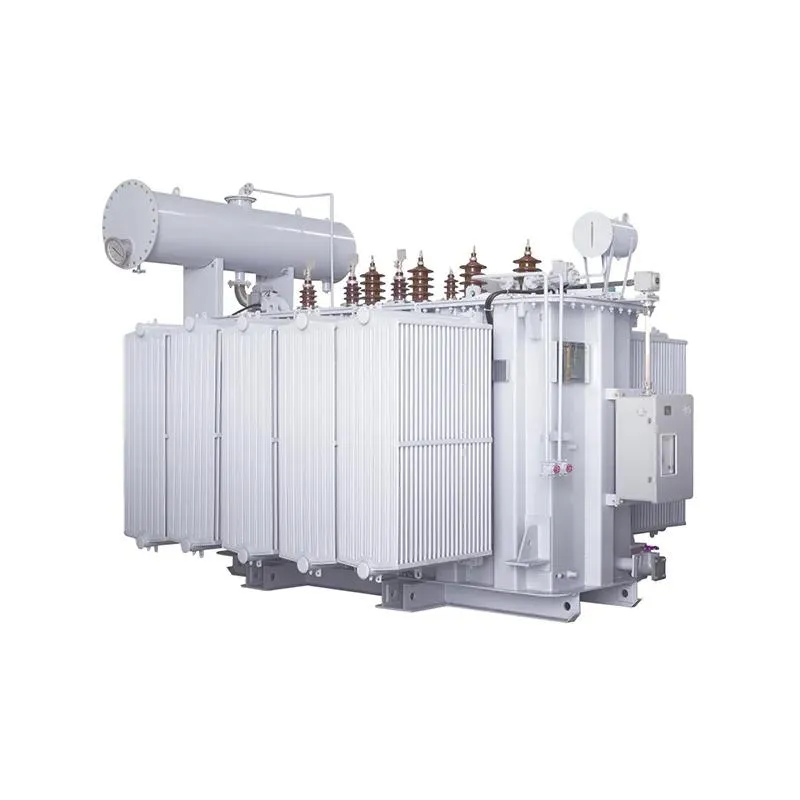
The Working Principle of a CT Transformer
The Current Transformer works using the science of electromagnetic induction. A magnetic field is produced when alternating current passes through the primary conductor, or primary winding, which then induces a current in the transformer’s secondary winding due to Faraday’s law of electromagnetic induction. In addition, the current induced in this secondary winding is directly proportional to that of what is passing through the primary winding.
The current decreases as it flows from the primary coil to the secondary coil through the winding ratio between them. For instance, if you have a 1-turn primary coil and a 100-turn secondary coil, when there is 1000 A of current in the primary conductor, then there will be only 10 A of current flowing through the secondary coil. Accordingly, through the many turns of wire in a current transformer, you can see how much current is passing through the cable(s) within your electrical distribution system, which is essential in measuring and protecting your electrical distribution system.
As a general rule, any time that the primary circuit of a CT transformer is active, the secondary winding must always be connected to a load (such as a measuring device). Leaving the secondary winding of a CT transformer open circuit while the primary circuit is energized can create potentially lethal high voltage, heat damage to the transformer, and damage to the transformer because there will not be a return path for current flow.
Types of CT Transformers
There are several variations of CTs and each serves a unique function in its intended application. Common CTs include:
Types of CT Wounds: In the wound-type CT, both the primary and secondary winding are applied to the same magnetic core. This type of CT is used where high accuracy is needed.
Bar Type CT: This is the simplest design of CT’s and is built using solid conductors like busbars or heavy cables for the primary winding. Due to their design they can reliably handle very high primary currents in order to produce an accurate secondary current.
Toroidal CTs: All Toroidal CTs are built without a primary winding and consist of a circular core. The conductor carrying the high current is passed through the core, thus operating as the primary winding. Due to this design, Toroidal CTs are widely utilized in cable applications and circuit breakers.
Advantages of a CT Transformer
Using a CT transformer offers numerous advantages, which include:
Safety: Accurate measurement of the current in a way that keeps both the measuring instruments and the operators safely isolated from the high voltage circuits.
Precision and Consistency – A properly built transformer CT will enable perfect values which is required to ensure safe reliable electrical systems. This precision allows for better management of energy and fault detection.
Compact, Lightweight and Economical Design: Compared to other current measuring devices, CT transformers are much more compact and lighter. They can be easily installed since they do not require any additional equipment or special tools to do so. They are also a very cost effective way to measure regularly, as well as protect electric systems.
Being adaptable in High Voltage Systems: because the CT transformers are made to withstand large amount of power, they can be used for various types of businesses or industries with their functional capabilities.
Applications of CT Transformers
The many uses for CTs make them a common choice across all industries. Below are some of the primary industry uses for CTs:
1.Monitoring & controlling power systems: CT transformers are used widely in power generation plants, on the transmission, and in electrical substations to measure and control current.
2.Protection System: Electrical Protection Systems employ Coil Test Transformers (CT) to identify fault conditions, such as Over-current or Short-Circuit and electronically give a signal to Circuit Breakers to allow them to isolate the damaged area and prevent any further damage to the system and ensure the continued safety of the whole system.
3. Energy Measurement Devices: Energy measurement devices play an essential role in measuring energy consumption of electric utility service in residential, commercial and industrial businesses. When devices are accurately measured, billing is accurate and fair.
4. Industrial Uses: In manufacturing facilities and industries CT transformers monitor the production and energy usage of motors, generators, and other machines. These measurements help to maximize efficient production and reduce the chance of breakdowns.
5. Research and Development: In the field of research and development (R&D), CTs are utilized for measuring and analyzing experimental electrical current flows through various types of circuits within laboratories or other laboratory-type environments.
Frequently Asked Questions
What is a CT transformer?
A CT transformer is sometimes called an ‘instrument transformer’ and is specifically designed as a means of converting a high alternating current (AC) into a low AC for the purpose of being able to measure, control and protect electrical circuits in large scale power system applications.
What is the working principle of a CT transformer?
Transformers operate using the principle of electromagnetic induction, where the primary winding creates a changing magnetic field to create an induced current in the secondary winding, which will be scaled to a lower value based on the difference in windings between the two.
What are the advantages of using a CT transformer?
CT Transformers offer greater safety, measurement accuracy and reliability. CTs are also compact, making them suitable for use on different types of applications (and cost-effective). Examples of CT applications include:
energy metering; and
protection and monitoring of electrical systems; etc.
What are the practical applications of a CT transformer?
CT transformers serve a multitude of purposes in the areas of power generation, energy measurement, electrical protective systems, industrial automation, as well as R&D facilities. The primary reason for their use in these applications is their ability to operate under high voltage conditions and at the same time provide accurate measurement and protection for the system. As such, CT transformers have proven to be invaluable tools in both industrial and commercial environments.
The CT transformer is an integral part of electrical systems as it provides precise current readings and protection for your system. It works by converting high currents into lower ones that are readable, allows you to use them in various types of applications and provide safety advantages over other types of measurement and monitoring devices. Understanding how the CT transformer functions and the applications that it can be used in will allow those within the industry to take advantage of the benefits associated with them, contributing to increased safety and efficiency in today’s electrical systems.

 JUBANG