From transformers and switchgear to ring main units, substations, circuit breakers and smart components, Jubang provides integrated product support for power distribution projects.
Discover Jubang’s strengths in technology R&D, quality testing and smart manufacturing, supporting reliable electrical equipment and efficient power distribution solutions for global customers.
From technical consultation and OEM/ODM customization to EPC support, smart O&M, delivery documentation and after-sales service, Jubang supports your project at every stage.
Explore Jubang Group’s development history, intelligent manufacturing base, R&D platforms, CNAS-accredited laboratory and global project service capabilities.
Renewable Booster Substation Cooling: Inputs to Define Before Equipment Review
Release Time: 2026-08-12
Renewable booster substation cooling should be reviewed from controlled project inputs, not from a generic promise about ventilation or HVAC. Before equipment review, the EPC, owner, equipment suppliers, and operations team should agree on the thermal-duty basis, site environment, enclosure boundary, auxiliary-power information, maintenance expectations, and decision owner.
This guide is an information-intake checklist. It does not choose a cooling system, calculate temperature rise, specify airflow, assign an environmental rating, or confirm a project outcome. Those decisions require the approved design and responsible engineers.
Part 1. Start with project inputs, not a cooling promise
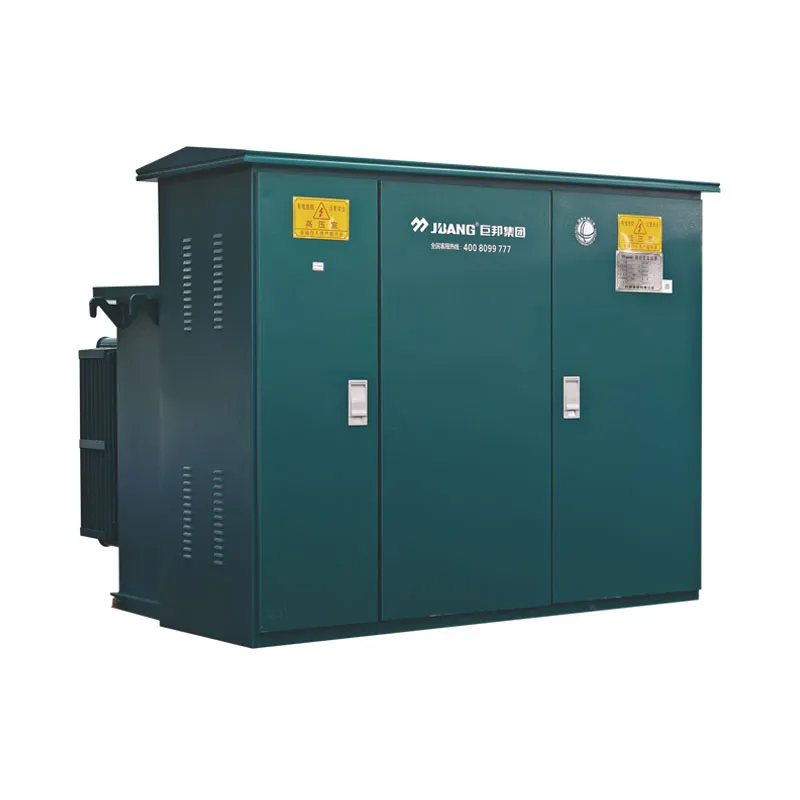
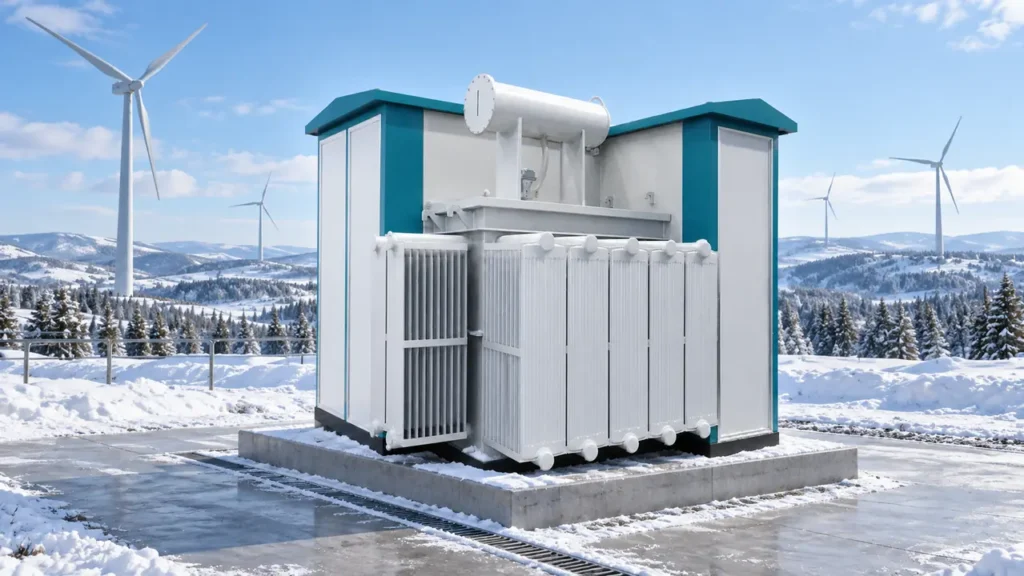
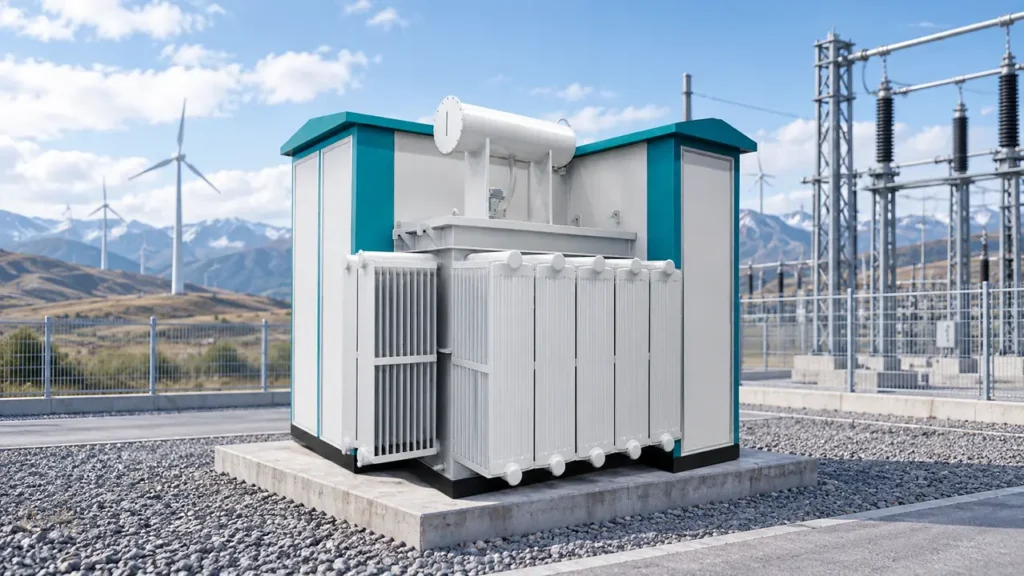
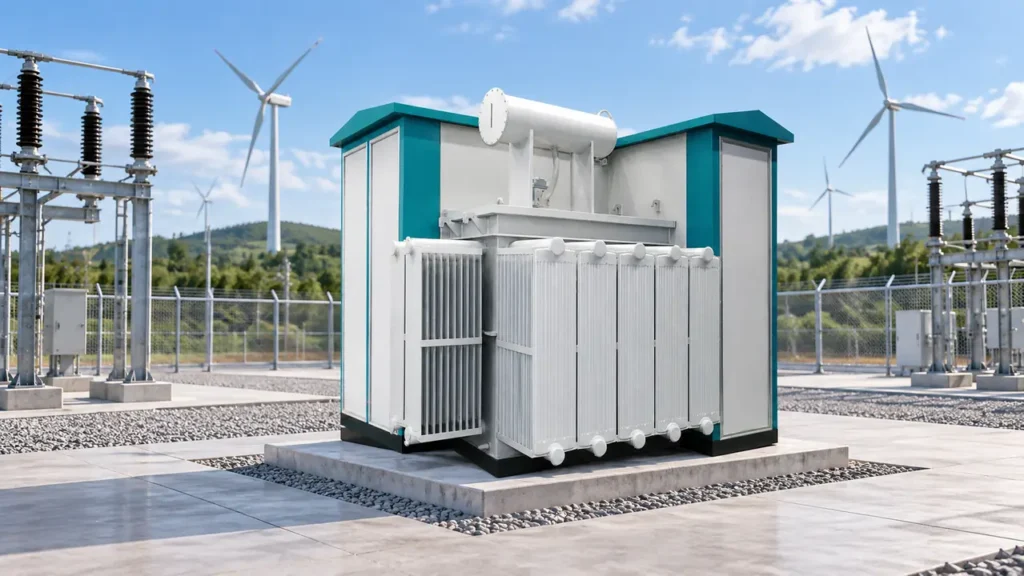
“Cooling” can refer to transformer duty, a PCS enclosure, a prefabricated-station compartment, or the site’s broader operating plan. The first task is to name which boundary is being reviewed and which party owns the supporting documents. Do not turn a product image or a generic enclosure description into a claim about thermal performance.
IEC 62271-202 gives scope context for AC prefabricated substations, but it does not select a cooling method or prove a project environment. Its value here is to keep the equipment boundary visible while the project team gathers the actual evidence.
Important: Do not ask a supplier to “provide cooling” without the approved operating and environment inputs. The request should identify the review boundary, document revision, and party responsible for each open assumption. (IEC 62271-202)
Part 2. Record the operating-duty basis
The project team should define the duty information used for review, including the named operating cases and the source of each record. This does not create a thermal calculation; it stops the quotation from being built around an undocumented default.
Duty input
Evidence to provide
Typical owner
Operating cases
Controlled project operating description and revision
Owner / EPC
Equipment scope
Scope matrix for PCS, transformer, MV and enclosure items
EPC
Duty-source document
Approved supplier or project document used for review
Equipment owner
Changes and exceptions
Assumption register with acceptance path
Project manager
IEC 60076-1 is a transformer standards-family reference, not a source for a cooling class, temperature-rise result, or equipment rating. The actual duty basis must come from the project documents.
Part 3. Define the site and enclosure evidence
Environmental information should be traceable to a project source. The goal is not to label the site with an assumed class, but to give the design authority and suppliers the same review record for ambient conditions, solar exposure, airborne contaminants, moisture observations, altitude, and any other conditions the project has documented.
Site or enclosure item
Input to collect
Do not claim
Ambient record
Project environmental data and its source
A universal operating limit
Solar exposure
Drawing or site-study reference, if available
A cooling result
Airborne conditions
Project environmental observations and owner
A material or enclosure rating
Enclosure boundary
Equipment scope and compartment responsibility
A ventilation design
Constraints
Access, noise, utilities and local project requirements
A solution without review
For a related environmental topic, JUBANG’s wind farm substation corrosion protection article discusses evidence gathering for corrosion decisions. It should not be read as a cooling or HVAC selection.
Part 4. Clarify auxiliary power and equipment boundaries
An equipment review needs to know what auxiliary services are available, what is only proposed, and who confirms each interface. Record the document source for auxiliary power, controls, and maintenance access rather than assuming a service arrangement from a product family.
Ask the project team to identify:
the approved document that defines available auxiliary-power interfaces;
which supplier owns controls, monitoring, and related supporting documents;
the equipment and enclosure boundaries relevant to the review;
any project restrictions that must be referred to the design authority; and
the person authorized to accept deviations or missing information.
This is a handoff checklist, not an instruction to configure auxiliary systems or select equipment.
Part 5. Include maintenance and document-control inputs
Maintenance expectations influence what information must be visible in a review package. Ask the owner or operations representative to provide documented service access expectations, inspection constraints, available maintenance windows, and the party who controls the current revision of the operating information.
Review record
Why it belongs in the package
Maintenance expectation
Shows what the project team expects to review
Access constraint
Identifies a civil or operations dependency
Current document revision
Prevents review against superseded information
Open-action register
Makes missing inputs explicit
Approval owner
Separates supplier comment from project acceptance
No single checklist can confirm thermal performance or suitability. The record simply gives the responsible engineers a controlled basis for their project-specific review.
Part 6. Build a thermal-review RFQ package
The RFQ should ask suppliers to identify information gaps and deviations, not to invent a cooling design. Include the following evidence with one controlled revision register.
RFQ input
Buyer should provide
Why it is needed
Project basis
Location, one-line diagram, scope matrix and revision
Defines the review boundary
Duty evidence
Approved operating-case description and document owner
Connects review to project inputs
Environment evidence
Available site records and their source
Keeps assumptions visible
Enclosure and auxiliary data
Boundary drawings and available service-interface documents
Assigns responsibility
Operations input
Maintenance expectations and access constraints
Captures user requirements
Decision control
Open-action register, required documents and approval path
Prevents silent defaults
For wider electrical interface preparation, see JUBANG’s PV booster station design inputs. That article is not a cooling-selection method and does not replace the current project review.
Part 7. Use the approved package for a product enquiry
After the project team has issued controlled thermal, environmental, auxiliary-power, and maintenance inputs, it can review the JUBANG prefabricated substation range for a project discussion.
The product-family page does not prove cooling capacity, HVAC suitability, environmental classification, compliance, or project performance. Send the controlled package through JUBANG Contact Us so the responsible parties can review the actual scope.
FAQs
Does this article select a cooling system?
No. It lists the project inputs required before a responsible engineer and the relevant suppliers review a cooling or thermal question.
Who should supply the site conditions?
The owner or EPC should identify the controlled project source and the person responsible for confirming its current revision.
Why include auxiliary power in the review package?
It clarifies the available service interface and its owner, without assuming any controls or equipment arrangement.
Can an enclosure image prove environmental suitability?
No. An image can show product context, while suitability depends on documented project conditions and the approved design review.
What should be reviewed before requesting a quotation?
Review the controlled scope, operating-duty evidence, site records, enclosure and auxiliary interfaces, maintenance constraints, and open assumptions.
What belongs in a renewable booster substation cooling RFQ?
Include the project basis, duty and environmental evidence, interface documents, maintenance expectations, required documents, and an action register for missing inputs.
Products are exported to more than 100 countries and regions such as Africa, the Middle East, and the United Kingdom and Europe. It is a leading manufacturer of power distribution equipment in China.

 JUBANG