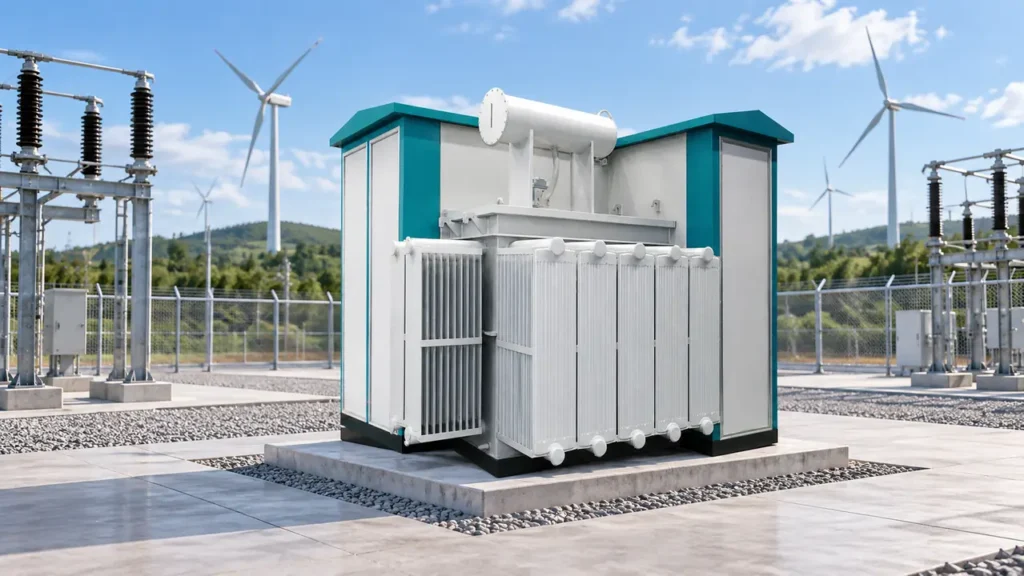
From transformers and switchgear to ring main units, substations, circuit breakers and smart components, Jubang provides integrated product support for power distribution projects.
Discover Jubang’s strengths in technology R&D, quality testing and smart manufacturing, supporting reliable electrical equipment and efficient power distribution solutions for global customers.
From technical consultation and OEM/ODM customization to EPC support, smart O&M, delivery documentation and after-sales service, Jubang supports your project at every stage.
Explore Jubang Group’s development history, intelligent manufacturing base, R&D platforms, CNAS-accredited laboratory and global project service capabilities.
How Ambient Temperature Changes Transformer Derating Decisions
Release Time: 2026-07-18
Transformer ambient temperature derating begins with the rating basis, not a copied percentage. Compare the actual local ambient profile with the conditions assumed for the proposed transformer, then provide the OEM with the load profile, cooling arrangement, installation conditions and monitoring scope needed to evaluate winding and hot-spot temperatures for that specific duty.
Part 1. Start with the rating basis, not a copied percentage
Ambient temperature matters because it sets the cooling medium around the transformer. A rating is established for stated conditions, so a site with a different ambient profile may require a different loading decision. Schneider Electric’s ambient guidance illustrates that normal service assumptions include more than one ambient measure and can also include altitude.
Begin with the nameplate and approved specification. Ask which ambient measures, cooling class, temperature-rise basis, altitude and duty were used for the proposed rating. A weather record alone cannot answer whether the transformer may carry a particular load at a particular site.
Input to compare
Why it matters
Owner
Proposed rating basis
Establishes the conditions against which the site is assessed
Transformer OEM
Local ambient profile
Shows seasonal, daily and short-duration exposure
Owner or EPC environmental lead
Intended loading duty
Connects the thermal question to the actual operating case
Electrical designer or owner
Installation concept
Identifies enclosure, room or outdoor conditions near the equipment
EPC electrical and mechanical leads
Part 2. Separate ambient, winding and hot-spot conditions
Ambient temperature is not winding temperature, and neither is automatically the winding hot spot. The ABB dry-type design guide presents temperature class as a relationship among ambient, winding rise and hot-spot allowance.
That relationship is why an ambient change cannot be converted safely into one universal rating adjustment. For liquid-filled equipment, a thermal assessment may also use top-oil temperature, other liquid temperatures and modelled winding gradients. For dry-type equipment, the temperature response depends strongly on surrounding air and its path through the unit.
In either case, load, losses, cooling mode and the OEM’s equipment parameters determine the result, including the assessment of insulation aging. Do not accept a field sensor reading as proof of the hottest winding location unless the measurement method and its interpretation were defined for that transformer. Treat the ambient reading as one input to the assessment, then preserve the distinction between measured values, calculated values and protective actions.
Part 3. Match the ambient record to the load profile
The difficult condition is often the overlap between high local ambient and high transformer loading. A peak may be brief, repetitive or sustained; the load may be flat, cyclic or driven by a process, charging fleet, renewable plant or seasonal demand. Research comparing IEC 60076-7 and IEEE C57.91 approaches shows why thermal models consider operating conditions and cooling modes rather than a single static load point.
Provide time-aligned data where it is available. Use the same time basis for ambient, current or power, cooling-stage status, voltage and frequency, peak duration, cyclic load and any planned overload duty. If future operating cases differ from the historical record, identify those cases separately instead of treating past weather and future load as one proven combination.
The request to the OEM should state which case requires a decision: continuous operation, repeating daily cycle, seasonal peak, contingency duty or a short controlled event. The OEM can then confirm the inputs needed for the applicable thermal model and any remaining assumptions.
Part 4. Treat cooling mode as an operating condition
Cooling mode is part of the loading case, not a background label. Natural and forced cooling arrangements respond differently to heat, and a fan-assisted stage is relevant only when the supplied equipment, control logic, auxiliary power and maintenance state make it available. The thermal-model comparison above also identifies cooling-mode treatment as an important source of different calculated outcomes.
Record the installed cooling class, all available stages, fan availability, normal control sequence, failure indication, auxiliary supply and intended operator response. If a cooling stage is assumed for a particular load case, show that assumption in the one-line diagram, control narrative and acceptance plan.
Do not turn a fan into an automatic derating remedy. Fan operation can change the equipment thermal condition, but the result still depends on the transformer design, local air or liquid conditions, load duration and the OEM evaluation.
Part 5. Capture the local installation environment
The ambient condition at the transformer can differ materially from the nearest meteorological record. Direct solar exposure, reflected heat, a roof canopy, an enclosure, room heat sources, recirculated exhaust and restricted ventilation can all change the local cooling environment. Altitude also belongs in the same review because it can affect air-based cooling assumptions.
Record the local air condition
For an outdoor transformer, identify orientation, solar exposure, shade, nearby hot discharge and the location proposed for ambient measurement. For an indoor dry-type transformer, identify the inlet-air temperature and location, room heat balance, intake and exhaust path, enclosure openings, filtration, room airflow and obstructions.
Air density can be relevant where altitude changes the air-cooling assumptions. The ABB installation guidance supports treating the surrounding-air path and room ventilation as part of the dry-type cooling context.
Site elevation and any project environmental basis
Lets the OEM review cooling and insulation assumptions
Solar and reflected heat
Exposure, shade and surrounding surfaces
Avoids substituting regional weather data for equipment conditions
Enclosure and ventilation
Drawings, intake/exhaust path and adjacent heat sources
Shows whether cooling air can reach and leave the transformer
Dust, humidity and contamination
Source, severity, cleaning constraints and ingress paths
Coordinates cooling, enclosure and maintenance decisions
Part 6. Keep liquid-filled and dry-type reviews distinct
Both liquid-filled and dry-type transformers can face high ambient conditions, but their thermal paths are not interchangeable. A liquid-filled evaluation may require the liquid cooling arrangement, liquid-temperature information and the applicable loading-model parameters. A dry-type evaluation requires particular attention to inlet-air condition, airflow through the unit, enclosure effects and room ventilation.
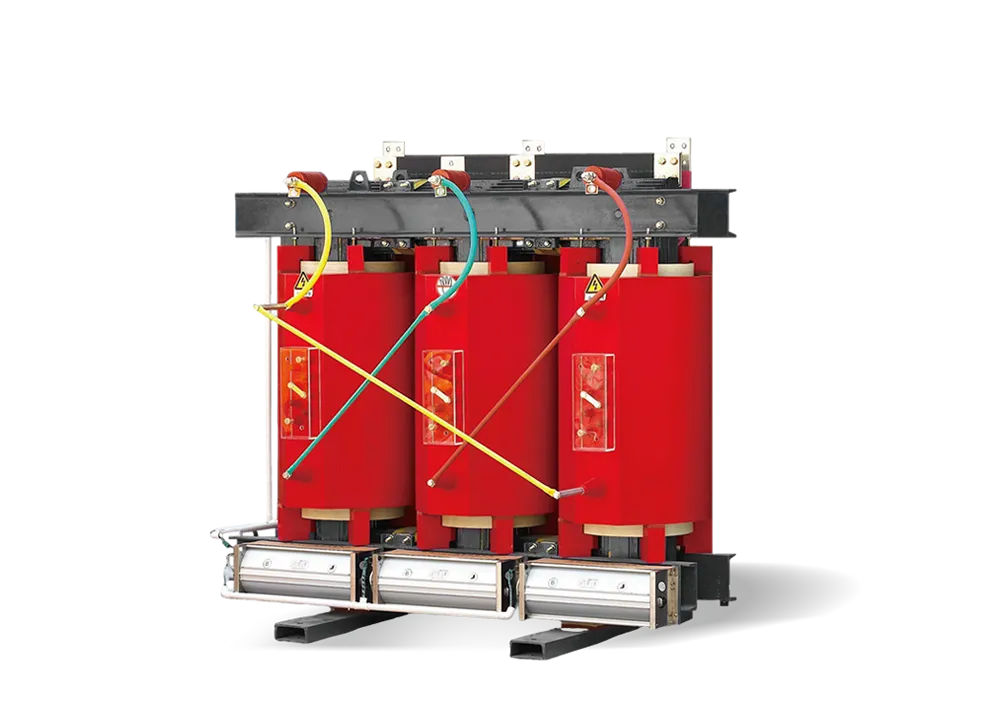
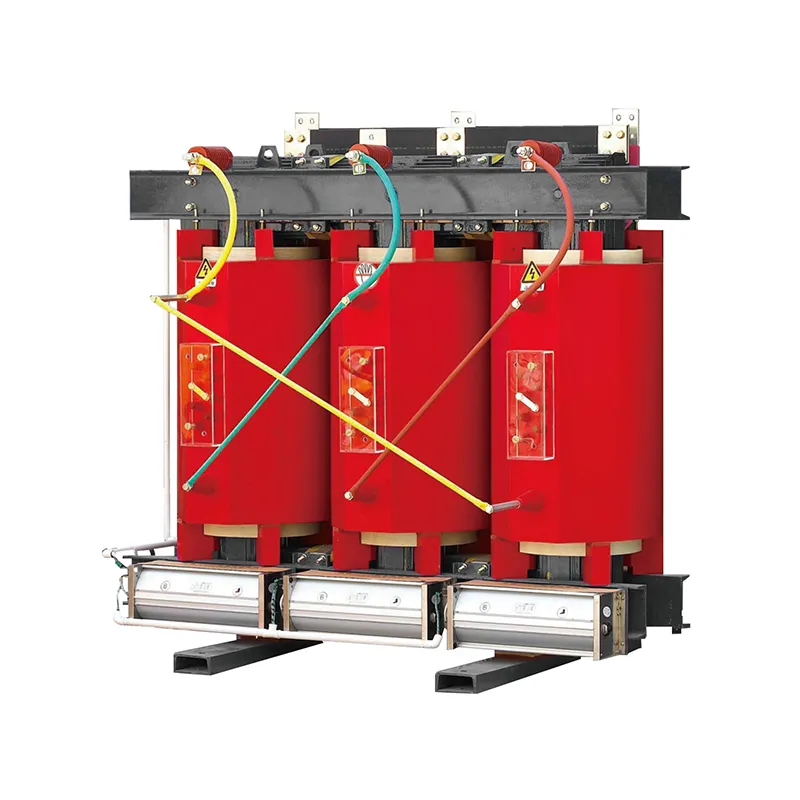
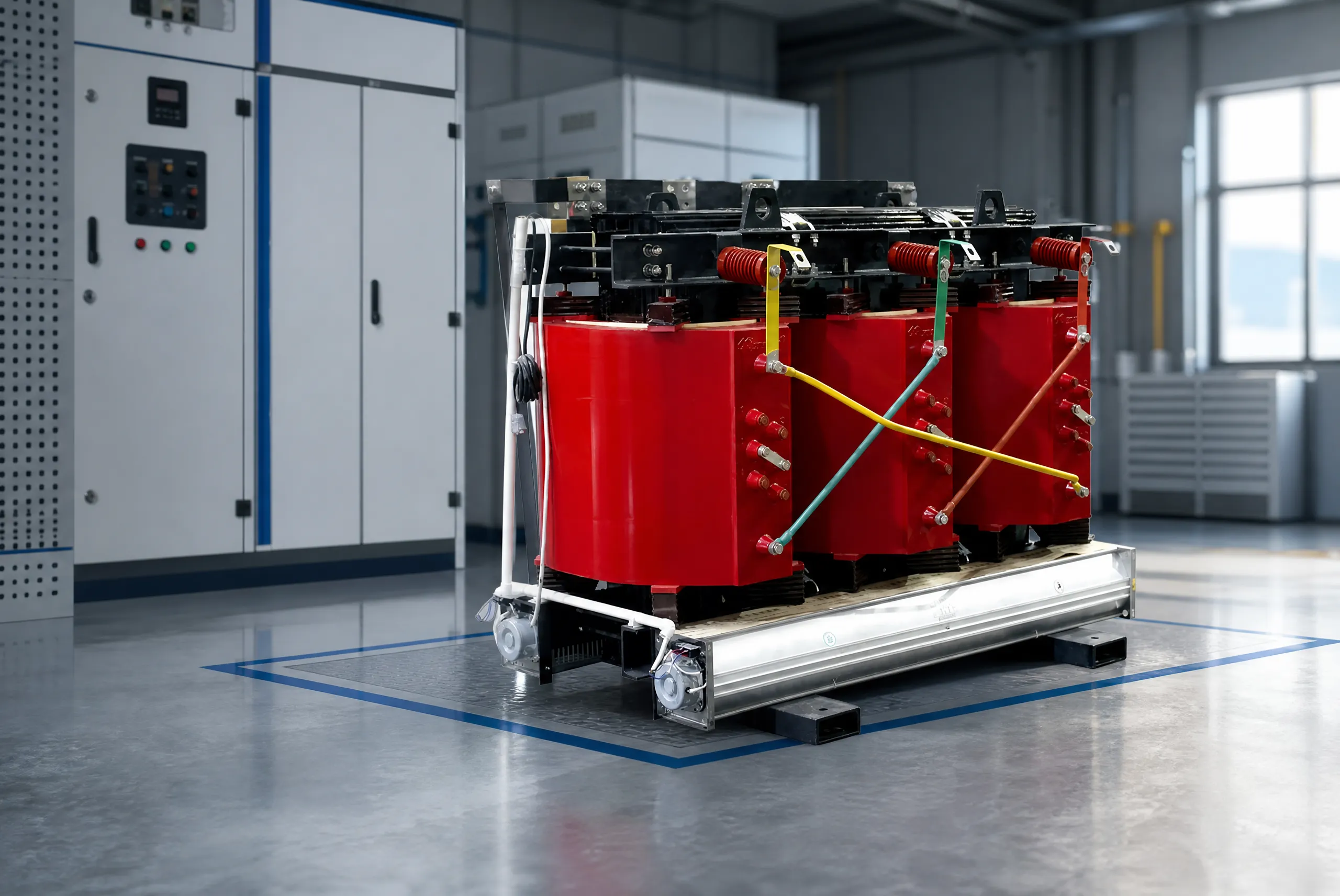
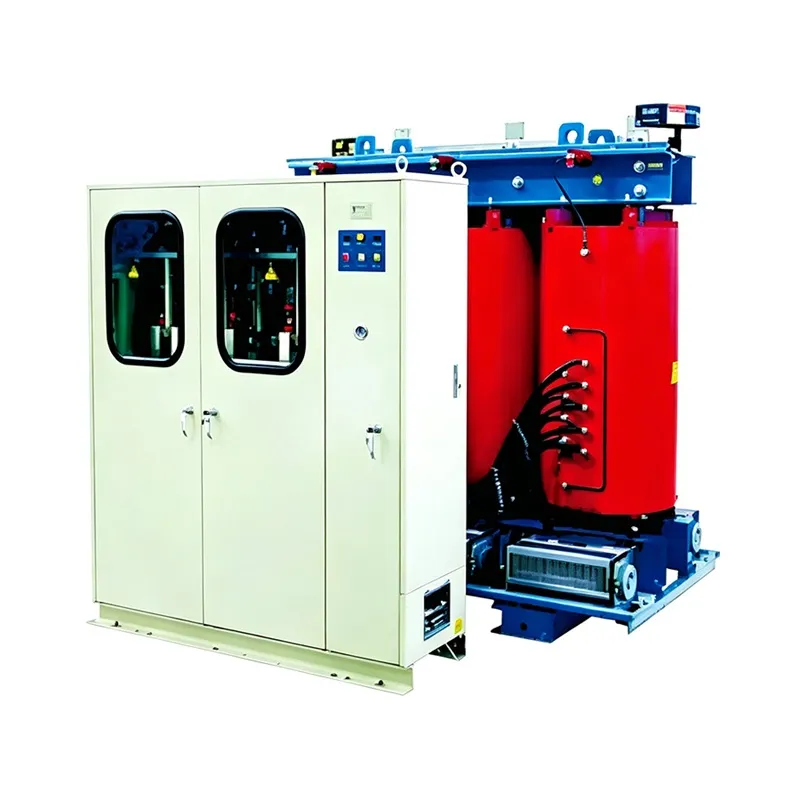
The common RFQ should therefore capture the site and duty once, then ask the OEM to apply the correct equipment-specific model. Do not take a liquid-filled curve, a dry-type room rule or a product-family example and reuse it for another construction. Readers needing dry-type construction context can also review the SCB14 resin cast dry-type transformer overview.
Review topic
Liquid-filled input focus
Dry-type input focus
Cooling medium
Liquid condition and cooling equipment
Surrounding and inlet air
Local installation
Radiator/cooler airflow, solar and enclosure effects
Air path, room ventilation, obstruction and enclosure effects
Thermal evidence
Applicable liquid and winding thermal parameters
Applicable winding, air-path and enclosure parameters
Decision boundary
OEM loading/thermal review for the stated unit
OEM loading/thermal review for the stated unit
Part 7. Define monitoring and alarm ownership
Monitoring is valuable when each signal has a purpose and an owner. Hitachi Energy’s TXpert Hub overview describes systems that combine temperature, ambient, load and cooling information to support hot-spot/aging assessment and cooling control. Those functions illustrate an interface; they do not establish a required sensor package or setpoint for every transformer.
Specify whether the project needs an ambient sensor near the equipment, load data, winding or liquid-temperature signals, cooling-stage status, enclosure temperature, fan-failure indication, SCADA points and event records. Define the source of each signal, sensor placement, its accuracy and location, the calculation owner, alarm annunciation, protective interface and functional-test responsibility.
Alarm and trip thresholds require the OEM, protection engineer and operations team to work from the approved transformer data, thermal study and cause-and-effect philosophy. Avoid copying thresholds from a different model, insulation system or duty cycle.
Part 8. Send an RFQ that supports a thermal review
An RFQ should let every bidder state the rating basis used, the thermal inputs reviewed and the conditions that remain outside its scope. It should not ask a supplier to guarantee performance from a maximum weather value alone.
RFQ input checklist
Proposed rating, voltage, frequency, tap range, OEM loss data, insulation/temperature-rise basis and requested documents.
Local ambient record with design, average and peak conditions, time basis, measurement location, altitude and solar/exposure description.
Load profile, maximum continuous duty, cyclic duty, planned overload cases, harmonics and future operating scenarios.
Cooling class, cooling stages, fan or pump availability, controls, auxiliary power, redundancy and failure response.
Site plan, elevations, enclosure or room drawings, OEM outline drawing, ventilation path, nearby heat sources, clearance/access envelope and maintenance constraints.
Transformer construction preference or constraints, including liquid-filled or dry-type, environmental exposure, contamination, humidity and ingress conditions.
Monitoring, alarm, trip, SCADA, testing and responsibility requirements, a responsibility matrix, plus the required thermal-study deliverable and deviation register.
Fit Boundary
Use this page to define the inputs for a transformer ambient-temperature derating decision. It does not select a rating, publish a derating curve, choose a cooling stage, establish an insulation life, approve an enclosure, design ventilation or set alarms and trips. Those are model-, site- and duty-specific decisions for the OEM and responsible project engineers.
Where the approved input package supports a resin-insulated dry-type arrangement, the JUBANG 35 kV resin-insulated dry-type transformer can be a relevant product-family discussion point. It is not a pre-approved answer for a hot site, enclosed room or any particular duty.
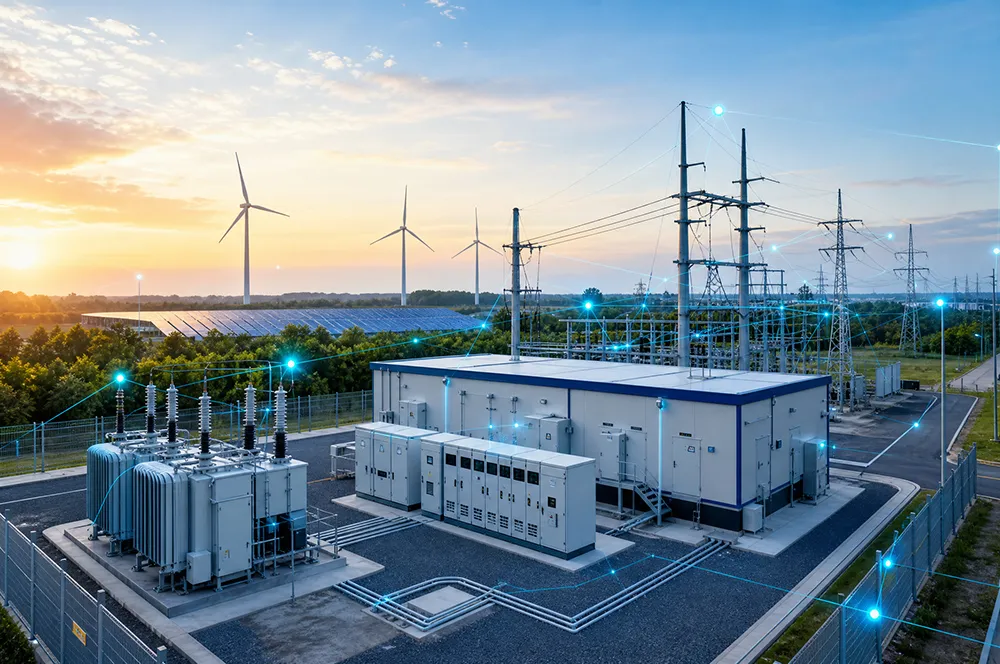
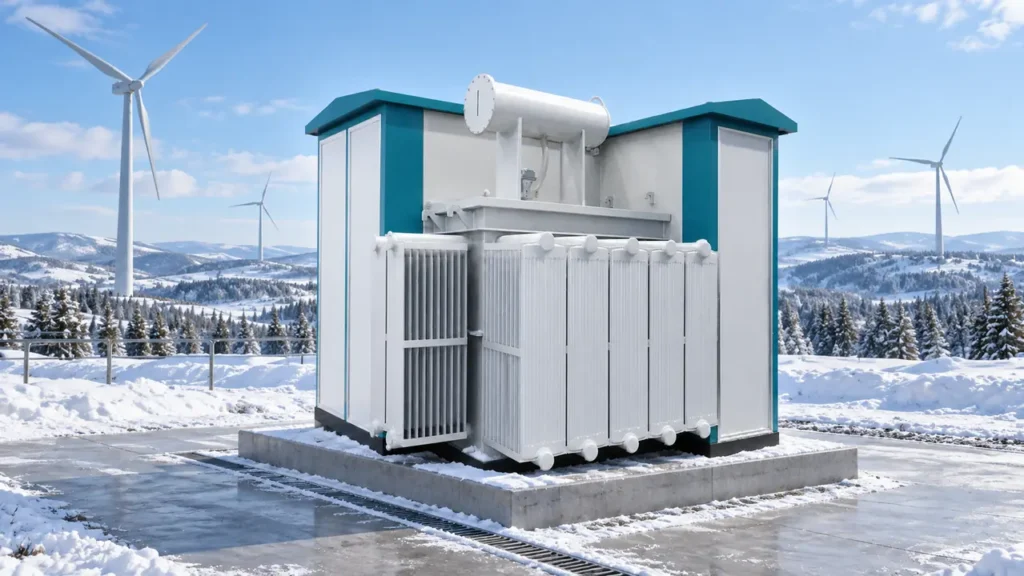
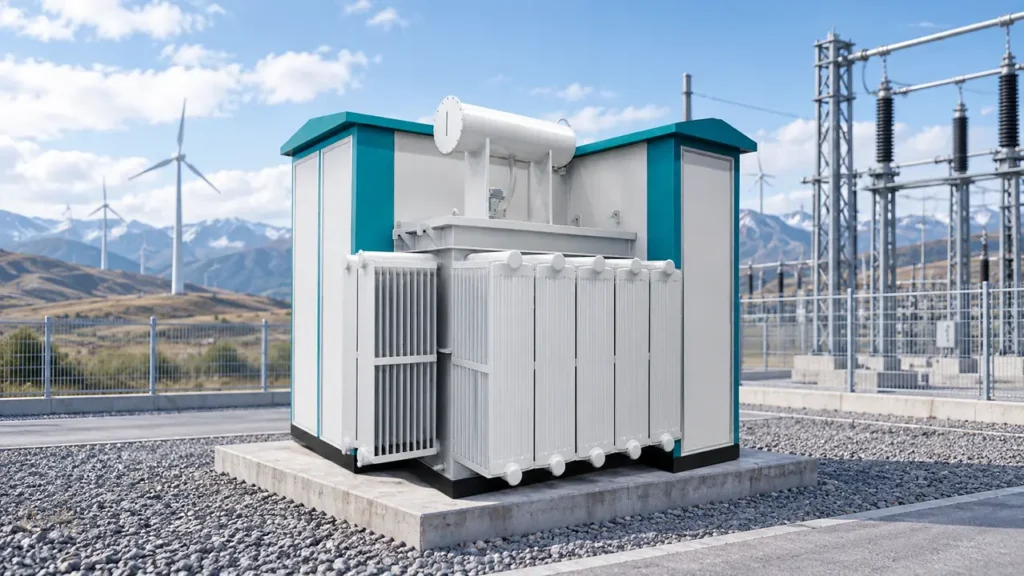
If the transformer is part of a prefabricated substation, include the integrated enclosure and ventilation boundary in the same review.
Send the rating basis, ambient and load profiles, cooling information, installation drawings and monitoring requirements to Contact JUBANG for a project-specific thermal review.
FAQs
What is transformer ambient temperature derating?
It is the review of whether the transformer’s stated rating basis remains suitable when the local ambient profile differs from that basis. The result depends on the particular transformer, duty, cooling configuration and installation conditions, so use an OEM thermal evaluation rather than a generic percentage.
Is ambient temperature the same as winding hot-spot temperature?
No. Ambient is a condition around the transformer. Winding and hot-spot temperatures are thermal results influenced by load, losses, cooling and the transformer’s design parameters.
Do daily peaks and load peaks need to be reviewed together?
Yes. A high ambient period can matter differently when it coincides with continuous, cyclic or short-duration loading. Provide time-aligned ambient and load data so the OEM can assess the intended duty case.
Does a fan-cooled transformer always keep its rating in high ambient?
No. The cooling stage must be installed, available and suitable for the stated load case. Its effect depends on the transformer design, controls, local cooling conditions and load duration.
Why do altitude, solar gain and an enclosure matter?
They can change the local cooling environment around the transformer. Record the equipment location, elevation, solar exposure, enclosure and air path instead of relying only on a regional weather value.
Are dry-type and liquid-filled transformers derated identically?
No. They have different cooling paths and may require different equipment inputs and thermal-model parameters. Use the same site and duty record, but ask the OEM to apply the correct unit-specific method.
What should an alarm or thermal monitor measure?
Define the signals needed for the project, such as local ambient, load, temperature and cooling status, along with signal ownership and action logic. The OEM and project protection/operations teams must approve the final scope and settings.
What information should be on the RFQ?
Include the rating basis, ambient and duty profiles, cooling configuration, installation drawings, environmental conditions, monitoring requirements and the required thermal-study output. Ask each bidder to record assumptions, exclusions and deviations.
Products are exported to more than 100 countries and regions such as Africa, the Middle East, and the United Kingdom and Europe. It is a leading manufacturer of power distribution equipment in China.

 JUBANG