From transformers and switchgear to ring main units, substations, circuit breakers and smart components, Jubang provides integrated product support for power distribution projects.
Discover Jubang’s strengths in technology R&D, quality testing and smart manufacturing, supporting reliable electrical equipment and efficient power distribution solutions for global customers.
From technical consultation and OEM/ODM customization to EPC support, smart O&M, delivery documentation and after-sales service, Jubang supports your project at every stage.
Explore Jubang Group’s development history, intelligent manufacturing base, R&D platforms, CNAS-accredited laboratory and global project service capabilities.
How Buyers Should Read a Distribution Transformer Nameplate
Release Time: 2026-07-17
A distribution transformer nameplate is most useful when it becomes a controlled comparison record. Read every line against the approved one-line diagram, OEM datasheet, order schedule, factory test report and site conditions. A plate identifies the unit and its rated quantities; it does not, by itself, approve a transformer for a particular network or installation.
Part 1. Start with the plate and its document set
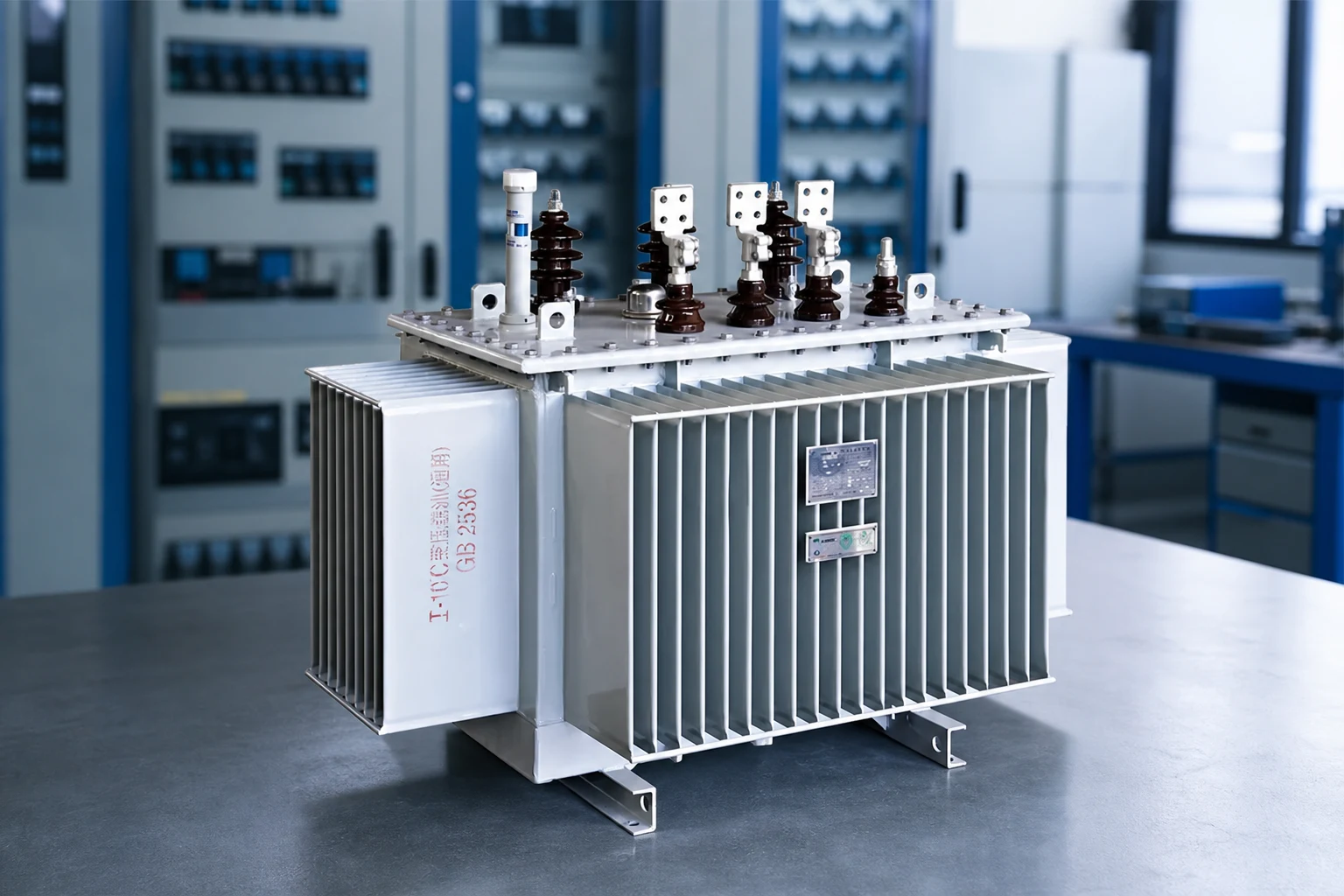
Begin by checking whether the plate belongs to the exact unit under review. The manufacturer name, serial number, manufacture date, model or type designation and applicable standard create the identity trail. Match them to the purchase order, approved data sheet, factory test report, outline drawing and terminal diagram before using the electrical fields in a comparison.
IEC 60076-1 covers general power-transformer requirements and includes connection symbols, tapped-winding specifications and rating-plate information. IEEE nameplate material also lists identifying fields alongside electrical and thermal fields. That is a useful reminder: the plate is one part of a document set, not a complete engineering decision.
Plate line
Buyer check
Document to match
Manufacturer, type and serial number
Is this the offered or delivered unit?
Order schedule and factory test report
Standard or specification reference
Is the cited basis the one requested?
Contract and project specification
Manufacture date and mass, where shown
Does logistics and records information align?
Shipping record and outline drawing
Terminal marking or connection diagram
Can the site interface be identified without assumption?
One-line diagram and terminal drawing
Do not accept an image of a plate as a substitute for the controlled OEM documents. If a field is unclear, request a legible plate photograph and the associated approved document before the comparison proceeds.
Part 2. Read rating, voltage and frequency together
kVA or MVA states a rated apparent-power quantity, but it is not a stand-alone selection answer. The buyer needs the rating together with the stated cooling arrangement, voltage ratio, frequency, tap basis, load duty and ambient assumptions. IEC 60076-7 discusses how ambient temperature and load conditions affect mineral-oil-immersed transformer loading and life, so a plate rating should be reconciled with the duty defined for the project.
Primary and secondary voltage entries identify the intended winding interfaces. Check the actual system nominal voltage, grounding arrangement, cable or busbar interface, prospective operating voltage and the required secondary supply. A voltage ratio that looks familiar can still be unsuitable if frequency, taps, connection or system conditions do not match the approved design.
Field
What it tells the buyer
What must match
kVA/MVA
The stated rating for the specified conditions
Load schedule, duty profile and cooling basis
Primary voltage
The high-voltage winding interface
Upstream system and equipment documents
Secondary voltage
The low-voltage winding interface
Downstream switchgear, busbar and load documents
Frequency
The rated system frequency
Project electrical basis and utility/interface requirement
Phase count
The intended single- or three-phase arrangement
One-line diagram and connection design
If more than one rating is shown, ask the OEM to explain the associated cooling condition, tap and duty in the offered documentation. Do not choose the highest number on the plate without confirming the conditions that accompany it.
Part 3. Check tapping before comparing offers
Tapping changes the available voltage ratio. A plate may show a principal tap, a range, positions, or separate tap data. The comparison needs to preserve the reference point: which tap is the rated condition, what voltage is stated at each position, and what kind of tap-changing arrangement the project requires.
IEC 60076-1 treats tapped-winding information as part of transformer specification. For a buyer, the useful action is to connect the plate line to the approved voltage-regulation requirement, operating philosophy, control interface and factory test documentation. A similar-looking tap range does not establish the same regulation capability or operating arrangement.
Ask these questions before comparing quotations:
Which tap is the principal or reference tap for the stated voltage and impedance?
Is the project requirement for de-energized adjustment or an on-load regulating arrangement?
What tap positions, voltage values, rated current and ratings are required in the approved schedule?
Which tap position is represented in the factory test report and system study?
Who owns the final operating and control settings?
The answer must come from the project and OEM documents. A plate is a concise confirmation point, not a replacement for the tap-changer specification.
Part 4. Treat vector group and impedance as network inputs
Connection and vector-group notation identifies winding arrangement and relative phase displacement. In a three-phase purchase, that information belongs with the one-line diagram, grounding plan, protection study and any proposed parallel-operation assessment. IEC 60076-1 public text defines connection-symbol terminology, while IEEE material lists phasor group and phasor diagram among nameplate information for polyphase transformers.
Impedance is another line that should travel with its reference conditions. IEC terminology describes short-circuit impedance for a winding pair at rated frequency and reference temperature, and identifies a reference tapping for a tapped winding. Send the stated value, reference tap and test information to the system-study owner; do not turn a percentage on a plate into a generic fault-level, voltage-regulation or parallel-operation conclusion.
Nameplate input
Why it is a network input
Review owner
Connection / vector group
It affects winding connection and phase relationship
Electrical design and protection team
Neutral and terminal arrangement
It connects to grounding and interface design
System and substation designer
Impedance and reference tap
It belongs in fault, voltage-drop and coordination studies
Power-system study owner
Parallel-operation proposal
It needs the actual pair of transformer and network records
Responsible engineer
Part 5. Separate operating voltage from insulation and thermal data
Operating voltage is not the same thing as insulation coordination. A BIL, or basic insulation level, entry is a stated insulation-withstand input for the relevant terminals; IEEE nameplate material lists BIL separately from voltage ratings. Check it against the project insulation-coordination record, terminal configuration, grounding approach and surge-protection design rather than reading it as the normal operating voltage.
Cooling class, liquid description and temperature-rise information also need their own document trail. IEC 60076-2 identifies liquid-immersed transformers according to cooling methods and defines temperature-rise limits and test methods. The article does not assign a cooling class, liquid or temperature rise to a project. Instead, require the offered plate, data sheet and test record to agree with the requested cooling arrangement and insulation system.
Field
What it is for
Buyer action
BIL / basic insulation level
Insulation-coordination input
Match terminal-by-terminal requirements and surge study
Insulation or dielectric information
Identifies the stated insulation basis
Compare with the approved specification and test schedule
Cooling class
Identifies the cooling arrangement associated with the rating
Match to the requested duty and installed auxiliaries
Liquid type
Identifies the specified insulating liquid
Confirm compatibility with the project and OEM documentation
Temperature rise
Records a thermal design or test-related quantity
Match the agreed test and ambient basis
Do not infer a complete insulation, loading or environmental approval from any one of these entries. The complete equipment and site record controls.
Part 6. Record the site conditions and identity trail
Ambient temperature, altitude and pollution or contamination exposure can change what the buyer needs the OEM to review. IEC 60076-7 is specifically a loading guide for mineral-oil-immersed transformers and addresses ambient and load conditions; it should not be used to declare a result for a different liquid or an unreviewed site. Put the actual site conditions on the RFQ and ask for an OEM response tied to the offered unit.
Site exposure is not always printed in full on a plate. When it is absent, that is a reason to check the approved specification rather than to fill in a default. Record installation location, enclosure context, maximum and minimum ambient conditions, altitude, dust, salt, humidity, corrosive atmosphere and pollution conditions as applicable to the project.
For the site sequence that follows equipment selection, JUBANG’s related oil-immersed transformer installation and pre-energization guide provides adjacent reading. Installation release still requires the approved OEM and project documents; a nameplate comparison is not a commissioning release.
Maintain a simple identity register:
Serial number, type designation, manufacturer and manufacture date.
Approved datasheet revision, order line and factory test report number.
Plate photograph date, location and reviewer.
Principal tap and recorded plate values used in the system-study handoff.
Site-condition document revision and the responsible approval authority.
That register makes later changes visible. It also prevents a plate from being separated from the transformer and documents it identifies.
Part 7. Turn the plate into an RFQ comparison sheet
Use the nameplate fields to structure the RFQ, then require the OEM to return a controlled data sheet and document schedule. A clear request lets procurement compare like with like while leaving engineering approvals with the correct project authority.
RFQ checklist
Required kVA/MVA, duty profile, load characteristic and operating frequency.
Primary and secondary voltage, phase count, grounding, terminal arrangement and one-line diagram.
Connection/vector-group requirement and any required phase relationship.
Impedance requirement, reference tap, system-study input format and factory test record requirement.
Tap arrangement, range, positions, control requirements and principal-tap definition.
Terminal insulation/BIL requirement and the project insulation-coordination basis.
Liquid type, cooling arrangement, temperature-rise requirement, losses and auxiliaries required for the stated duty.
Applicable standards, approved drawings, test schedule, nameplate language, serial-number traceability and document-submittal requirements.
Acceptance authority, deviation route and the documents that must match before order release, delivery and energization.
For a project with this controlled input package, JUBANG’s 6–10 kV oil-immersed power transformers can be a relevant product-family starting point. Submit the RFQ through an OEM/ODM transformer consultation and ask for the offered unit’s documents to be checked against the project record.
Fit Boundary
This guide fits buyers who need to compare a transformer’s stated information with a defined project package. It is not suitable as a shortcut for selecting an unreviewed unit, approving parallel operation, setting protection, confirming insulation coordination or declaring environmental suitability. Those decisions require the applicable OEM, project and responsible-engineer documentation.
FAQ
What does kVA or MVA on a distribution transformer nameplate mean?
It is a stated rated apparent-power quantity. Compare it with the approved duty, voltage, frequency, cooling arrangement, tap basis and site assumptions. The plate alone does not size the transformer for an unreviewed load.
Do primary and secondary voltage labels prove the transformer will fit my system?
No. The voltage entries must match the actual system interfaces, frequency, connection, grounding, tapping and approved electrical documents. Treat them as checks within the full design record.
Why does the vector group matter to a buyer?
It identifies the connection and relative phase displacement for a polyphase transformer. Send it with the terminal and system documents to the responsible electrical and protection reviewers, particularly if any parallel operation is proposed.
Is percent impedance just a factory detail?
No. It is a specified electrical quantity with reference conditions. The system-study owner needs the stated impedance, reference tap and test information for the actual transformer; a plate value alone is not a network conclusion.
What is BIL/basic insulation level on a transformer nameplate?
It is an insulation-withstand input shown separately from operating voltage. Verify it against the project insulation-coordination record, terminal configuration, grounding approach and surge-protection design.
Does cooling class tell me the permitted site temperature?
Not by itself. Cooling, liquid, temperature-rise information, ambient conditions, altitude, duty and the OEM documentation must be read together. Do not use a cooling label as a generic site approval.
Which nameplate details belong in an RFQ?
Include identity, rating, voltage, frequency, taps, connection/vector group, impedance basis, insulation/BIL, cooling/liquid, temperature-rise, environmental conditions, standards, test documents and acceptance responsibilities. Part 7 provides a working checklist.
Can a JUBANG product page replace a project specification?
No. A product page can support a qualified equipment-family inquiry, but the specific transformer must be evaluated against the controlled RFQ, approved project documents and the OEM’s response for that unit.
References
General transformer requirements and rating-plate context: IEC 60076-1:2011
Rated quantities, connection symbols, taps and impedance terminology: IEC 60076-1 public text
Liquid-immersed cooling and temperature-rise scope: IEC 60076-2:2011
Mineral-oil transformer loading and ambient-condition guidance: IEC 60076-7:2018
General requirements for liquid-immersed distribution, power and regulating transformers: IEEE C57.12.00-2021
Products are exported to more than 100 countries and regions such as Africa, the Middle East, and the United Kingdom and Europe. It is a leading manufacturer of power distribution equipment in China.

 JUBANG