JUBANG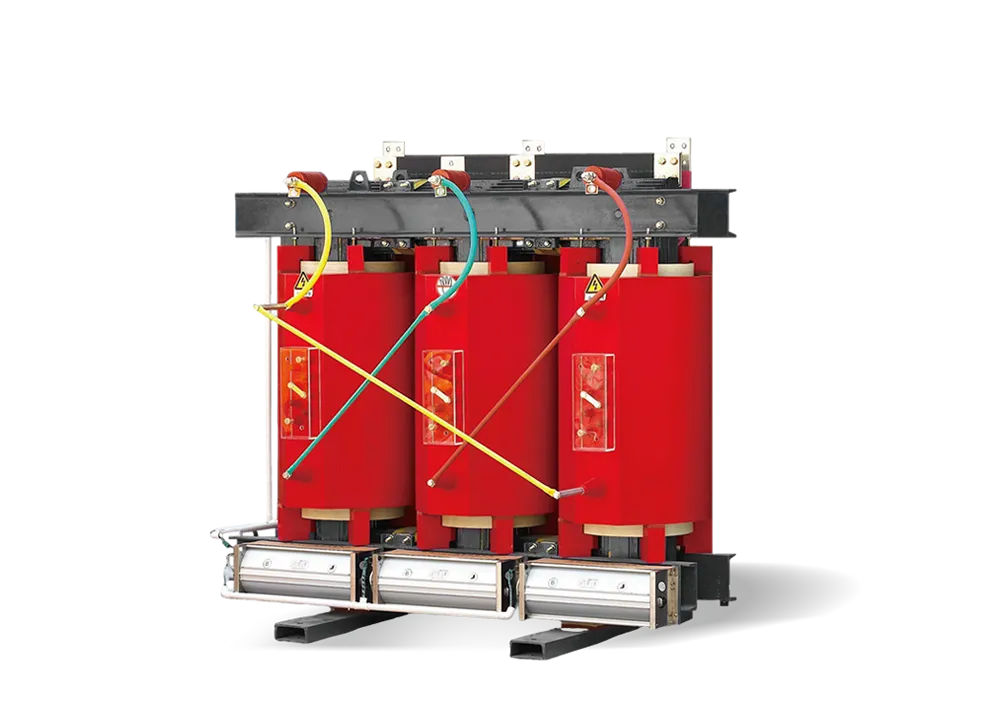
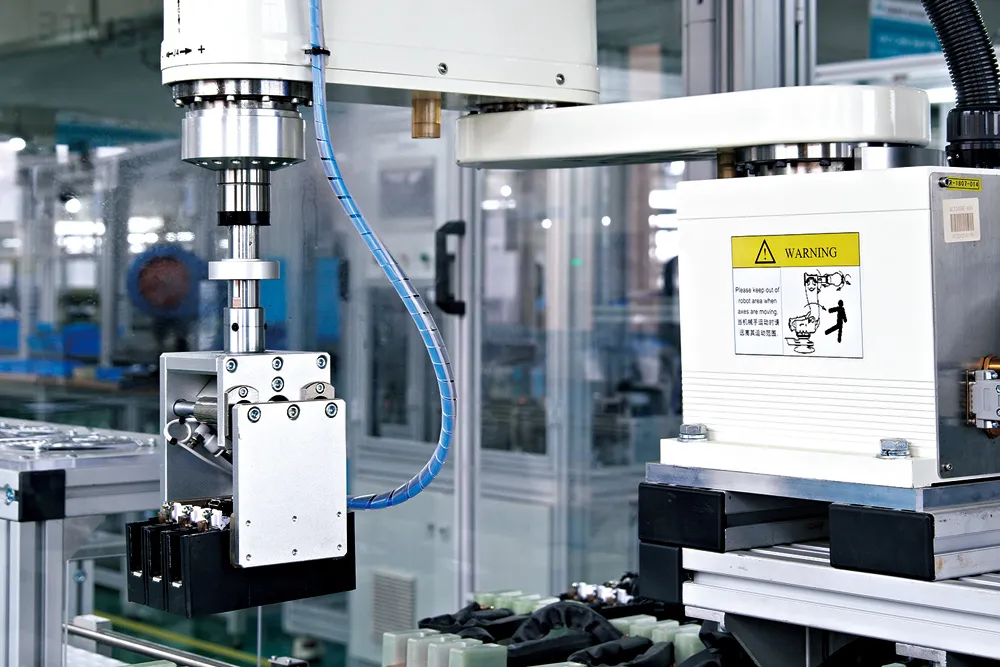
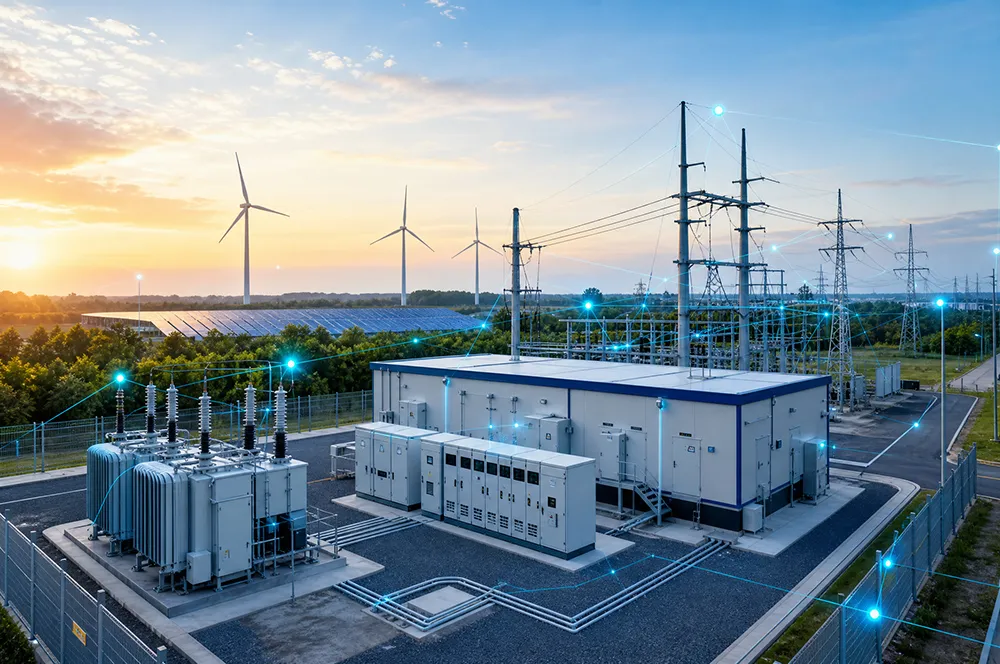

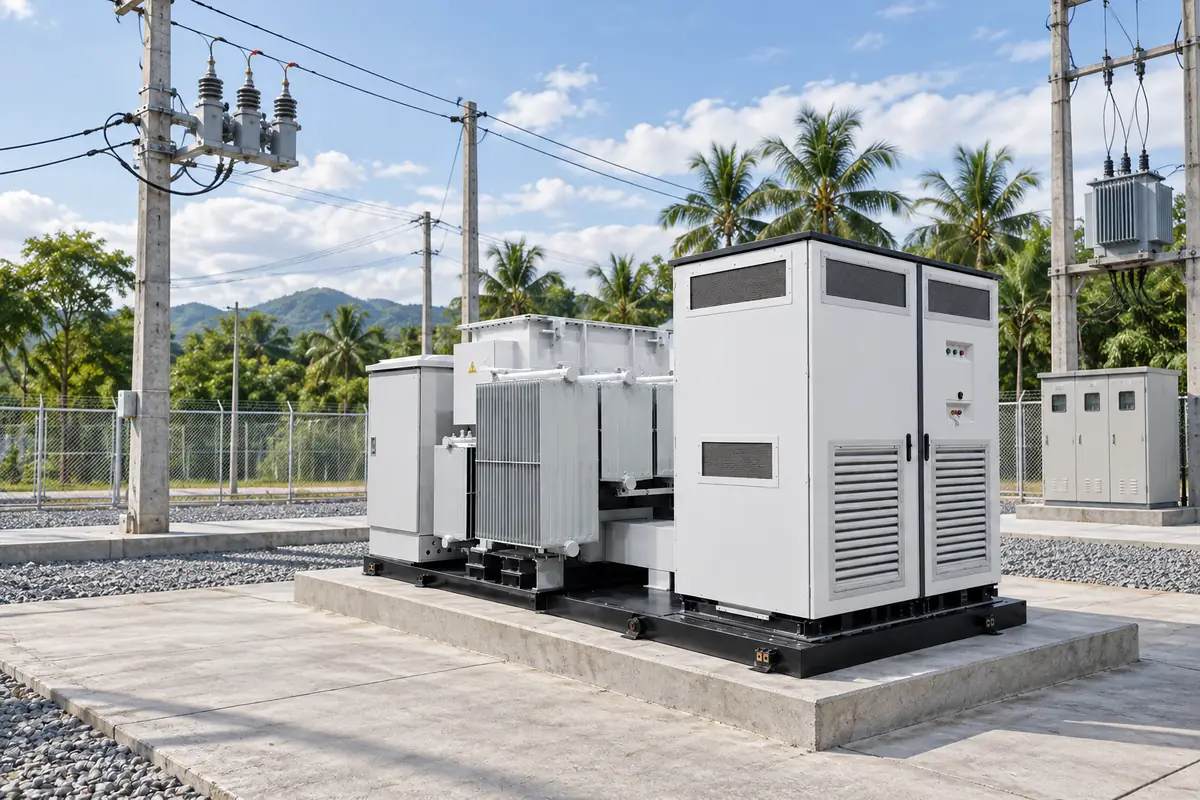
When a protection engineer in Monterrey encountered repeated feeder outages at a growing industrial park, she raised the recloser trip setting and replaced a vacuum circuit breaker (VCB) relay. The visible failure returned within a week: a temporary branch fault still disconnected the whole 13.8 kV feeder. A joint review found the root cause was coordination and equipment selection—an underspecified recloser curve, CT ratio and breaker interrupting duty—not a bad breaker.
Summary: A substation is a coordinated chain of transformers, switchgear, VCBs, instrument transformers, protection, control and communications; a recloser substation adds automatic fault interruption and reclosing for overhead feeders. For a 12 kV or 13.8 kV project, verify IEC 62271-1 and IEC 62271-111 duties, IEC 60255 relay settings, IEC 61850 interfaces and IEC 60076 transformer data before ordering. The practical action is to freeze the single-line diagram, fault level, grounding method and communications map together.
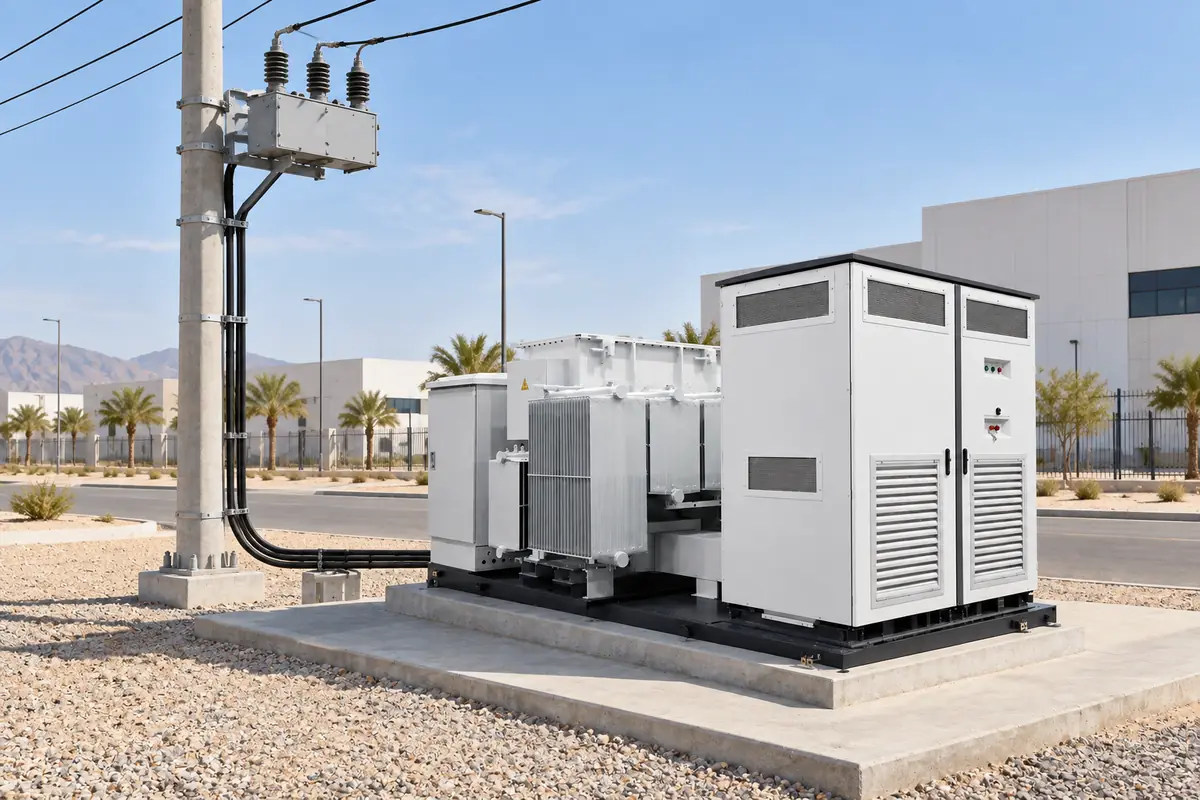
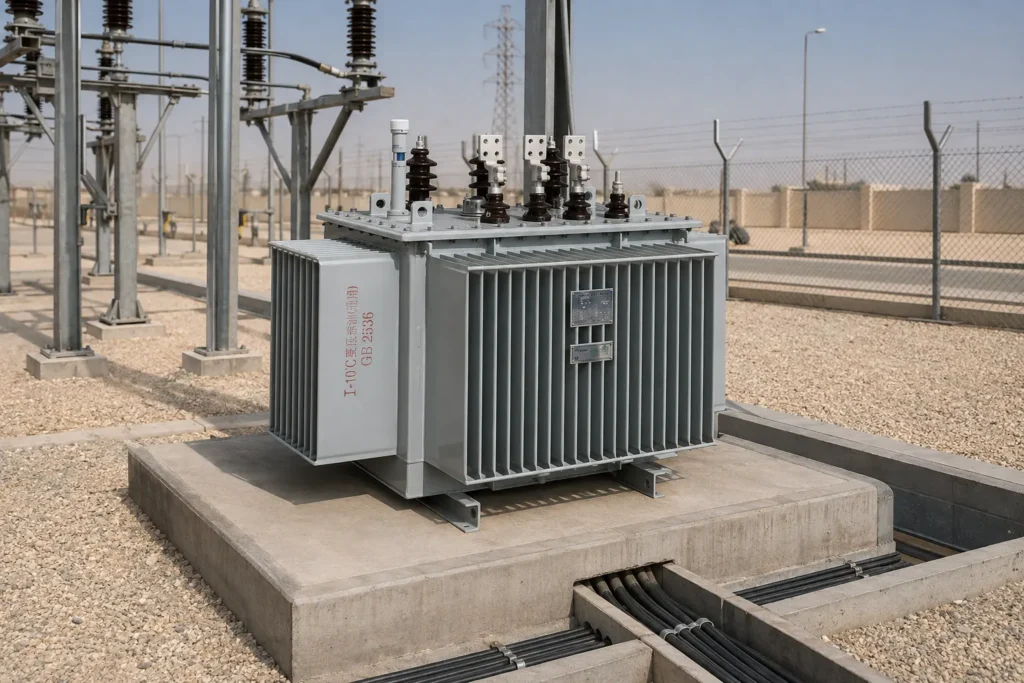
“Substation equipment” is therefore a system term, not one product. The incoming bay isolates and protects the source; a transformer changes voltage; outgoing feeders distribute power; and automation records, trips and restores service. A recloser is a medium-voltage switching device that opens for a detected fault, waits for a programmed interval and recloses when the fault is likely transient. If the fault persists, it locks out and leaves the feeder safely isolated.
What equipment belongs in a recloser substation?
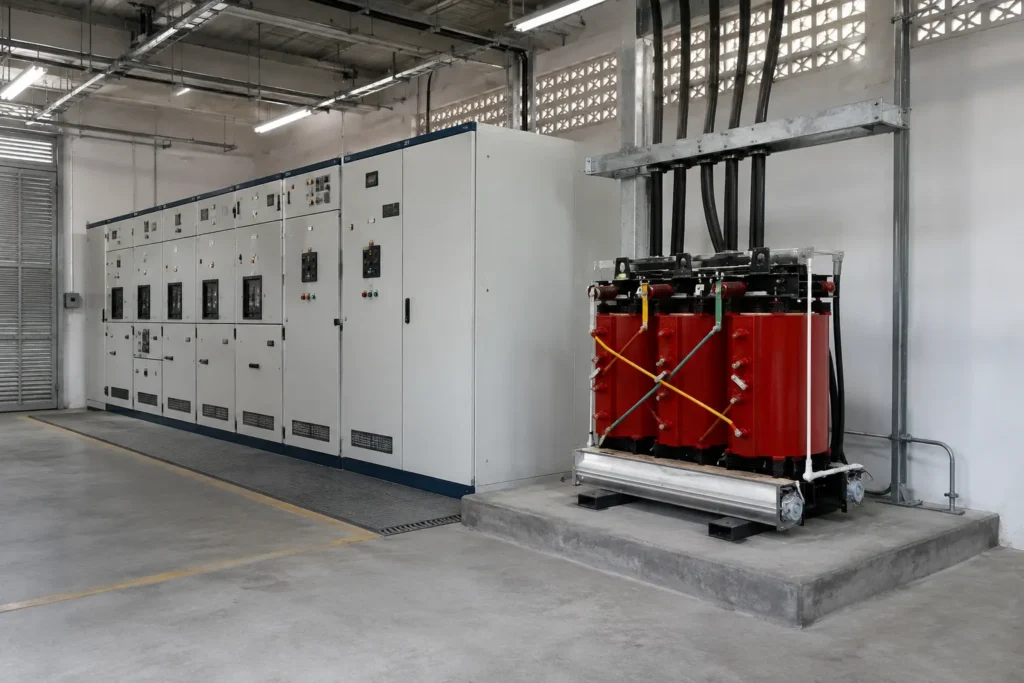
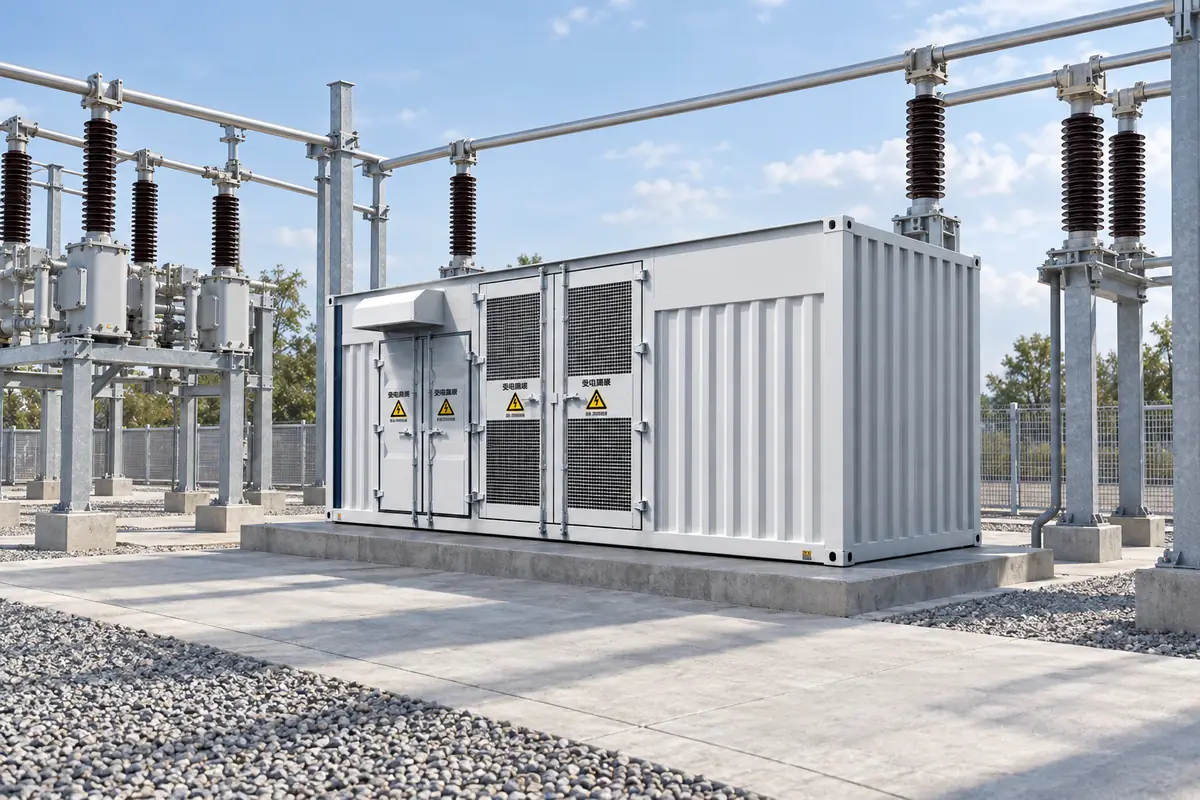
The primary path normally includes a busbar, surge arresters, disconnectors or load-break switches, a VCB or recloser, current and voltage transformers, and the power transformer. Secondary systems include protection relays, trip coils, battery and charger, remote terminal unit (RTU), metering, interlocking and earthing. IEC 62271-1 defines common service and test requirements for high-voltage switchgear; IEC 62271-111 addresses automatic circuit reclosers and fault interrupters for AC systems.
A VCB interrupts current in a sealed vacuum interrupter. Its contacts separate, the arc extinguishes near the next current zero and the dielectric strength recovers quickly. The mechanism, rated short-circuit current and operating sequence still matter: a 12 kV, 25 kA VCB is not interchangeable with a 12 kV, 16 kA unit when the calculated bus fault is 21 kA.
For an illustrative feeder, assume 12.47 kV line-to-line, 10 MVA transformer capacity and 0.9 power factor. Full-load current is approximately I = 10,000 kVA /(√3 × 12.47 kV) = 463 A. A 600/5 A CT gives useful headroom; however, the breaker must be checked against the study fault current, not the 463 A load. A 20 kA symmetrical fault at 12.47 kV corresponds to about 432 MVA of fault level, so a 25 kA interrupting rating may be selected only after asymmetrical and transient-duty checks.
How do VCBs, reclosers and relays work together?
The relay receives scaled current and voltage, applies an IEC 60255 characteristic and sends a trip command to the breaker. A feeder recloser adds a sequence such as fast trip, dead time, slow trip and lockout. The sequence should reflect conductor sag, fuse-saving policy, transformer inrush and downstream device curves; otherwise a temporary tree contact can become a long outage or a permanent fault can be re-energized too often.
Protection engineers should document pickup current, time multiplier, instantaneous element, residual or earth-fault measurement, and the number of permitted shots. As an illustrative calculation, if a 600/5 CT feeds a relay with a 2 A secondary pickup, primary pickup is 600 × 2/5 = 240 A. That setting must be compared with a 463 A normal load, motor-start current and minimum fault current; a pickup below expected load causes nuisance trips, while one above the minimum fault may fail to clear a high-resistance fault.
IEC 61850 can carry sampled values, GOOSE trips and supervisory data across an Ethernet station bus. Confirm whether the project requires Edition 2/2.1 models, time synchronisation, redundant network paths or a hardwired backup. A recloser with a proprietary protocol can still be integrated, but the gateway, cybersecurity controls and test responsibility belong in the interface schedule.
Comparison: VCB, SF6 breaker and pole-mounted recloser
| Dimension | Indoor/outdoor VCB | SF6 circuit breaker | Pole-mounted recloser |
|---|---|---|---|
| Typical role | Substation incomer, bus coupler, feeder | High-voltage or high-duty transmission/distribution bays | Automatic overhead-feeder sectionalising |
| Interruption medium | Vacuum interrupter | Sealed SF6 chamber | Vacuum interrupter, electronic control |
| Maintenance driver | Mechanism operations, contact wear and insulation checks | Gas density, leakage controls and mechanism | Battery, control cabinet, communications and mechanism |
| Environmental consideration | No operating gas; enclosure and creepage still apply | SF6 handling and greenhouse-gas reporting may apply | UV, moisture, wildlife, lightning and pole loading |
| Coordination need | Relay, CTs, transformer and bus protection | Gas-monitoring and protection scheme | Downstream fuses, sectionalizers and feeder automation |
| Unit-cost tendency | Moderate; depends on rating and panel | Higher at comparable distribution duty | Moderate-to-high turnkey cost; fewer truck rolls can reduce TCO |
The comparison is conditional, not a universal ranking. A VCB is often attractive for medium-voltage substations because it avoids routine gas handling; an SF6 design may suit a compact high-voltage bay; a recloser earns its cost where transient overhead faults are frequent and remote restoration has measurable value.
Application and sizing matrix
| Application | Voltage / current example | Key dimensions to specify | Evidence to request |
|---|---|---|---|
| Industrial indoor feeder | 12 kV, 630 A, 25 kA | Panel width, withdrawable position, CT ratio, arc classification | Routine tests, IEC 62271-200 design data, wiring diagrams |
| Utility overhead feeder | 13.8 kV, 400 A, 12.5 kA | Reclose shots, dead times, pole strength, radio/fibre link | IEC 62271-111 type-test scope, control firmware and FAT record |
| Renewable collector substation | 33 kV, 1250 A, 31.5 kA | Transformer impedance, cable charging, synchronism and SCADA map | IEC 60076 transformer tests, protection study and IEC 61850 ICD file |
| Remote rural spur | 12 kV, 200 A, fault level project-specific | Battery autonomy, environmental enclosure, manual override | Temperature/altitude limits, communications survey and maintenance plan |
Standards and compliance risks
Standards are design controls, not marketing badges. IEC 62271-1 sets common high-voltage switchgear requirements; IEC 62271-111 covers automatic circuit reclosers; IEC 60255 covers measuring relays and protection equipment; IEC 61850 specifies communication models and services; IEC 60076 covers power transformers. The applicable edition, national deviation and rated-voltage scope must be written into the purchase order.
Ask for the exact type-test report, routine-test list, short-circuit certificate scope, environmental class and calibration records. A test report for one enclosure, voltage or control variant does not automatically certify another configuration. Unsupported “IEC certified” wording can trigger utility rejection, customs delays, retesting cost, warranty disputes or liability after a fault. Destination-market rules—such as grid-code, emissions or cybersecurity requirements—can add obligations beyond IEC publications.
Procurement checklist and where Jubang fits
- Freeze the system study: normal, emergency, minimum and maximum fault currents; X/R ratio; grounding; transformer impedance; and feeder lengths.
- Match ratings: rated voltage, insulation level, continuous current, short-time withstand, peak withstand, interrupting current and operating sequence.
- Coordinate interfaces: CT/VT ratios and classes, relay curves, interlocks, trip-coil supervision, battery autonomy, SCADA points and IEC 61850 files.
- Verify constructability: cable bending space, pole loads, clearances, ingress protection, altitude, ambient temperature and maintenance access.
- Make evidence contractual: approved drawings, FAT witness points, routine-test records, spare-parts list, firmware version and site-acceptance procedure.
Jubang Group can support this interface-led workflow with configurable KYN28A-12 metal-clad switchgear, YB-12 intelligent integrated substations, GT GIS-12 gas-insulated switchgear and GT-SRM-12 SF6 ring main units. Request configuration drawings and test evidence for the actual project variant; product-family descriptions alone should not be treated as certification.
Frequently Asked Questions
What is an Substation Equipment and Recloser Substation?
It is a substation equipment system—transformer, switchgear, breakers, instrument transformers, protection, control and communications—with an automatic recloser used to interrupt and restore overhead feeder circuits. The recloser trips for a fault, waits for a programmed dead time and recloses; persistent faults end in lockout. Ratings and settings must follow the utility protection study.
What is the purpose of a vacuum circuit breaker?
A vacuum circuit breaker interrupts medium-voltage current in a sealed vacuum interrupter, limiting arc duration and isolating the fault. It protects feeders, transformers and bus sections when matched to the system’s voltage, current, short-circuit and operating-duty requirements.
How does a vacuum circuit breaker work?
Its contacts separate inside a vacuum bottle; the metal-vapour arc extinguishes near current zero, and dielectric strength recovers rapidly. The operating mechanism then provides the required opening and closing speed, contact travel and endurance. Routine mechanical and insulation tests remain necessary.
What is the difference between a VCB and an SF6 circuit breaker?
A VCB uses vacuum as the interruption medium, while an SF6 breaker uses sulphur hexafluoride gas. VCBs avoid operating-gas handling, whereas SF6 designs require density, leakage and end-of-life controls; the better choice depends on voltage, duty, footprint, environmental rules and service capability.
How do pole-mounted reclosers protect overhead lines?
Current sensors detect overcurrent or earth fault, the controller trips the vacuum interrupter, and the device recloses after one or more dead times. If the fault remains, it locks out and signals the control centre. Fuse coordination, lightning protection, battery autonomy and communications testing are essential.
How do you select the voltage and breaking capacity of an outdoor VCB?
Use the highest system voltage and insulation level, then select continuous current from load and emergency studies. Choose interrupting and withstand ratings above the calculated symmetrical and asymmetrical fault duties, including X/R effects, and verify altitude, ambient temperature, creepage, pole spacing and relay coordination.
References
- IEC, IEC 62271-1:2017, Common specifications for high-voltage switchgear and controlgear.
- IEC, IEC 62271-111, Automatic circuit reclosers and fault interrupters.
- IEC, IEC 60255 series, Measuring relays and protection equipment.
- IEC, IEC 61850 series, Communication networks and systems for power utility automation.
- IEC, IEC 60076 series, Power transformers.
Reliable restoration starts before energisation: specify the network, prove the interfaces and test the sequence. Contact Jubang Group with your single-line diagram, fault level, transformer data and communications requirements for a coordinated substation equipment and recloser-substation review.