JUBANG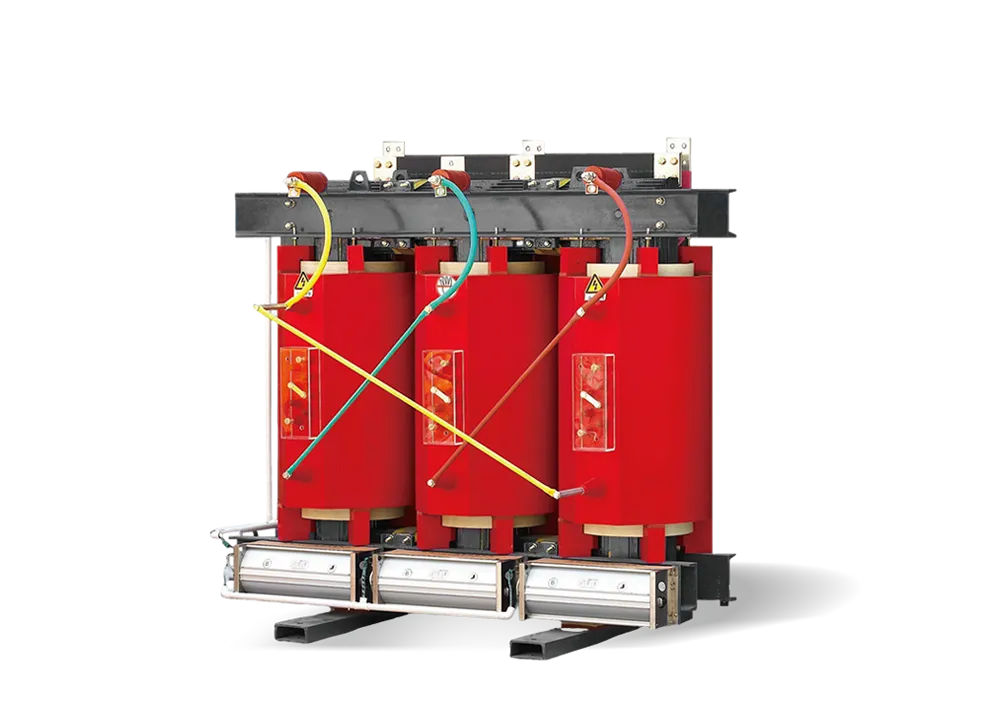
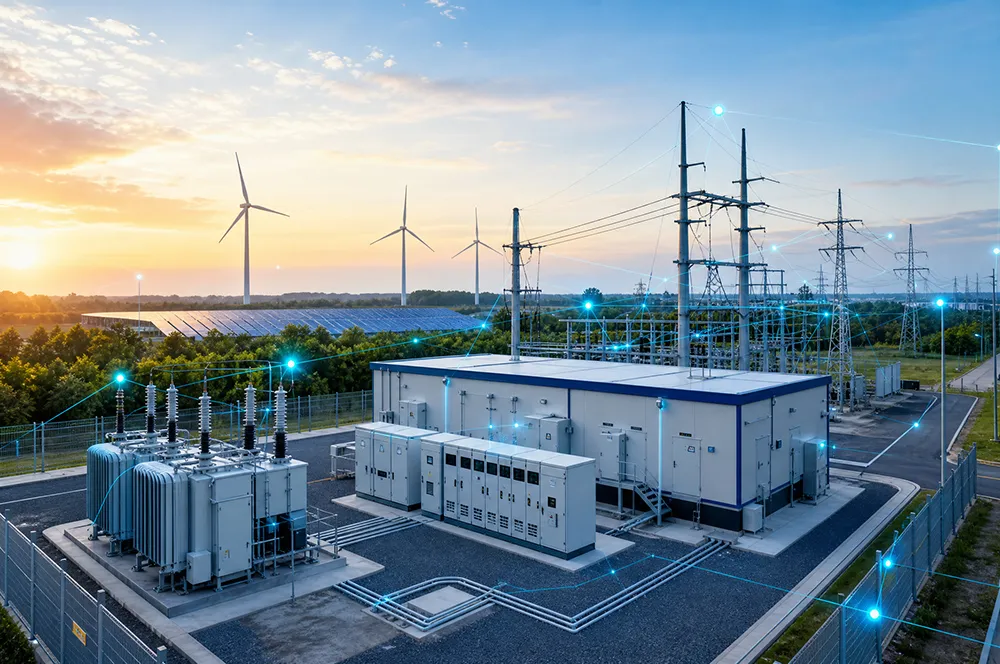

When a project electrical lead in Dubai, UAE, approved an indoor substation layout for a logistics hub, the coordination drawing showed the transformer’s hot-air discharge facing a wall and an ambient basis that ignored summer plant-room conditions. The approval package returned for redesign, holding cable-tray and fire sign-off. The unit was not necessarily bad; selection, thermal assumptions, and installation details had been treated separately.
Summary: An Epoxy resin insulated dry type transformer SCB is a practical indoor three-phase option when its declared cooling, temperature rise, insulation level, and room conditions are specified as one system. IEC 60076-11 provides the dry-type framework, while IEC 60076-1, IEC 60076-3, and IEC 60076-5 address general ratings, dielectric testing, and short-circuit withstand. Before releasing a purchase order, align the kVA rating with a 40 °C reference ambient where applicable, actual ventilation, fault-study data, and acceptance documents—not simply the catalogue headline.
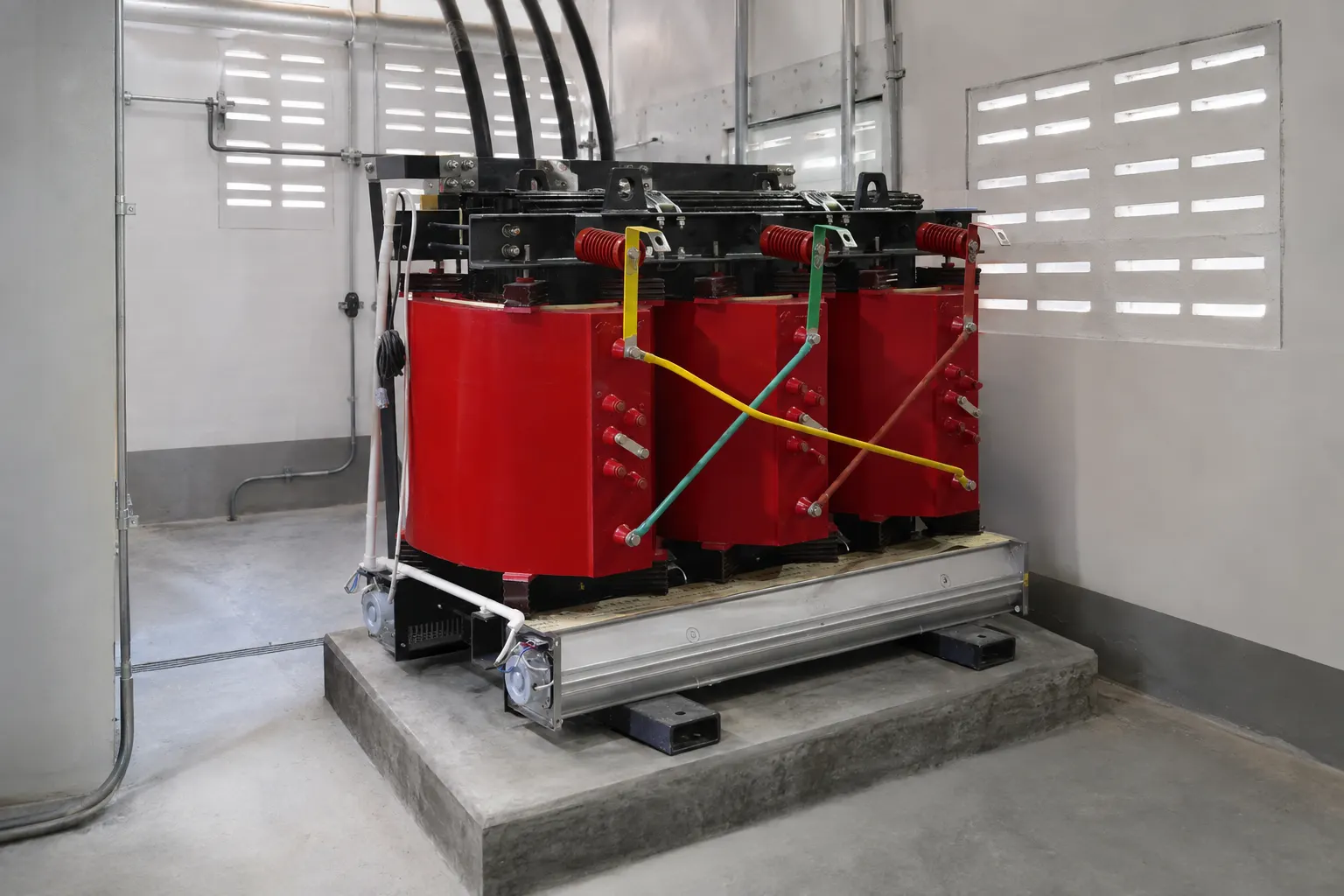
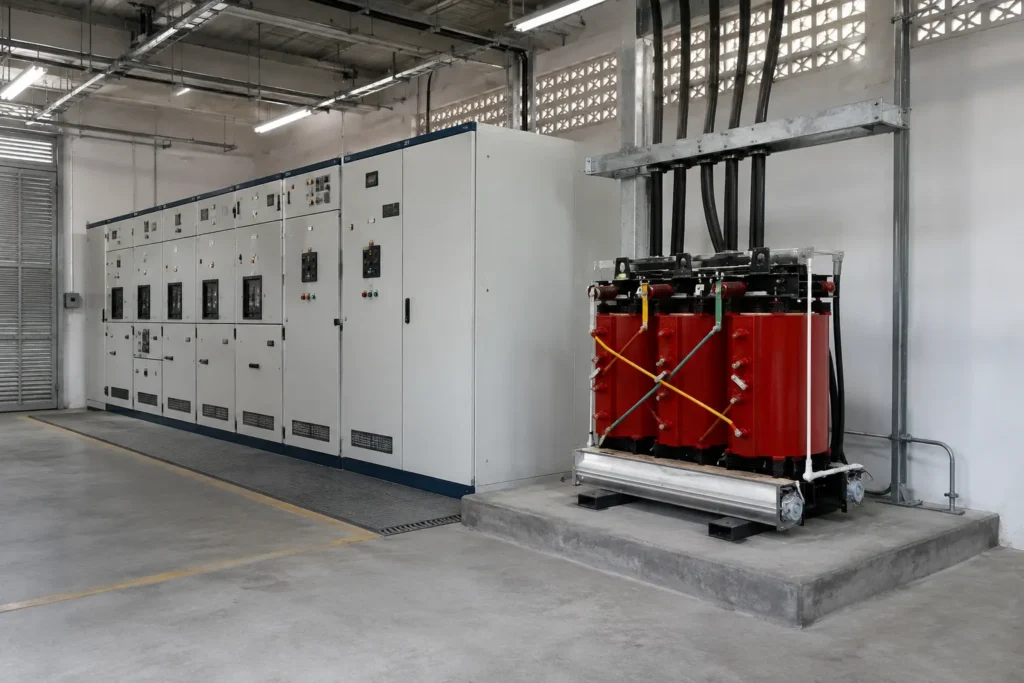
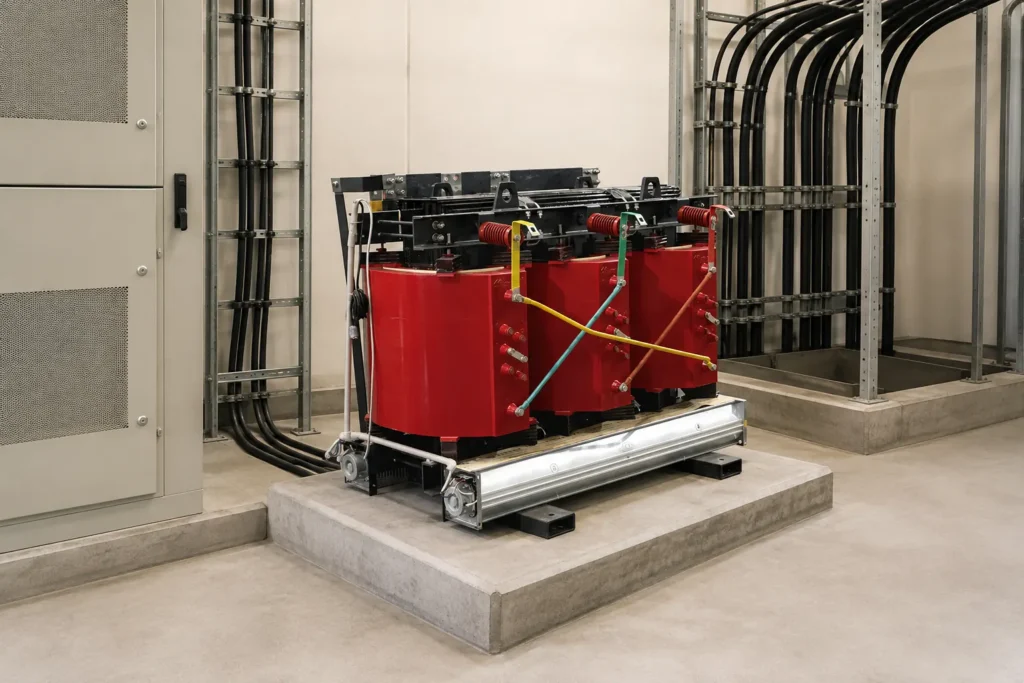
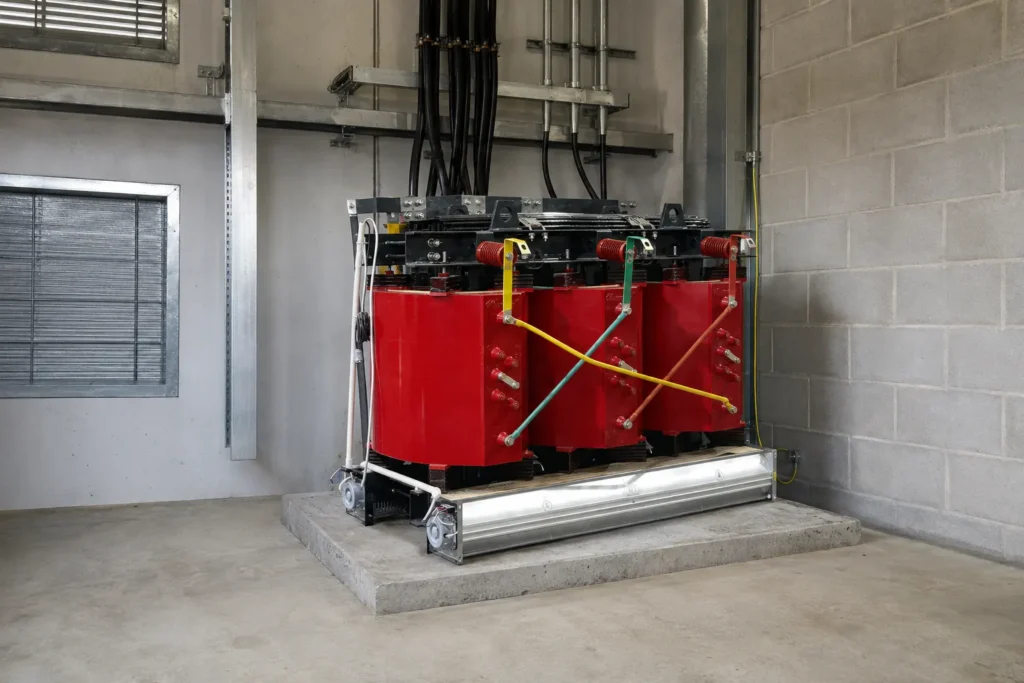
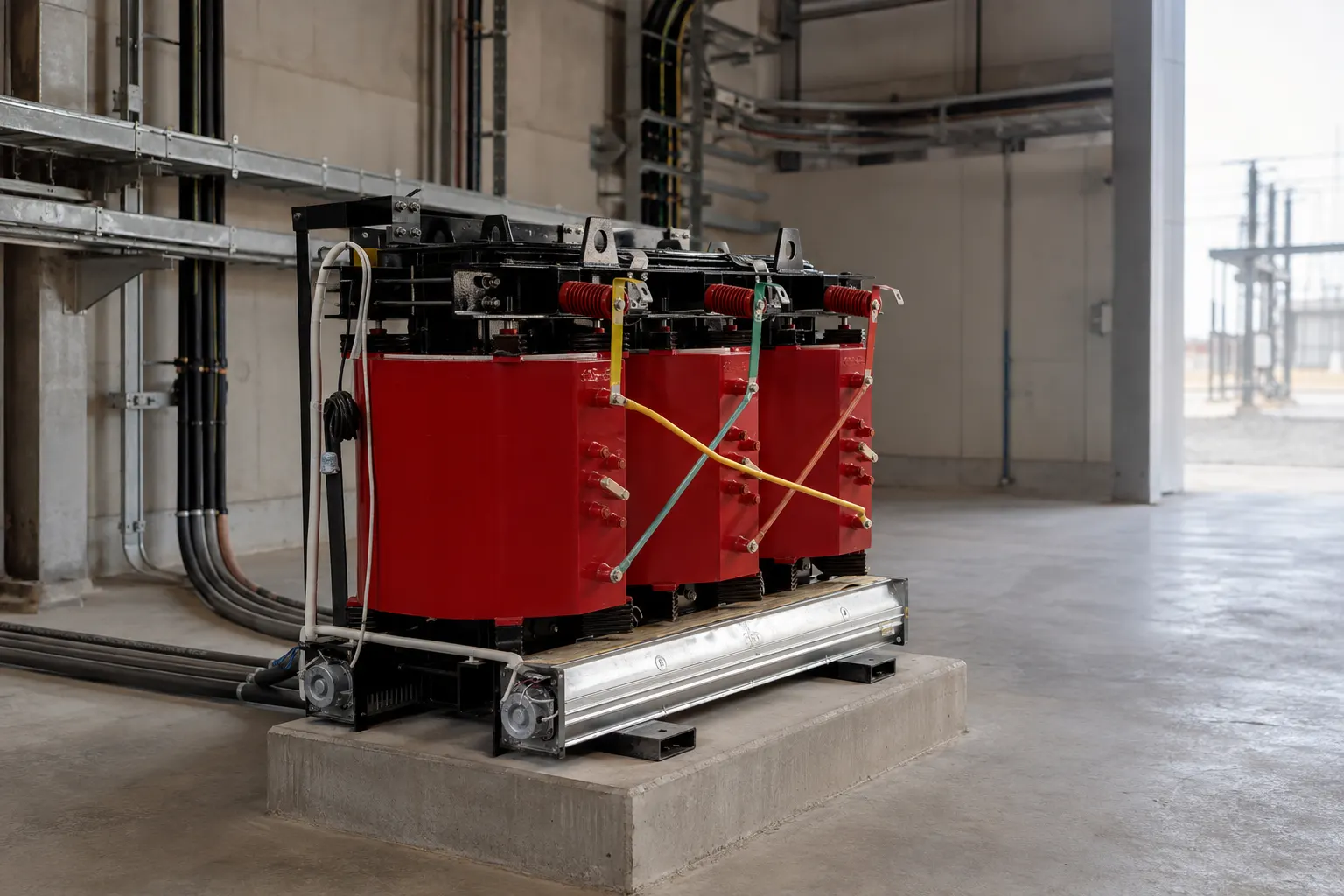
SCB commonly denotes a three-phase cast-resin dry-type transformer family. Its windings are cast or encapsulated in cured epoxy resin rather than insulated and cooled by mineral oil. That affects fire strategy, room arrangement, and inspection, but does not make every indoor layout suitable.
1. How cast-resin insulation supports an indoor three-phase design
An Epoxy resin insulated dry type transformer SCB uses resin around the winding system for dielectric separation and mechanical support. Construction varies: high-voltage windings may be cast, while low-voltage windings may use foil or conductors. Request the voltage ratio, vector group, cooling designation, and enclosure; “epoxy resin” alone is not a performance specification.
Cast-resin winding encapsulation can help manage ordinary dust and moisture exposure, but it does not address condensation, salt contamination, cable terminations, or enclosure design by itself. In coastal Southeast Asia or the Middle East, assess the room as well as the transformer. IEC 60076-11 environmental classification is evidence, not a substitute for that assessment.
IEC 60076-11 covers dry-type transformers and climatic, environmental, and fire-behaviour classifications. Its C, E, and F designations are defined test classifications—not blanket building approval. State the required class and test basis instead of requesting a vague “indoor grade.”
2. Temperature rise, ventilation, and the real kVA available
The rating of an SCB three-phase dry type transformer for indoor use depends on cooling and reference conditions. Natural-air-cooled designs are commonly identified as AN; forced-air proposals need separately scheduled fan duty and controls. Many ratings use 40 °C maximum ambient as a reference, but a 45–50 °C room, exhaust-air recirculation, or altitude may require derating.
IEC 60076-11 temperature-rise testing checks the tested design under defined conditions; it does not guarantee any site result. Confirm thermal class, temperature-rise limit, sensors, and alarm/trip interfaces, then coordinate air paths, clearances, louvres, and nearby heat sources.
Indoor ventilation and thermal margin is a procurement deliverable, not an installer afterthought. Harmonics, unbalanced loads, poor connections, or obstructed grilles can raise local heating. State the harmonic spectrum or load profile so the supplier can evaluate added losses and temperature effects.
3. Use IEC 60076-1, -3, -5, and -11 as connected evidence
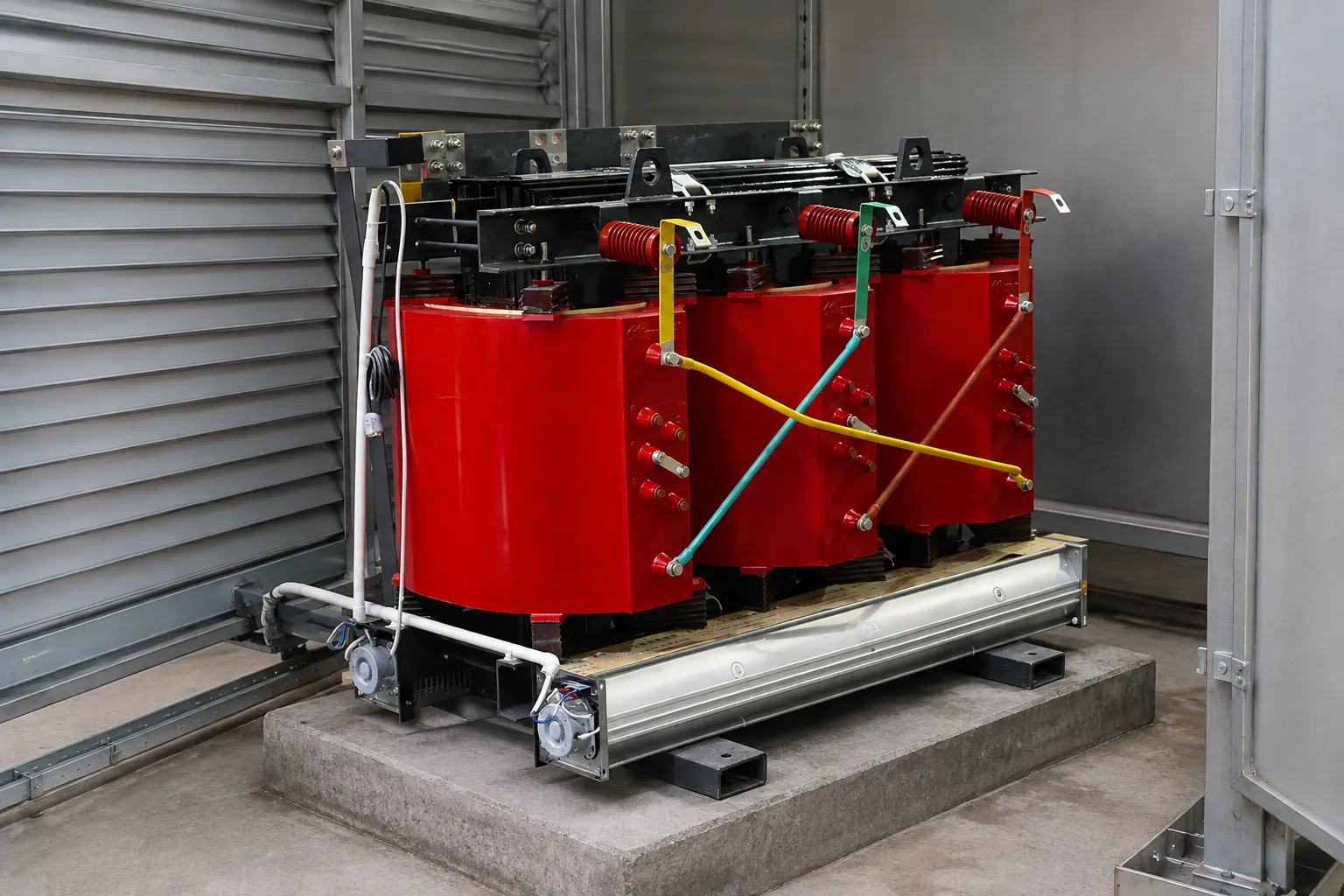
IEC 60076-1 establishes general ratings and test terminology. IEC 60076-3 covers insulation levels and dielectric tests; IEC 60076-5 covers short-circuit withstand; and IEC 60076-11 covers dry-type requirements. Together, they turn a voltage-and-kVA enquiry into an auditable schedule.
For 6–10 kV, confirm highest voltage for equipment, rated voltage, taps, and dielectric-test levels. At 35 kV, review insulation coordination, terminals, surge exposure, and clearances separately. Routine tests demonstrate the supplied unit; type tests or design assessments support only their stated scope.
An SCB three-phase dry type transformer for indoor use must be checked against prospective fault current and protection-clearing time. Short-circuit forces affect windings, leads, clamps, and supports; include impedance, network configuration, and protection settings in the query. Request an IEC 60076-5 withstand basis rather than claiming fault immunity from resin construction.
IEC 60076-11 test documentation should match declared losses, ratio, resistance, insulation tests, and requested temperature-rise or classification evidence. A mark or report has value only within its issuing body, product, and jurisdictional scope; irrelevant documents can still delay approval.
4. Compare dry type and oil type through site risk and TCO
An Epoxy resin insulated dry type transformer SCB can suit an indoor location that benefits from avoiding insulating oil and can provide ventilation, access, and cleanliness. Oil-immersed designs can suit other capacities, outdoor arrangements, and controls. Review fire, environmental, and building requirements for both.
| Decision dimension | Cast-resin dry type | Oil-immersed type | Buyer check |
|---|---|---|---|
| Insulating and cooling medium | Solid resin-based winding insulation with air cooling | Liquid insulation and cooling medium | Assess fire, containment, and maintenance arrangements. |
| Indoor arrangement | Often considered where oil-management measures are constrained | May require oil-related safeguards depending on rules | Confirm local authority and building requirements. |
| Thermal dependency | Room airflow and heat rejection are central | Cooling equipment and liquid system need review | Model the actual installation, not just nameplate kVA. |
| Maintenance focus | Cleanliness, ventilation, connections, sensors | Liquid condition, accessories, containment, connections | Cost planned inspections and outage windows. |
| TCO drivers | Guaranteed losses, room works, cooling energy, access | Guaranteed losses, civil controls, fluid service, access | Use the project loss-capitalisation method. |
TCO includes evaluated losses, cooling energy, civil works, maintenance, and outage consequence. Illustratively, a 0.2% loss difference at a sustained 1,000 kW loading point equals 17.52 MWh over 8,760 hours. This arithmetic is not a site forecast; loading, tariff, ambient, and the contract method determine value.
5. Match the transformer to the application, not a generic indoor label
For every SCB three-phase dry type transformer for indoor use, start with demand, voltage, load profile, ambient, altitude, harmonics, fault level, space, and future expansion. Where voltage variation matters, an on-load tap-changing dry-type distribution transformer approach may need separate evaluation.
| Application condition | Information to request | Selection response |
|---|---|---|
| Commercial tower or transit facility | Room layout, fire strategy, acoustic limit | Coordinate enclosure, airflow, and approval requirements. |
| Hot Gulf plant room | Design ambient, ventilation calculation, temperature-rise data | Assess derating; do not assume 40 °C conditions. |
| Humid Southeast Asian utility room | Condensation control, environmental class, enclosure plan | Protect terminals and the room environment. |
| Industrial facility with high fault level | System study, impedance, clearing time, IEC 60076-5 evidence | Confirm short-circuit duty before award. |
| Data or process load with harmonics | Load spectrum, neutral duty, loss evaluation | Obtain assessment for the non-linear load. |
6. Procurement actions and compliance
First, lock the electrical schedule: power, ratio, vector group, impedance, taps, losses, cooling, and terminals. Second, attach site data—ambient, altitude, room layout, ventilation, load profile, and fault-study inputs. Third, specify drawings, nameplate data, routine tests, and agreed short-circuit or temperature-rise evidence. Fourth, state destination-market electrical, fire, construction, and grid rules.
Write compliance as standards and evidence, not unqualified claims. IEC documents are test frameworks, not automatic certificates for every country; owners and authorities may add requirements. Unsupported claims can cause rejection, redesign, insurance questions, or energisation delays.
7. Selection guide and supplier review
For 6–10 kV or 35 kV packages, Jubang Group is a China-based T&D equipment provider with EPC and intelligent O&M capabilities that can be evaluated on configuration, drawings, test documents, and clarification against the defined duty. Its 35 kV resin-insulated dry-type transformer range is a comparison point; compare complete submittals, not claims alone.
Frequently asked questions
What is a Epoxy Resin Insulated Dry Type Transformer?
It is a dry-type transformer with windings insulated using cured epoxy resin, commonly in a cast-resin construction. Its voltage class, cooling, enclosure, and tested characteristics must be confirmed from the project data sheet.
Why would you use a dry type transformer?
It is often selected indoors where the project seeks to avoid insulating oil and can provide ventilation and access. Still compare capacity, losses, ambient, fire rules, and TCO with alternatives.
Which is better, an oil type or dry type transformer?
Neither is automatically better. Dry type may fit indoor rooms, while oil type may fit other capacity, cooling, and outdoor arrangements; choose by application and local requirements.
What is the difference between cast resin and VPI dry type transformers?
Cast-resin designs encapsulate windings in resin; VPI designs generally use varnish impregnation under vacuum and pressure. Compare construction, environment, cooling, sound, maintenance, and standard evidence before treating them as interchangeable.
Are dry type transformers suitable for indoor installation?
They are commonly used indoors when the room meets declared ambient, ventilation, clearance, fire, access, and maintenance conditions. An SCB three-phase dry type transformer for indoor use should be selected with the installation design and local approvals, not after the room is fixed.
How do you select a dry type transformer rating?
Start with maximum demand and load profile, then assess voltage, future capacity, ambient, altitude, harmonics, cooling, impedance, and fault duty. Reconcile those inputs with guaranteed losses and agreed test documents before awarding an Epoxy resin insulated dry type transformer SCB.
References
- International Electrotechnical Commission, IEC 60076-1: Power transformers—Part 1: General.
- International Electrotechnical Commission, IEC 60076-3: Insulation levels, dielectric tests and external clearances in air.
- International Electrotechnical Commission, IEC 60076-5: Ability to withstand short circuit.
- International Electrotechnical Commission, IEC 60076-11: Dry-type transformers.
A reliable indoor transformer is chosen where electrical duty, thermal reality, and approval evidence meet—not where a catalogue description ends.
At the point of technical comparison, review Jubang Group’s 6–10 kV SCB resin-insulated dry-type transformer options and contact the team with the project schedule, room data, and fault-study inputs.