JUBANG

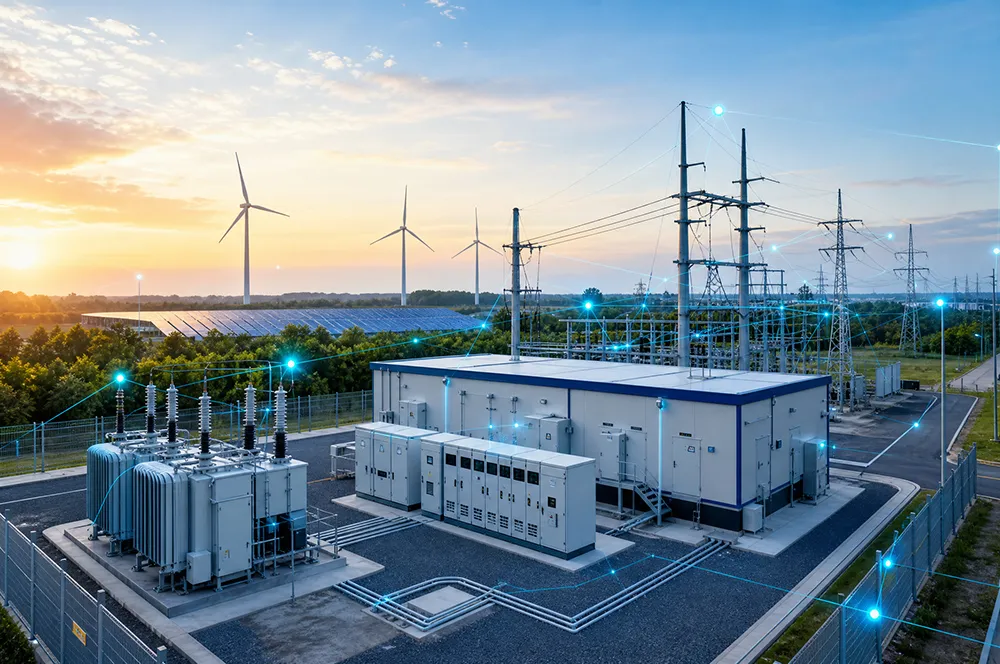

When a procurement manager in Surabaya accepted a 10 kV transformer on a “no air gap” brochure claim, the first-night boundary survey failed by 6 dB. A joint review found no defective transformer: the bid had not fixed acoustic measurement conditions, the delivered design operated at a different flux density from the comparison model, and a tank panel reinforced the dominant tone. The reversal was commercial as much as technical—the specification had bought a construction phrase, not a complete-unit sound and loss guarantee.
Summary: Treat Stereo rolled core transformer low noise no air gap as a claim to verify, not a literal description. Real magnetic circuits contain joints, interfaces, dimensional tolerances and effective reluctance. Require no-load and load-loss guarantees under IEC 60076-1, sound determination under IEC 60076-10, and application guidance from IEC 60076-10-1. For a Three-dimensional rolled core transformer for grid energy saving, compare tested watts over up to 8,760 energized hours per year and model site acoustics from the guaranteed factory quantity. Award only after the manufacturer states configuration, tolerance, cooling state and remedies.
Why the Low-Noise Claim Needs a Procurement Test
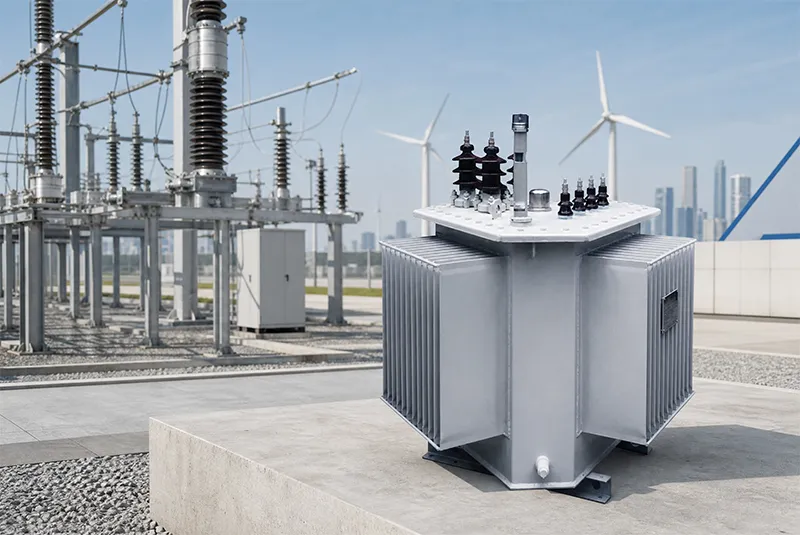
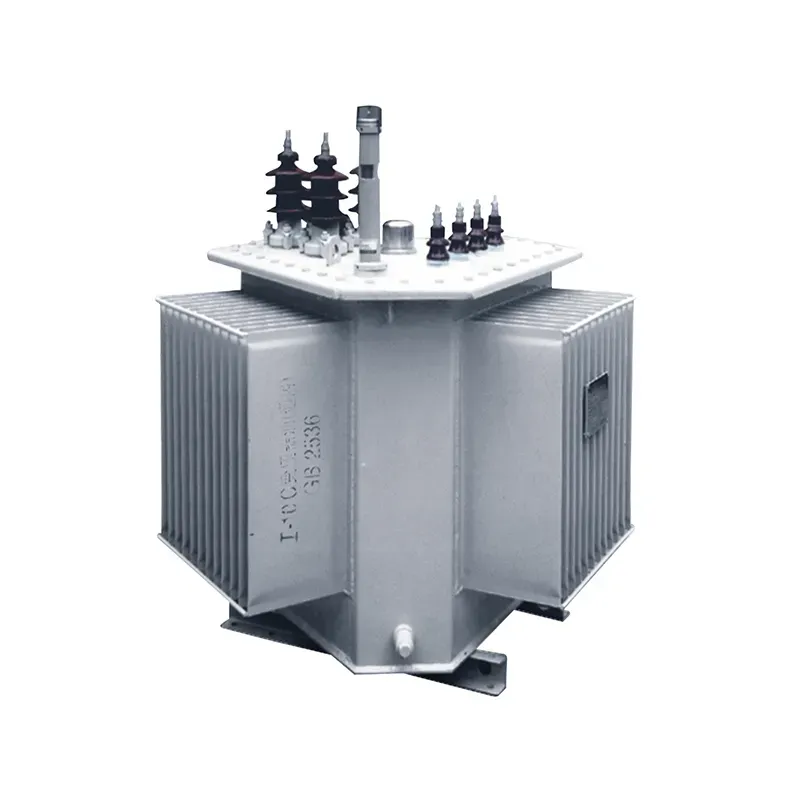
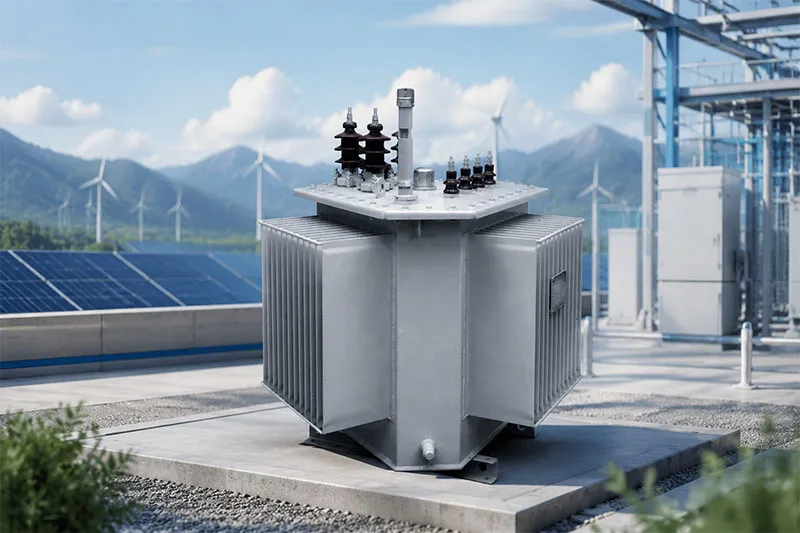
A three-dimensional rolled or wound core arranges three magnetic paths in a spatially symmetrical three-phase assembly. Fewer discontinuities and balanced path lengths can reduce localized flux disturbance and excitation forces when the steel, winding, annealing, assembly and clamping processes are controlled. That engineering potential is relevant to a Three-dimensional rolled core transformer for grid energy saving, especially where a distribution unit remains energized during long light-load periods.
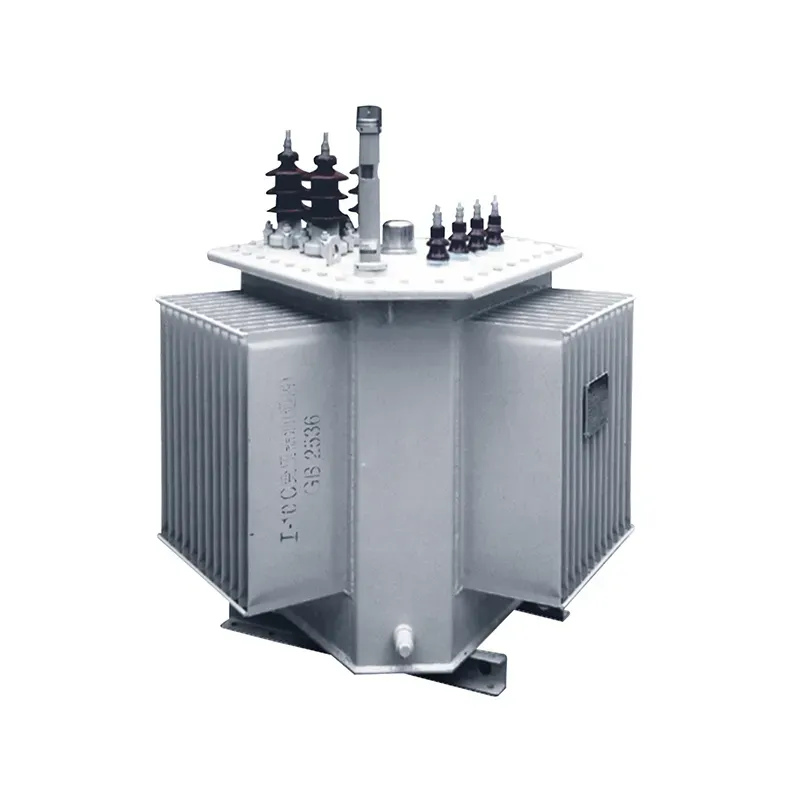
Yet “low noise” is not a stand-alone specification. Buyers need the acoustic quantity, guaranteed limit, operating condition, cooling state, test environment and acceptance rule. Similarly, the phrase Stereo rolled core transformer low noise no air gap combines a topology description with two performance implications. Neither implication follows automatically from the core name; both must be demonstrated for the complete offered transformer.
1. What Does “No Air Gap” Mean in a Real Magnetic Circuit?
In this market, “no air gap” is construction or marketing shorthand for a wound path intended to avoid the multiple deliberate lap joints of a conventional stacked core. It must not be read as zero physical discontinuity or zero magnetic reluctance. A finished core has strip ends or joining regions, mating surfaces, insulation coatings, dimensional tolerances, assembly clearances and stress-dependent material properties. Even microscopic interfaces can behave as effective gaps.
That qualification is essential whenever Stereo rolled core transformer low noise no air gap appears in a tender. Ask the supplier to describe the joining method, steel grade and thickness, winding tension, annealing control, handling limits and final clamping arrangement. A section drawing and process-control plan are more useful than an absolute “gap-free” statement.
Flux density is the other control variable. At a fixed turns count and core area, magnetic induction changes approximately with volts per hertz; a unit intended for 50 Hz cannot be evaluated at 60 Hz without considering its declared design and test basis. IEC 60076-1 provides general requirements and the basis for measuring no-load loss and current at rated conditions. For a Three-dimensional rolled core transformer for grid energy saving, request guaranteed no-load current and watts at stated voltage, frequency and tap, plus the applicable tolerance—not only a calculated core-material figure.
2. How Should Low-Noise Performance Be Verified?
IEC 60076-10 specifies methods for determining transformer sound levels; IEC 60076-10-1 explains application considerations. The tender should distinguish sound-power level from sound-pressure readings. Sound power characterizes the source under defined conditions, while pressure at a microphone also depends on distance, measurement surface, room reflections and background. A single near-field reading cannot establish a substation-boundary result.
For Stereo rolled core transformer low noise no air gap, require the report to identify energized voltage and frequency, tap position, load condition, cooling equipment state, microphone geometry, background correction and whether the tank, radiators, terminal enclosures and auxiliaries match the offered configuration. If fans or pumps are optional, specify separate limits for natural and forced cooling where relevant. IEC 60076-10 is a test method, not a universal “quiet transformer” certification.
Decibels are logarithmic: a 3 dB increase in sound-power level represents approximately twice the acoustic power, although it is not the same as twice the perceived loudness. Factory acceptance should therefore state how uncertainty and guarantee tolerance are handled. A Three-dimensional rolled core transformer for grid energy saving can still miss a site limit if walls, ventilation openings, bus connections or foundations create a stronger transmission path; use the guaranteed factory result as an input to the project acoustic model.
3. Which Loss Guarantees Support Grid Energy Saving?
No-load loss accrues whenever the transformer is energized; load loss changes approximately with the square of current, subject to temperature correction and additional-loss effects. IEC 60076-1 keeps these quantities distinct. A bidder that quotes only “efficiency” leaves procurement unable to normalize rating, load point, reference temperature, tap, waveform and auxiliaries.
For a Three-dimensional rolled core transformer for grid energy saving, obtain guaranteed no-load loss, load loss, no-load current, impedance and auxiliary power on one schedule. Then apply the owner’s hourly or representative load profile. A lightly loaded rural feeder can place more value on standing loss; an industrial feeder with sustained high current can rank load loss more heavily. There is no defensible universal percentage saving from core geometry alone.
Destination rules may also set an absolute threshold. European Commission Regulation (EU) No 548/2014, as amended, covers many transformers of at least 1 kVA used in 50 Hz transmission, distribution or industrial applications, subject to exclusions. It uses maximum load/no-load losses or minimum Peak Efficiency Index depending on category and rating; Tier 2 requirements apply from 1 July 2021. That regulation does not automatically govern Southeast Asian or Middle Eastern projects, but it shows why the contract must identify the destination regime and declared model data.
4. Hidden Cost, Tank Resonance and Illustrative ROI
Core magnetostriction can generate a strong component at twice the supply frequency—typically 100 Hz on a 50 Hz system or 120 Hz on a 60 Hz system—plus harmonics. Tank panels, supports, radiators and cable structures can reinforce or transmit particular components. Lower core excitation does not guarantee lower installed noise if the enclosure has an unfavorable mode. IEC 60076-10 testing and a project-specific propagation assessment address different parts of this risk.
Hidden cost can include a late acoustic enclosure, ventilation redesign, structural isolation, repeat testing, civil changes, delayed energization and energy charges above the bid model. Maintenance access and repair strategy also matter: a Stereo rolled core transformer low noise no air gap proposal should be evaluated as a complete active-part, tank and site interface—not merely a core.
Illustrative ROI only: suppose compliant Bid A guarantees 0.35 kW less no-load loss than Bid B. At 8,760 energized hours and an assumed US$0.12/kWh energy value, the arithmetic saving is 3,066 kWh, or about US$368 per year. If A’s verified incremental purchase cost were US$1,800, simple payback from that difference alone would be about 4.9 years. This is not a product price or performance claim. A proper TCO model discounts cash flows and adds load loss, auxiliaries, loss tolerance, maintenance, acoustic mitigation, downtime and residual risk.
Construction and Procurement Comparison
| Decision dimension | 3D rolled/wound core offer | Conventional stacked-core offer | Evidence to compare |
|---|---|---|---|
| Magnetic joints | Designed for fewer major discontinuities; “no air gap” remains shorthand | Uses engineered lap joints | Core drawing, process controls, no-load current |
| Noise potential | Balanced paths may reduce excitation asymmetry | Optimized step-lap designs can also perform well | IEC 60076-10 complete-unit report |
| Loss performance | Potentially attractive standing loss; design-specific | Broad range of steel and flux-density choices | Guaranteed no-load and load loss under IEC 60076-1 |
| Tank and installation | Spatial active part can change footprint and resonant behavior | Familiar planar layouts may simplify some repairs | Approved drawing, mass, natural frequencies, access plan |
| Unit-cost tendency | May carry process or tooling differences | May benefit from familiar supply chains | Comparable commercial scope; no assumed price |
| TCO | Strong only when verified loss or acoustic value exceeds added cost | Strong when guarantees, serviceability and site fit are better | Discounted loss capitalization and risk sensitivity |
Grid and Application Evidence Matrix
| Application | Performance priority | Required project data | Acceptance focus |
|---|---|---|---|
| Urban indoor substation | Low source sound and controlled structure-borne vibration | Room geometry, background, receiver limit, ventilation state | IEC 60076-10 result plus site acoustic model |
| 24/7 utility feeder | Low standing loss and fleet repeatability | 8,760-hour energization, tariff/loss value, sample strategy | Guaranteed watts and production test trend |
| Solar or wind collector grid | Variable loading and voltage duty | Hourly profile, harmonics, voltage range, switching regime | Loss model across duty; insulation and control coordination |
| Industrial infrastructure | Load loss, harmonics and maintainability | Spectrum, utilization, ambient, outage consequences | Thermal evidence and accessible complete-unit design |
| Remote Middle Eastern site | Ambient capability, logistics and low intervention | Temperature, altitude, dust, solar exposure, route limits | Derating, cooling state, spares and field plan |
Standards, Regulation and Commercial Consequences
- IEC 60076-1: general requirements, test classification and loss/impedance framework. It does not certify a core topology as energy-saving.
- IEC 60076-10: determination of sound levels for transformers and associated equipment. It is a measurement standard, not proof of an installed boundary level.
- IEC 60076-10-1: guidance for applying sound-determination information, including factors relevant to specification and interpretation.
- Regulation (EU) No 548/2014, as amended: ecodesign requirements for covered transformers placed on the EU market; scope, exclusions, rating and category determine applicability.
State the standard edition, destination law, tested configuration, laboratory, report number and acceptance rule. Unsupported Stereo rolled core transformer low noise no air gap wording can produce failed FATs, acoustic redesign and delay; unsupported Three-dimensional rolled core transformer for grid energy saving claims can distort loss capitalization or create a regulatory documentation gap. “Tested to IEC” and “IEC certified” are not interchangeable.
Four Actions Before Technical and Commercial Award
- Freeze common conditions. State kVA, voltages, 50 or 60 Hz frequency, vector group, taps, impedance, cooling, ambient, altitude, harmonics, flux/overvoltage duty, accessories and sound receiver criteria.
- Convert claims into guarantees. For Stereo rolled core transformer low noise no air gap, require a construction explanation, sound quantity and report. For Three-dimensional rolled core transformer for grid energy saving, schedule no-load loss, load loss, tolerance, auxiliaries and remedies.
- Audit configuration traceability. Match drawings, material schedule, process plan and test evidence to the offered unit. Jubang Group can configure a three-dimensional wound-core transformer against a project data sheet; buyers should still verify report applicability and public qualification information.
- Run an alternative and sensitivity case. Compare the same schedule with a conventional 6–10 kV oil-immersed transformer. Recalculate TCO at low and high energy values, different load profiles, loss tolerances and acoustic-mitigation outcomes.
Frequently Asked Questions
Does “no air gap” mean a transformer has zero magnetic gap?
No. In Stereo rolled core transformer low noise no air gap wording, “no air gap” is shorthand for a wound construction intended to minimize major joint discontinuities. Real assemblies retain interfaces, strip joining regions and tolerances that create effective reluctance; request drawings and measured excitation data.
Are three-dimensional rolled-core transformers always quieter?
No. Symmetry and fewer effective joints can help, but steel, flux density, stress, clamps, tank modes, cooling equipment and installation determine the result. Specify an IEC 60076-10 quantity and complete-unit configuration rather than relying on Stereo rolled core transformer low noise no air gap alone.
How do IEC 60076-10 and IEC 60076-10-1 differ?
IEC 60076-10 specifies sound-determination methods; IEC 60076-10-1 provides application guidance for using and interpreting acoustic information. Neither is an automatic certificate that a substation will meet its property-line limit.
How should a grid buyer verify an energy-saving claim?
For a Three-dimensional rolled core transformer for grid energy saving, compare guaranteed no-load and load losses at common conditions, then apply the owner’s energized hours and load curve. Include auxiliaries, tolerance, tariff or loss value, discount rate and applicable local efficiency rules.
What should an RFQ request for a low-noise rolled-core transformer?
Request ratings, duty, sound-power guarantee, measurement condition, loss schedule, tolerances, drawings, construction description, test-plan status and contractual remedies. Ask bidders to identify every deviation and to show how tank, cooling equipment and site interfaces affect both acoustic and lifecycle performance.
Primary References
- IEC 60076-1, Power transformers—Part 1: General, International Electrotechnical Commission.
- IEC 60076-10, Power transformers—Part 10: Determination of sound levels, International Electrotechnical Commission.
- IEC 60076-10-1, Power transformers—Part 10-1: Determination of sound levels—Application guide, International Electrotechnical Commission.
- European Commission Regulation (EU) No 548/2014 on small, medium and large power transformers, EUR-Lex.
Memorable line: A quiet, efficient magnetic circuit is an engineering possibility; a quiet, efficient grid asset is a measured and contracted outcome.
For the next tender, send the duty profile, loss capitalization method, acoustic limit and destination requirements, then request a project-specific proposal for Jubang Group’s Three-dimensional rolled core transformer for grid energy saving.