JUBANG



When a procurement manager in Dubai encountered a 19-page transformer quotation that undercut the next bidder by 23%, he marked it as the commercial favourite and asked engineering for a quick approval. The first drawing looked convincing; the second review exposed a different picture. The quoted loss values had no tolerance basis, the radiator calculation stopped at 40 C, the marshalling box was excluded, and the warranty began at shipment rather than energization. Three weeks of clarification erased most of the saving and threatened the industrial park schedule. The low price was not the mistake; comparing an incomplete promise with a complete scope was.
Summary: A bankable oil-immersed distribution transformer quotation connects six items: site duty, guaranteed losses, thermal margin, standard-based tests, delivery boundaries, and enforceable remedies. An oil transformer should be priced by evaluated lifetime cost, not invoice value alone. A three-phase oil-immersed transformer for Dubai also needs an explicit 50 C thermal review, not a generic tropical label. IEA’s Electricity 2024 report projected average global electricity-demand growth of 3.4% annually from 2024 to 2026; as networks expand, weak specification control multiplies across every installed asset.
How Does an Oil-Immersed Distribution Transformer Move Heat as Well as Power?
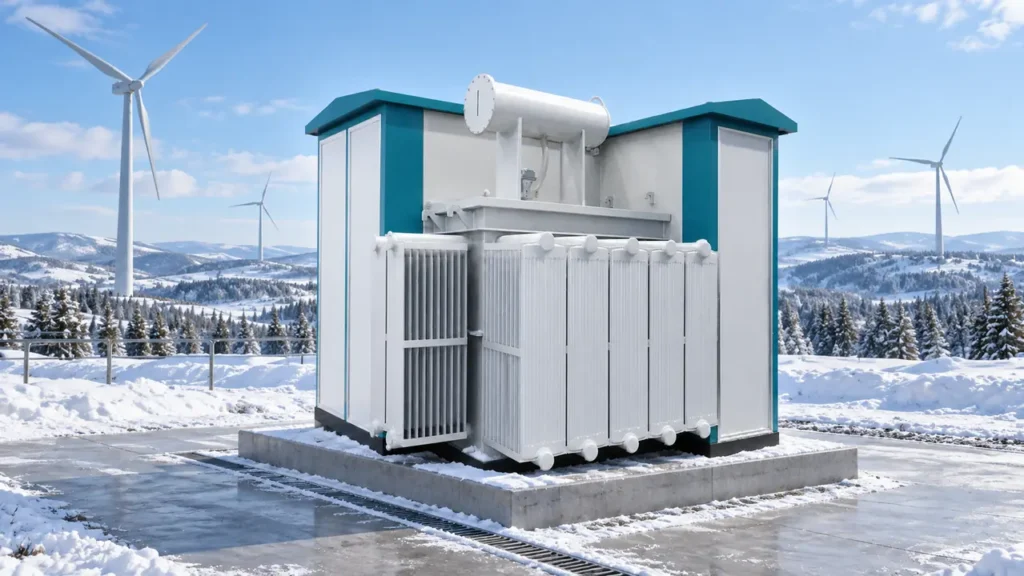
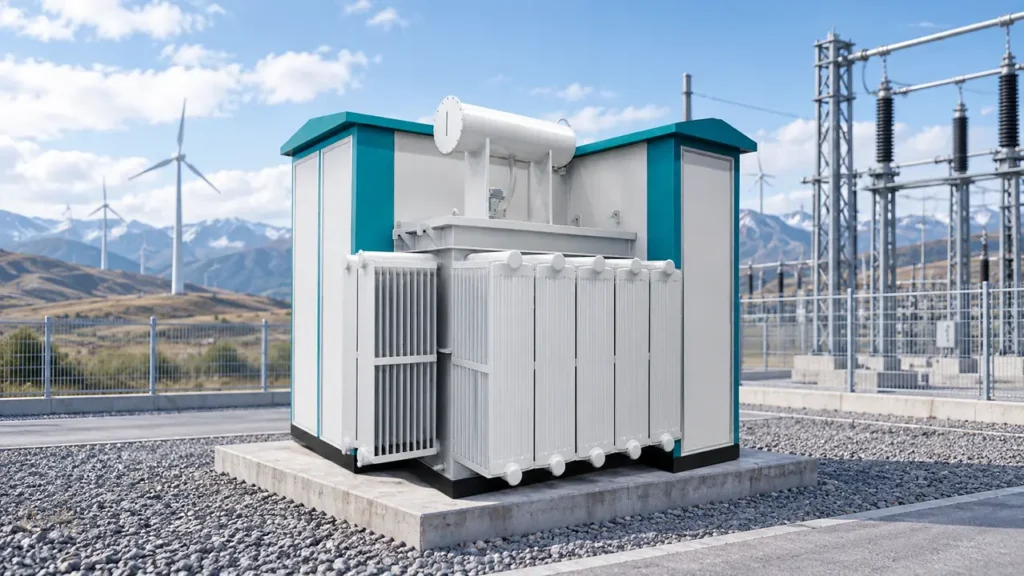
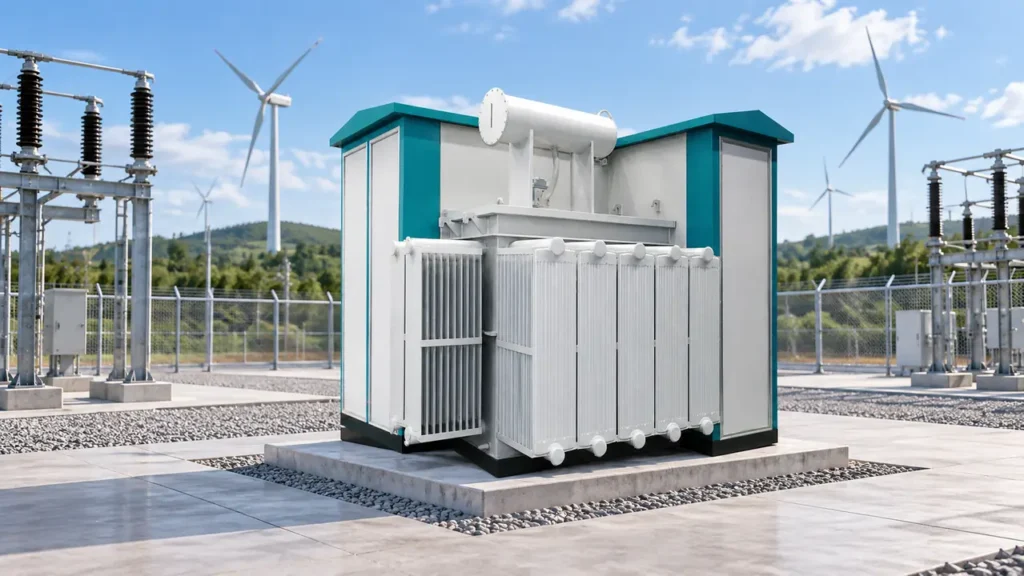
Procurement often sees a transformer as a voltage-changing box; engineering sees two linked circuits. The electrical circuit transfers energy through the core and windings, while the thermal circuit moves losses from conductor and steel into insulating liquid, tank walls, radiators, and ambient air. A weakness anywhere in that heat path reduces loading margin.
IEC 60076-1 covers general requirements, and IEC 60076-2 addresses temperature rise for liquid-immersed transformers. These standards create a common test language, but they do not select the correct site assumptions for the buyer. Maximum ambient, daily average, altitude, solar exposure, enclosure proximity, and airflow remain project inputs.
ONAN cooling relies on natural oil circulation and natural air movement. ONAF adds fans, which may provide another rating stage but also introduces auxiliary power, controls, noise, maintenance, and a failure mode. The procurement file should state whether the continuous project duty depends on fan operation.
This is the first distinctive sourcing test: ask the bidder to draw the heat path and name the limiting temperature at the project peak. A serious answer identifies winding hot spot, top oil, ambient basis, cooling state, and allowable duration; a generic answer repeats only the nameplate kVA.

What Data Should Define a Three-Phase Oil-Immersed Transformer Before Pricing?
A useful request for quotation begins with a system model, not a copied catalogue page. At minimum, the data sheet should define rated power, voltage ratio, highest voltage for equipment, frequency, vector group, neutral arrangement, impedance, tapping, insulation levels, cooling, terminals, losses, sound, environment, accessories, and test scope.
Consider an illustrative 1,600 kVA, 11/0.415 kV industrial unit. A specified 6% impedance influences prospective secondary fault current, voltage dip during motor starting, and compatibility with another transformer. Accepting 4.5% or 7.5% because the kVA is unchanged can force protection and switchgear changes.
A three-phase oil-immersed transformer intended for parallel operation needs matched ratio, phase displacement, polarity, tap position, and suitably close impedance. The bidder should state manufacturing tolerance and the project team should define its acceptance band.
- Load evidence: 15-minute or hourly profile, base load, peak duration, motor starts, harmonics, and forecast growth.
- Network evidence: fault level, earthing method, relay philosophy, cable length, voltage limits, and upstream switching.
- Site evidence: ambient distribution, altitude, sand, salt, solar radiation, ventilation, fire separation, and lifting access.
- Commercial evidence: operating hours, energy price, outage cost, required spares, and planned service life.
How Should a Three-Phase Oil-Immersed Transformer Be Rated for Dubai?
The phrase “suitable for tropical climate” is not a design calculation. Dubai procurement should state the maximum outdoor temperature, expected daily profile, solar loading, installation clearances, and whether the transformer sits behind a wall, inside a kiosk, or in open air. Each arrangement changes radiator performance.
IEC 60076-7 provides loading guidance for mineral-oil-immersed transformers. The manufacturer can use the project load cycle and ambient profile to estimate top-oil and hot-spot behaviour. The useful deliverable is not a single yes/no statement; it is a curve showing load, temperature, duration, and assumed loss of life.
A three-phase oil-immersed transformer may need more radiator area, lower current density, upgraded gasket materials, higher-temperature accessories, or a revised rating to carry the same load at 50 C. These changes cost money, which is why an apparently cheap standard design can become expensive during approval.
Sand adds a second constraint. Radiator spacing should permit cleaning; fan-assisted equipment needs filters or an agreed cleaning regime; marshalling boxes and terminal enclosures require an ingress-protection level suitable for the location. Thermal margin that disappears under dust is not genuine margin.
The approved general arrangement for an oil-immersed distribution transformer should therefore show airflow clearances and maintenance zones as controlled dimensions, not leave them to site interpretation.
Which Oil Transformer Quotation Looks Cheap Only Because It Is Incomplete?
A quotation autopsy separates price from scope. The buyer creates one normalization sheet and records whether each item is included, excluded, optional, assumed, or silent. Silence receives a cost allowance or a clarification hold; it never receives free compliance.
| Quotation line | What a complete offer states | Typical silent exclusion | Normalization action |
|---|---|---|---|
| Guaranteed losses | No-load and load loss, reference temperature, tolerance, remedy | Typical values without guarantee | Apply loss capitalization and a risk premium |
| Hot-climate design | Ambient profile, rise limits, cooling state, thermal calculation | Standard 40 C design labelled tropical | Price radiator or winding redesign before award |
| Accessories | Named manufacturer, model, contacts, ranges, quantities | Generic indicators; remote contacts optional | Add project-standard accessory package |
| Testing | Routine tests, witness points, type evidence, report format | Witnessing, impulse, sound, or temperature test excluded | Add laboratory, travel, and schedule cost |
| Delivery boundary | Incoterm, shipping condition, unloading, supervision, oil treatment | Factory gate price presented as delivered cost | Land the offer at the energized-site boundary |
| Warranty | Start date, duration, exclusions, response, remedy, freight | Warranty expires during project delay | Align coverage with delivery and energization milestones |
The result is often surprising: a technically complete oil transformer offer can move from second-lowest to best evaluated price once missing tests, accessories, freight, and loss cost are added consistently.
Each oil-immersed distribution transformer line item should retain its own loss guarantees, accessory scope, drawing set, test evidence, and delivery date; averaging a multi-unit package can conceal one noncompliant design.

How Does Oil Transformer Loss Capitalization Change the Award?
No-load loss runs whenever the transformer is energized; load loss varies approximately with the square of load current. A buyer can convert both into present-value money using expected loading, operating hours, energy price, evaluation life, discount rate, and loss factors.
An illustrative comparison makes the logic visible. If Bid A costs USD 8,000 less but carries 700 W more no-load loss, that difference consumes about 6,132 kWh per year at continuous energization before any load-loss difference is counted. The buyer should apply its own tariff and financial model rather than treat this example as a universal threshold.
For every oil transformer bid, the capitalization sheet should preserve the supplier’s guaranteed values and the owner’s assumptions separately so that an audit can reproduce the award.
| Cost layer | Input | Procurement treatment |
|---|---|---|
| Purchase | Transformer, accessories, tests, spares | Normalize to identical supply scope |
| Energy | Guaranteed no-load and load losses | Capitalize with the owner’s approved model |
| Delivery | Freight, insurance, customs, unloading, oil handling | Compare at the same site boundary |
| Risk | Deviations, missing evidence, schedule exposure | Resolve, price, or reject before award |
| Service | Oil tests, spares, response, outage consequence | Add owner-specific lifecycle allowance |
This method does not automatically favour the most efficient design. It reveals the break-even point. The award can then reflect actual operating economics instead of an abstract preference for either low capex or low losses.
Which Evidence Makes an Oil-Immersed Distribution Transformer Compliant?
Compliance is a chain, not a logo. The purchase specification names the standard and edition; the approved drawing identifies the offered design; the inspection plan identifies hold points; calibration records support measurements; and the final report ties every reading to the serial number.
IEC 60076 routine testing normally covers winding resistance, ratio and phase displacement, impedance and load loss, no-load loss and current, dielectric checks, and accessory operation as applicable. IEC 60076-3 addresses insulation levels and dielectric tests; IEC 60076-5 addresses short-circuit withstand.
A three-phase oil-immersed transformer may also require temperature-rise, lightning-impulse, sound-level, zero-sequence impedance, or other type and special tests. The tender should say whether a historical report is acceptable and define how closely its design must match the offered unit.
IEEE C57.12.00 provides a different general-requirements route for liquid-immersed distribution, power, and regulating transformers. A project may use IEC or IEEE, but mixing clauses without a cross-reference matrix can produce conflicting ratings, tolerances, and test expectations.
ISO 9001, ISO 14001, ISO 45001, and ISO 50001 certifications strengthen management-system due diligence; CE, CB, KEMA, DEKRA, or CNAS-linked evidence should be checked for product family, laboratory scope, issuing body, validity, and relevance. A certificate title alone does not close the technical requirement.
How Do Maintenance and Environmental Controls Protect an Oil Transformer Investment?
The environmental discussion should move beyond slogans. Lower guaranteed losses reduce operational energy waste; a robust tank and gasket system limits leakage risk; a containment bund controls consequences; accessible radiators and valves improve maintainability; documented materials support end-of-life recovery.
A condition-based plan trends information rather than collecting disconnected inspections. Operators can record load, top-oil temperature, winding indication, oil level, pressure events, leaks, cooling performance, and alarms. Oil-quality and dissolved-gas analysis can be scheduled by asset criticality and interpreted as a trend.
Maintenance access around a three-phase oil-immersed transformer should be reviewed on the general arrangement before approval. If a wall blocks radiator cleaning or a cable trench blocks valve access, the drawing has already created the future maintenance problem.
- Before energization: inspect transport indicators, oil condition, bushings, earthing, protection circuits, tap position, and installation clearances.
- After initial loading: compare temperature and sound with factory data and confirm that cooling surfaces remain unobstructed.
- After faults or severe overloads: review relay records, thermal history, oil evidence, and physical condition before return to normal service.
How Can a Buyer Qualify the Transformer Factory Before Award?
Factory qualification should follow the evidence path of the order. The buyer reviews design ownership, conductor and core traceability, winding controls, drying and oil filling, tank leak testing, laboratory calibration, nonconformance control, preservation, and packing. A polished assembly area matters less than repeatable records.
An oil transformer supplier should also demonstrate how a failed test becomes a documented root-cause review, approved corrective action, repeated test, and controlled design update.
- Ask for an anonymized sample data book that shows drawing revision, serial traceability, raw readings, acceptance limits, and signatures.
- Audit how engineering changes reach purchasing, production, inspection, nameplates, manuals, and spare-parts records.
- Confirm who owns the project after shipment and what response is contractually available if site measurements differ from factory results.
- Verify that packing design accounts for total mass, centre of gravity, lifting points, moisture protection, shock monitoring, and the chosen shipping route.
Jubang Group Co., Ltd. provides 35 kV-and-below transformers, switchgear, prefabricated substations, and integrated power-system delivery supported by ISO 9001, ISO 14001, ISO 45001, ISO 50001, CE, CB, KEMA, DEKRA, and a CNAS-recognized laboratory scope where applicable. Procurement teams can use the Jubang Group capability overview when transformer, switchgear, and substation interfaces need one coordinated technical review.
For a project-specific offer, the buyer can submit the single-line diagram, load profile, ambient data, loss evaluation factors, accessory schedule, test plan, logistics boundary, and delivery milestone through the Jubang Group project review channel.
Which Documents Turn the Award into a Controllable Delivery?
The purchase order should attach the signed data sheet, deviations, guaranteed-loss schedule, drawings, quality plan, inspection and test plan, accessory schedule, document index, packing requirement, spare-parts list, delivery programme, and warranty matrix. Every later submission should carry the same project and revision identifiers.
The final data book for each oil-immersed distribution transformer should connect the serial number to approved drawings, material records, routine tests, accepted type evidence, calibration certificates, oil records, packing release, manuals, and open-item closure. That chain is what makes future maintenance and warranty claims practical.
Which References Support This Sourcing Method?
- IEC 60076 Power Transformers – general, thermal, dielectric, short-circuit, and loading framework.
- IEEE C57.12.00 – general requirements for liquid-immersed distribution, power, and regulating transformers.
- International Energy Agency, Electricity 2024 – electricity-demand and grid context.
- International Organization for Standardization – management-system standards used in supplier qualification.
What Is the Final Procurement Judgment?
A defensible oil-immersed distribution transformer award is not the cheapest bid with acceptable headings. It is the offer whose thermal assumptions, guaranteed losses, tests, delivery boundary, and remedies remain coherent when traced from tender to serial-number data book.
The honest answer is that an oil transformer is purchased twice: once in the contract and again through every watt of loss, every degree of temperature, and every hour of unavailable capacity. Bid normalization makes the second purchase visible before the first is signed.
For a three-phase oil-immersed transformer, the decisive comparison is therefore not copper versus aluminium or one country versus another; it is verified duty versus undocumented assumption.
Jubang Group Co., Ltd. builds transformer, switchgear, prefabricated-substation, EPC, and intelligent-operation solutions for that decision point. Project teams can submit their electrical data, climate profile, evaluated-loss method, inspection plan, and delivery destination through the Jubang Group official website to request a matched technical and commercial proposal.