From transformers and switchgear to ring main units, substations, circuit breakers and smart components, Jubang provides integrated product support for power distribution projects.
Discover Jubang’s strengths in technology R&D, quality testing and smart manufacturing, supporting reliable electrical equipment and efficient power distribution solutions for global customers.
From technical consultation and OEM/ODM customization to EPC support, smart O&M, delivery documentation and after-sales service, Jubang supports your project at every stage.
Explore Jubang Group’s development history, intelligent manufacturing base, R&D platforms, CNAS-accredited laboratory and global project service capabilities.
How to specify recloser communication for SCADA projects
Release Time: 2026-08-07
Recloser communication protocols define how a controller exchanges status, measurements, and commands with SCADA; buyers should lock roles, points, time sync, and security boundaries before comparing protocol labels. Use this page to separate protocol labels from role maps, point lists, and acceptance tests.
Part 1. What a recloser communication interface actually connects
A recloser communication interface links the controller to SCADA or a telecontrol gateway. It carries status, measurements, and commands only as the architecture assigns those roles.
Readers searching for recloser communication protocols usually need a project checklist, not a catalog slogan.
Part 2. Protocol choices that belong in the project specification
Name candidate protocols as requirements, not as brand defaults. Record which device speaks which profile and who owns gateway translation.
RFQ field
What to record
Owner
Protocol profile
Named profile and gateway role
SCADA / telecom
Point list scope
Status, measurands, commands
Automation
Time sync method
Project expectation stated
Controls
Security boundary
Zone and remote-access notes
OT security
Part 3. How SCADA points and controller functions should be separated
A point list is not the same as protection logic. Keep measurement and status exposure separate from curve ownership in the RFQ.
Important: Do not accept a recloser communication offer that is silent on roles, points, and time sync. A protocol label alone is incomplete. (Source: IEC telecontrol / IEC 61850 overviews / project architecture notes.)
Part 4. Why event records and time synchronisation matter
Event order and SOE usefulness depend on a stated time-sync method. Ask for the project expectation without inventing accuracy claims here.
Part 5. Security and network boundaries the RFQ should state
State network zones, remote access rules, and document expectations at requirements level. Do not copy another utility’s hardening checklist blindly.
Part 6. Supplier inputs that make controller integration testable
Ask for interface documents, point list drafts, and test scope when discussing JUBANG pole-mounted switching routes.
Project signal
JUBANG route
Send with quote
Pole-mounted switching with documented telecontrol
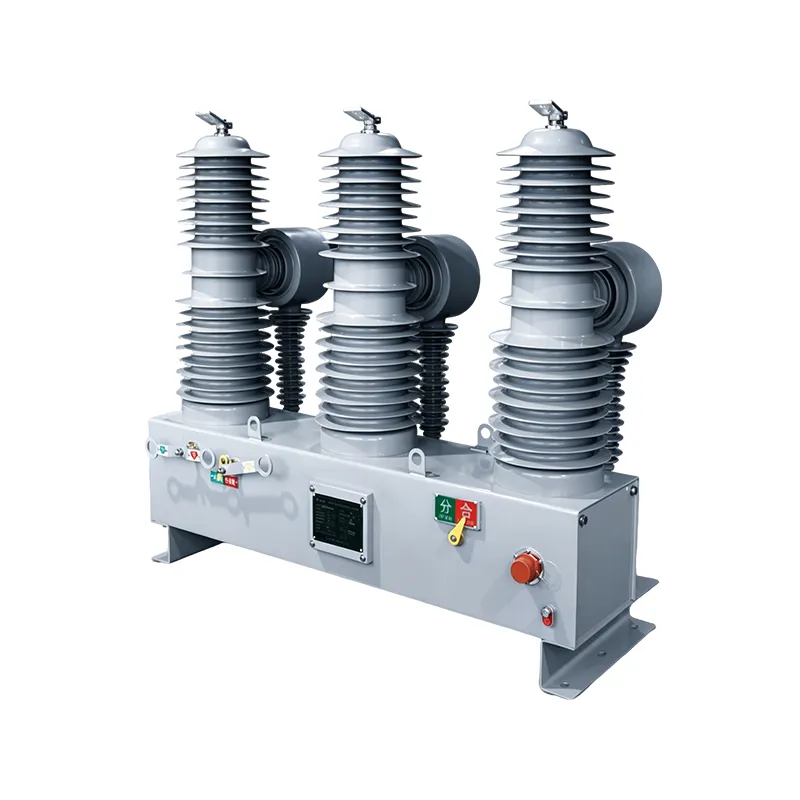
ZW32-40.5 Outdoor Pole Mounted VCB
Role map, protocol note, point-list draft, destination
Products are exported to more than 100 countries and regions such as Africa, the Middle East, and the United Kingdom and Europe. It is a leading manufacturer of power distribution equipment in China.

 JUBANG