From transformers and switchgear to ring main units, substations, circuit breakers and smart components, Jubang provides integrated product support for power distribution projects.
Discover Jubang’s strengths in technology R&D, quality testing and smart manufacturing, supporting reliable electrical equipment and efficient power distribution solutions for global customers.
From technical consultation and OEM/ODM customization to EPC support, smart O&M, delivery documentation and after-sales service, Jubang supports your project at every stage.
Explore Jubang Group’s development history, intelligent manufacturing base, R&D platforms, CNAS-accredited laboratory and global project service capabilities.
Transformer Temperature Rise vs Insulation Class: What Buyers Should Specify
Release Time: 2026-11-11
Transformer temperature rise is the increase in winding temperature above the stated ambient under defined operating conditions. Insulation class describes the insulation system’s thermal classification. They are separate specifications: a class label is not the same as average winding rise, hotspot temperature or permission to overload the transformer.
A useful enquiry names the thermal quantity, the load and cooling conditions, the ambient basis and the evidence required for the offered model.
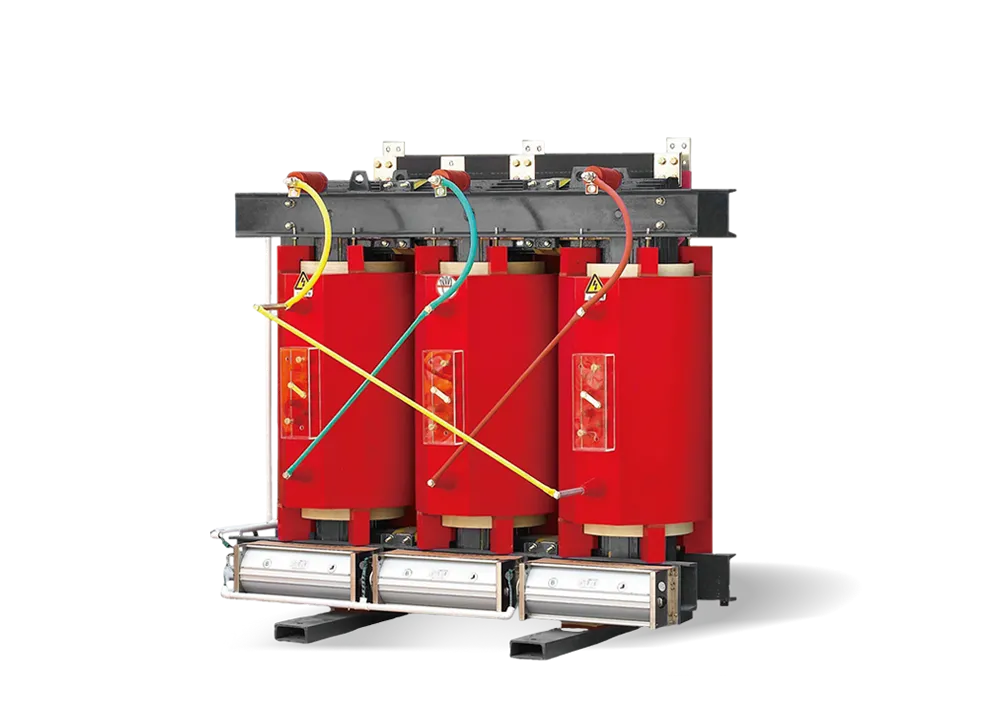
Cover image: conceptual transformer illustration with warm lighting, not an infrared inspection, measured hotspot or JUBANG thermal-test result.
Transformer temperature rise is a difference, not an absolute temperature
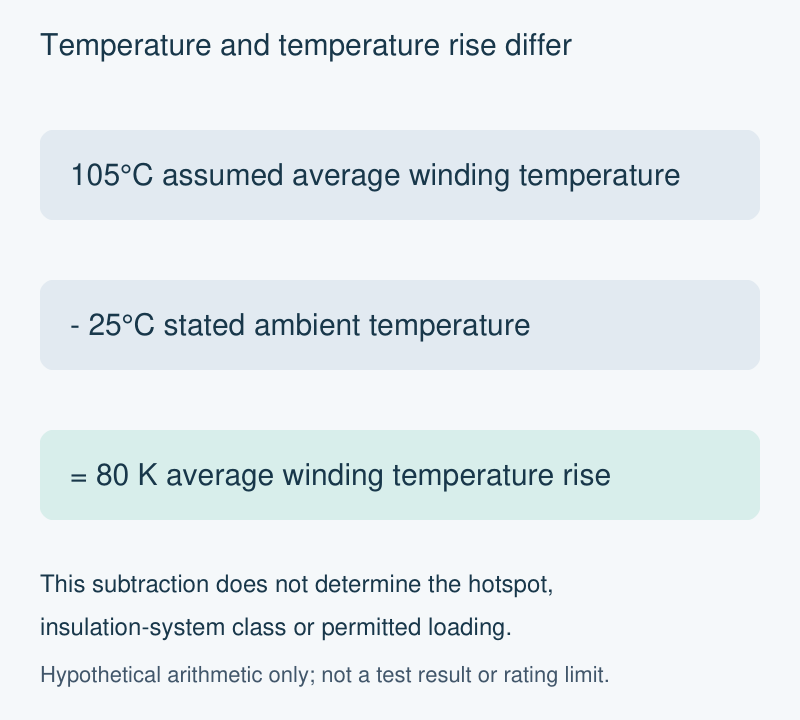
As an original arithmetic example, assume an average winding temperature of 105°C and a stated ambient temperature of 25°C. The difference is 105 − 25 = 80 K. A temperature difference of 80 K has the same numerical size as an 80°C difference.
The example does not say that 105°C is a permitted temperature for a particular unit. It also does not identify the hottest location or the insulation class. Those conclusions need separate equipment information and assessment criteria.
Temperature-difference arithmetic only. These are assumed values, not a product rating, test record or allowable thermal limit.
That separation helps when reading a bid. A supplier stating a winding temperature and another stating a rise may appear to offer different thermal performance simply because the quantities differ. Compare the same quantity under the same declared conditions.
Average winding, hotspot and insulation class answer different questions
The average winding temperature describes an average quantity. The hotspot concerns the hottest part of the winding insulation system. Insulation-system classification is a separate attribute of the design. None should be substituted for another just because all appear in a thermal discussion.
Thermal field
What it describes
What to request with it
Average winding rise
Increase of the average winding temperature above the stated ambient
Load, cooling, ambient and assessment/test basis
Hotspot temperature or criterion
The hottest winding-insulation location and its relevant assessment
Definition and evidence applicable to the offered design
Insulation-system class
The system’s declared thermal classification
Applicable classification reference and offered system identification
Temperature monitoring/control
The quantities monitored and the functions provided
Sensor/control description and configuration-specific documentation
One insulation system can be used in designs with different declared rises. Conversely, simply subtracting ambient temperature from a class number does not establish an allowable average rise: it leaves the hotspot and the applicable assessment conditions unresolved.
A controller display also needs its own definition. Identify what the sensor arrangement reports before treating a displayed value as the same quantity used by an average-winding-rise specification. The presence of monitoring does not, by itself, prove that an agreed thermal requirement has been met.
Keep load, cooling and installation conditions attached
A thermal statement needs a load basis. Ask whether the offered rise refers to the specified rating and cooling condition, and which conditions accompany that declaration. A value quoted without this context is difficult to compare with another supplier’s figure.
Cooling arrangements belong in the same discussion. If the offer includes different cooling modes, the documentation should identify the rating and thermal information applicable to each relevant mode. Do not infer an overload allowance merely from the presence of fans.
The installation environment must also be stated. Supply the project’s ambient and enclosure/ventilation conditions so the supplier can identify the applicable equipment basis and any issues requiring review. This is an input to the specification; it is not a universal derating percentage.
Ask for evidence that matches the offered configuration
The buyer should be able to connect each declared thermal quantity to the offered unit and its supporting information. A general brochure, an unrelated test report and a configuration-specific thermal declaration serve different purposes.
Identify the applicable test or assessment reference in the project specification, then ask the supplier to explain the evidence supplied against it. Keep average winding rise and hotspot criteria separately identifiable in that response. A thermal photograph without the required context cannot replace the agreed assessment.
This also makes deviations easier to review. If a supplier proposes a different rise, cooling arrangement or insulation system, the response can identify the changed field and its supporting evidence instead of relying on a broad statement that the alternative is “equivalent.”
A neutral thermal enquiry clause
A preliminary enquiry can state: “Identify the offered insulation system and declared average winding temperature rise at the specified load, cooling and ambient conditions. State the applicable hotspot criterion, assessment reference and supporting evidence. Identify deviations and the temperature-monitoring/control functions included.”
The project team must fill in its actual conditions and requirements; this clause deliberately supplies no universal limit or operating setpoint. It is a way to make the supplier’s answer complete and comparable.
The published JUBANG SCB resin-insulated dry-type transformer family describes temperature monitoring/control and cooling. Request the offered model’s thermal declaration and relevant documentation before accepting a rise, hotspot or loading claim for the project.
Products are exported to more than 100 countries and regions such as Africa, the Middle East, and the United Kingdom and Europe. It is a leading manufacturer of power distribution equipment in China.

 JUBANG