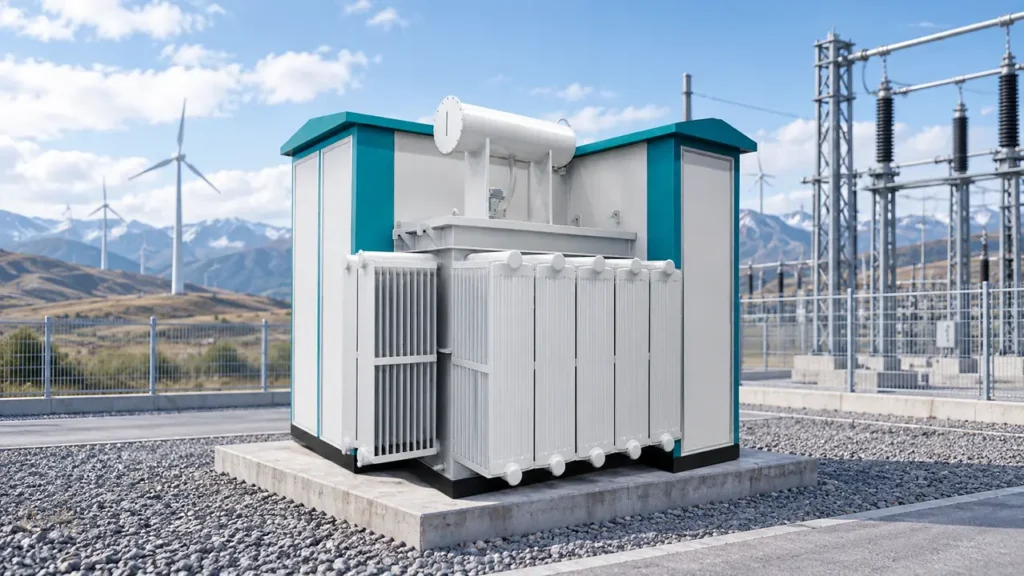
From transformers and switchgear to ring main units, substations, circuit breakers and smart components, Jubang provides integrated product support for power distribution projects.
Discover Jubang’s strengths in technology R&D, quality testing and smart manufacturing, supporting reliable electrical equipment and efficient power distribution solutions for global customers.
From technical consultation and OEM/ODM customization to EPC support, smart O&M, delivery documentation and after-sales service, Jubang supports your project at every stage.
Explore Jubang Group’s development history, intelligent manufacturing base, R&D platforms, CNAS-accredited laboratory and global project service capabilities.
Oil-Immersed Distribution Transformer Buyer Checklist for Utility Projects
Release Time: 2026-07-08
An oil-immersed distribution transformer is a long-life asset—often 25 to 40 years in service—so procurement teams should evaluate losses, cooling, tank design, and test documentation before approving purchase orders for utility feeders or industrial substations. Specify 50 or 60 Hz as applicable when requesting quotes.
Part 1. Scope, Voltage Class, and Application Context
Evaluation focus
Define where oil-immersed distribution transformer fits in your single-line diagram, fault level, and duty cycle before comparing vendor quotations.
Capture ambient conditions, altitude, pollution level, and maintenance access constraints in the RFQ package.
Panel builders and EPC contractors should request type test summaries that match the exact configuration quoted—not a similar catalog variant.
When oil-immersed distribution transformer appears in a tender package, list applicable IEC and IEEE reference documents in the specification so bidders normalize test scope.
Compare quotations on identical Incoterms, witness FAT points, and included spares—unit price alone rarely reflects lifecycle cost.
Document ambient temperature range, altitude, and pollution class; suppliers may derate ratings when site conditions exceed standard reference values.
Documentation and RFQ
Align requested ratings with utility interconnection or plant protection studies—not catalog defaults alone.
Align factory acceptance tests with items your insurer, utility, or internal reliability program may require before energization approval.
Use interval load data rather than nameplate assumptions alone when confirming continuous current, overload, and switching duty.
Cross-functional reviews (operations, maintenance, procurement) reduce rework when protection, civils, and logistics constraints surface late.
Keep a single controlled RFQ revision with marked-up single-line diagrams so technical and commercial clarifications stay traceable.
Panel builders and EPC contractors should request type test summaries that match the exact configuration quoted—not a similar catalog variant.
Tip: Attach one-line diagrams and load lists to every RFQ revision to reduce quote variance.
Part 2. Technical Parameters Buyers Should Compare
Evaluation focus
Compare no-load and load losses, insulation/coordination margins, and short-circuit withstand across bids using identical test standards.
Request guaranteed performance data—not typical values—for ONAN/ONAF cooling and operating temperature rise.
When oil-immersed distribution transformer appears in a tender package, list applicable IEC and IEEE reference documents in the specification so bidders normalize test scope.
Compare quotations on identical Incoterms, witness FAT points, and included spares—unit price alone rarely reflects lifecycle cost.
Document ambient temperature range, altitude, and pollution class; suppliers may derate ratings when site conditions exceed standard reference values.
Align factory acceptance tests with items your insurer, utility, or internal reliability program may require before energization approval.
Documentation and RFQ
Document vector groups, impedance, and accessory lists so FAT witnesses can verify as-built compliance.
Use interval load data rather than nameplate assumptions alone when confirming continuous current, overload, and switching duty.
Cross-functional reviews (operations, maintenance, procurement) reduce rework when protection, civils, and logistics constraints surface late.
Keep a single controlled RFQ revision with marked-up single-line diagrams so technical and commercial clarifications stay traceable.
Panel builders and EPC contractors should request type test summaries that match the exact configuration quoted—not a similar catalog variant.
When oil-immersed distribution transformer appears in a tender package, list applicable IEC and IEEE reference documents in the specification so bidders normalize test scope.
Parameter
Why it matters
RFQ action
Rated voltage / kA
Insulation & breaking adequacy
State IEC/IEEE test basis
Losses / efficiency
Lifecycle OPEX
Quote guaranteed max values
Enclosure / IP
Site environment
Define indoor/outdoor & pollution
Comparison topic
What to normalize
Why it matters
Test standards
IEC vs IEEE basis in quote
Avoids incompatible FAT scope
Losses / efficiency
Guaranteed max at reference temperature
Lifecycle OPEX
Delivery scope
Incoterms, witness FAT, spares
Total installed cost
Documentation
Type test, drawings, manuals
Acceptance and audits
Part 3. Standards, FAT, and Handover Documentation
Evaluation focus
Specify routine and type tests applicable to FAT documentation and name witness points before manufacturing release.
Include spare parts, drawings, and commissioning manuals in the purchase order deliverables table.
Compare quotations on identical Incoterms, witness FAT points, and included spares—unit price alone rarely reflects lifecycle cost.
Document ambient temperature range, altitude, and pollution class; suppliers may derate ratings when site conditions exceed standard reference values.
Align factory acceptance tests with items your insurer, utility, or internal reliability program may require before energization approval.
Use interval load data rather than nameplate assumptions alone when confirming continuous current, overload, and switching duty.
Documentation and RFQ
Plan energization checklists with your utility or EPC partner before accepting final payment milestones.
Cross-functional reviews (operations, maintenance, procurement) reduce rework when protection, civils, and logistics constraints surface late.
Keep a single controlled RFQ revision with marked-up single-line diagrams so technical and commercial clarifications stay traceable.
Panel builders and EPC contractors should request type test summaries that match the exact configuration quoted—not a similar catalog variant.
When oil-immersed distribution transformer appears in a tender package, list applicable IEC and IEEE reference documents in the specification so bidders normalize test scope.
Compare quotations on identical Incoterms, witness FAT points, and included spares—unit price alone rarely reflects lifecycle cost.
Tip: Store FAT reports with serial numbers for warranty and insurance audits.
Part 4. Installation Environment and Site Constraints
Ambient and enclosure requirements
Document indoor/outdoor duty, pollution level, altitude, and corrosion class before finalizing oil-immersed distribution transformer ratings.
Confirm clearance, ventilation, and access for maintenance against your layout drawings—not brochure defaults.
Document ambient temperature range, altitude, and pollution class; suppliers may derate ratings when site conditions exceed standard reference values.
Align factory acceptance tests with items your insurer, utility, or internal reliability program may require before energization approval.
Use interval load data rather than nameplate assumptions alone when confirming continuous current, overload, and switching duty.
Cross-functional reviews (operations, maintenance, procurement) reduce rework when protection, civils, and logistics constraints surface late.
Grid and interconnection context
Share available fault level, nominal voltage, and earthing philosophy with the supplier early in design.
Where IEC and regional practice differ, state the governing standard in the purchase specification.
Keep a single controlled RFQ revision with marked-up single-line diagrams so technical and commercial clarifications stay traceable.
Panel builders and EPC contractors should request type test summaries that match the exact configuration quoted—not a similar catalog variant.
When oil-immersed distribution transformer appears in a tender package, list applicable IEC and IEEE reference documents in the specification so bidders normalize test scope.
Compare quotations on identical Incoterms, witness FAT points, and included spares—unit price alone rarely reflects lifecycle cost.
Tip: Record 50 or 60 Hz as applicable, plus control voltage, in every RFQ revision.
Part 5. Protection, Coordination, and Interlocks
Protection settings and selectivity
Protection curves and relay settings should coordinate with upstream and downstream devices on the approved single-line diagram.
Witness settings during FAT when contractual; store as-built files with the panel serial number.
Document ambient temperature range, altitude, and pollution class; suppliers may derate ratings when site conditions exceed standard reference values.
Align factory acceptance tests with items your insurer, utility, or internal reliability program may require before energization approval.
Use interval load data rather than nameplate assumptions alone when confirming continuous current, overload, and switching duty.
Cross-functional reviews (operations, maintenance, procurement) reduce rework when protection, civils, and logistics constraints surface late.
Mechanical and electrical interlocks
Verify interlocks, padlocks, and racking procedures match your safety program before energization.
Functional tests should include trip logic, indicator lamps, and auxiliary contact mapping to SCADA where used.
Keep a single controlled RFQ revision with marked-up single-line diagrams so technical and commercial clarifications stay traceable.
Panel builders and EPC contractors should request type test summaries that match the exact configuration quoted—not a similar catalog variant.
When oil-immersed distribution transformer appears in a tender package, list applicable IEC and IEEE reference documents in the specification so bidders normalize test scope.
Compare quotations on identical Incoterms, witness FAT points, and included spares—unit price alone rarely reflects lifecycle cost.
Important: Do not energize without approved protection settings and interlock checks completed.
Part 6. Commissioning, Monitoring, and Lifecycle Operations
Acceptance testing
Commissioning should repeat critical FAT checks after installation—insulation, mechanical operation, and ratio/timing where applicable.
Thermography and partial discharge screening may be specified for critical feeders per owner policy.
Document ambient temperature range, altitude, and pollution class; suppliers may derate ratings when site conditions exceed standard reference values.
Align factory acceptance tests with items your insurer, utility, or internal reliability program may require before energization approval.
Use interval load data rather than nameplate assumptions alone when confirming continuous current, overload, and switching duty.
Cross-functional reviews (operations, maintenance, procurement) reduce rework when protection, civils, and logistics constraints surface late.
Maintenance and spares
Plan inspection intervals based on operating duty and environment, not calendar time alone.
Stock spares (trip units, fuses, gaskets, fans) by lead time and production impact.
Keep a single controlled RFQ revision with marked-up single-line diagrams so technical and commercial clarifications stay traceable.
Panel builders and EPC contractors should request type test summaries that match the exact configuration quoted—not a similar catalog variant.
When oil-immersed distribution transformer appears in a tender package, list applicable IEC and IEEE reference documents in the specification so bidders normalize test scope.
Compare quotations on identical Incoterms, witness FAT points, and included spares—unit price alone rarely reflects lifecycle cost.
Lifecycle item
Typical interval
Owner
Visual inspection
Per manufacturer guide
Site maintenance
Protection audit
After major load change
Protection engineer
Thermography
Annual or per policy
Reliability team
Tip: Log baseline test results after energization for future troubleshooting.
Part 7. Matching Product Lines for This Application
Once voltage class, duty, and documentation requirements are fixed, compare published ratings on the matching catalog lines below.
Use public datasheets for preliminary fit; confirm witness FAT scope and delivery milestones with your EPC schedule.
Document ambient temperature range, altitude, and pollution class; suppliers may derate ratings when site conditions exceed standard reference values.
Align factory acceptance tests with items your insurer, utility, or internal reliability program may require before energization approval.
Share your single-line diagram, voltage class, and fault study inputs via Jubang Group engineering support for a configuration review.
FAQ
How do I size an oil-immersed distribution transformer?
Use measured or calculated kVA with diversity and growth margins; confirm primary/secondary voltage, vector group, and impedance with your engineer before RFQ release.
What is the difference between ONAN and ONAF cooling?
ONAN relies on natural oil and air circulation; ONAF adds forced air on radiators for higher ambient or overload duty—specify based on site temperature and load cycle.
Should I compare transformers on price or total cost of ownership?
Compare guaranteed no-load (P0) and load (Pk) losses using your utility capitalization factors when available—unit price is often a minority of lifetime cost.
What tests belong in a factory acceptance test (FAT)?
Routine tests per IEC 60076-1 or applicable IEEE C57 series, ratio, resistance, insulation, and loss measurements; agree witness points before manufacturing starts.
When is mineral oil still the default choice?
Many outdoor utility and industrial feeders use mineral oil for cost and thermal mass; ester fluids may be preferred when fire spacing or environmental policies require higher flash point fluids.
What documents should I attach to a transformer RFQ?
Single-line data, loss limits, cooling class, tank type, accessories, test standards, packaging, Incoterms, and warranty terms—use identical specs when comparing multiple vendors.
Can I use this checklist for pad-mounted and pole-mounted units?
Yes—add form-factor constraints (clearances, bushings, tap changer access) to the same loss and test requirements for each installation type.
Products are exported to more than 100 countries and regions such as Africa, the Middle East, and the United Kingdom and Europe. It is a leading manufacturer of power distribution equipment in China.

 JUBANG